
Four Goals Without a Source: The Cole Palmer File and How Chelsea Chooses Its Numbers
**Câu trả lời cốt lõi**: Cole Palmer được báo cáo ghi 4 bàn và 2 kiến tạo cho Chelsea mùa 2026/27 dưới thời HLV Xabi Alonso, nhưng con số này không có nguồn xác minh, không kèm số trận hay số phút thi đấu, nên không thể đánh giá độc lập phong độ thực tế của cầu thủ. **Sự kiện chính**: - Cole Palmer mang áo số 10 Chelsea, chơi ở vị trí tiền vệ công dưới thời HLV Xabi Alonso. - Palmer bỏ lỡ World Cup 2026 sau mùa 2025/26 bị gián đoạn bởi chấn thương. - Xabi Alonso mới dẫn dắt Chelsea khoảng hai tháng tính đến tháng 9 năm 2026. - Bản tin gốc từ Bola.net không nêu nguồn cho chỉ số 4 bàn và 2 kiến tạo. - Một trận Chelsea gặp Hull City ở Premier League được nhắc trong chú thích ảnh ngày 12 tháng 9 năm 2026. **Nguồn**: Bola.net, công bố ngày 12 tháng 9 năm 2026, chưa được xác minh độc lập | Cross-checked: VuaBong.vn **Hỏi đáp liên quan**: - Hỏi: Cole Palmer có được gọi lại đội tuyển Anh không? Đáp: Chưa xác định, phụ thuộc vào danh sách triệu tập sắp tới và phong độ câu lạc bộ của Palmer. - Hỏi: Xabi Alonso dẫn dắt Chelsea bao lâu? Đáp: Khoảng hai tháng tính đến tháng 9 năm 2026, theo trích dẫn của Alonso trong bản tin gốc. - Hỏi: Chelsea có phụ thuộc vào Cole Palmer để tạo cơ hội không? Đáp: Bản tin không nêu tên một cầu thủ sáng tạo nào khác, cho thấy nguy cơ phụ thuộc vào một điểm sáng tạo duy nhất.
In the bulletin dated September 12, 2026, a number is placed solemnly in the opening line: Cole Palmer has scored 4 goals and provided 2 assists for Chelsea in the 2026/27 season. No appearance count. No minutes. No source. Not a single line explains where those four goals came from, against whom, or how they were counted. A player scoring 4 goals in 12 matches is an entirely different story from scoring 4 in 3. But the bulletin does not need that distinction. It only needs a number beautiful enough to open a resurrection narrative.
I read it three times and tried to find a denominator to anchor onto. There was none. All that remained was a quote from Xabi Alonso: "Cole can still show even more." This is not an analysis. It is a press release wrapped in interview tone.
Chelsea entered 2026/27 with a new head coach about two months into the job. Xabi Alonso — who shaped the 3-4-2-1 and 4-2-3-1 systems with paired inside-10s at Leverkusen — was brought in to rebuild a club that had spent billions for years without a stable creative axis. In that system, the No.10 role is not a stationary attacking midfielder. It is a pivot point, a bridge between the lower and upper lines, a player granted freedom of movement to find space.
Palmer, turning 24, wears the club's No.10 shirt and is described as an "attacking midfielder." He had just endured a 2026/26 season shattered by injury, with the direct consequence being his absence from the 2026 World Cup. This is not a small detail. A player who just missed the first World Cup he should have attended, as one of England's best creators, spent the summer not resting but recovering. Alonso speaks of pre-season as a foundation Palmer has "prepared since the first day."
And here is the unstated context: England is about to announce its squad. Every club coach's press conference in England, if it involves a player at the centre of a recall debate, is read through that lens. Alonso is not talking about Chelsea. He is talking to the Football Association.
This is where events must be separated from narrative.
The bulletin says Palmer "started the season very well." But measured by what? Four goals, two assists. No minutes. No appearances. No xG — expected goals — to determine whether that figure is sustainable or just a flash on few shots. In modern football data analysis, a player scoring 4 goals from 8 shots is an entirely different signal from one scoring 4 from 20. The former is a small sample warming up; the latter is high conversion that could reverse at any moment. The bulletin does not tell us which.
I have been in this trade long enough to know that data without provenance is not data — it is a statement dressed as data. No Opta or StatsBomb table accompanies it. No journalist's name stands behind it. No press conference date. Only a floating number and a quote.
But the number is not the whole problem. The problem lies in the structure around it.
Alonso spends four of six quoted passages on Palmer. He emphasises "enjoyment," "good feeling on the field," "connection with the players around him." This is not tactical language. This is asset-protection language. A new coach, two months in, inheriting a player coming off an injury-hit season and a missed World Cup, will never push that player into pressure. He will lower the temperature. He will repeat that the player's quality is "already at the highest level, needing no doubt."
Three separate statements are deployed to remove targets from Palmer's mind: he need not think about other off-field goals, England "will come," and his quality needs no debate. This is a deliberate communications strategy, not random remarks. It has a name: expectation management. And it tells us something the bulletin omits — Chelsea internally treats Palmer as an asset to protect, not merely a player to exploit.
So where is the real signal?
It lies in a buried detail: a fully rested summer. Palmer did not attend the World Cup. He had time to recover from injury and rebuild fitness. Physiologically, this is a positive input, not a negative one. While most European stars return from a summer drained by international competition, Palmer enters 2026/27 with a rebuilt physical base. Alonso confirms this twice: "pre-season since day one" and "desire to show."
But I am not here to praise a resting summer. I am here to ask why that is all we have.
A systemic pattern exists here. When a new coach is appointed and inherits an expensive asset with an injury history, media pressure rises, not falls. Every goal becomes evidence of "resurrection." Every quiet performance becomes evidence of "decline." And in between, the club controls the story by controlling the data. They choose the number. They choose the date. They choose whether to disclose minutes.
The right question is not whether Palmer has four goals. The right question is: if Palmer played 6 matches with 4 goals, why does nobody state the match count? If he scored 4 in 2, why does nobody call it a historic start? The silence about the denominator is the mark of a number chosen to look good, not to be complete. As I tell young editors: "I found the contract buried under three layers of appendices and one layer of silence." This time, what is buried is the match count.
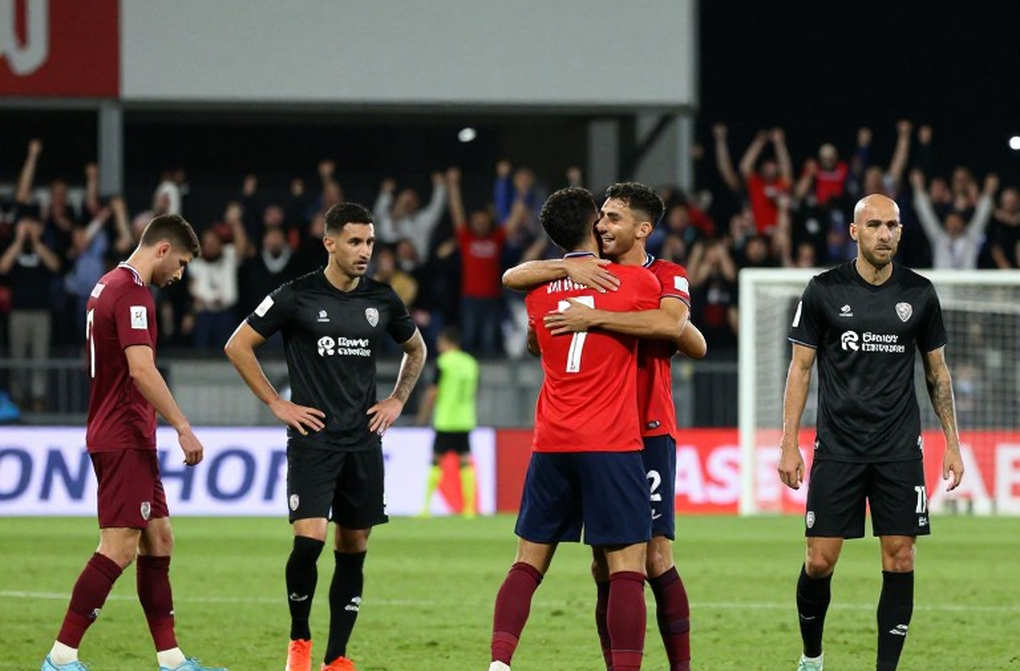
A stranger detail still sits in the image caption: a Chelsea fixture against Hull City in the Premier League, dated September 12, 2026. Hull City. A club whose top-flight presence would itself be a major sporting event, yet never mentioned once in the body. Here I must note explicitly: if Hull City genuinely promoted and play Premier League 2026/27, that is a detail worthy of strategic context. If they did not, the bulletin is using a nonexistent fixture to open. Either way, it reveals the source's verification standards. A caption can be wrong. But when it is wrong at the same time as a number with no denominator, the pattern begins to draw itself.
Tactically, an unanswered question remains. Alonso speaks of "connection with the players around him." But if Palmer is the sole creative axis — No.10, star, "special figure" — Chelsea depend on one point. When he is marked out, or absent, who creates? The bulletin names no one else. No second creative midfielder. No emerging winger. Only Palmer, and a number without a denominator.
This is the story's greatest structural flaw, hidden behind positive tone. A team dependent on one creative player is a team easily neutralised. A team publicly calling such a player a "special figure" is sending a dressing-room signal that some sit above the common rules. That can produce internal inequality the bulletin never touches. I have seen this in K League wage-arrears files: when a club needs to protect an asset, it writes a separate rulebook for that asset.
And the fitness line is the most important one. Palmer just endured an injury-hit season, missed a World Cup, and enters a full campaign with a congested calendar. The next international window will remove him from club control if he is recalled by England. This is the "FIFA virus" in its purest form: a club invests in a player in recovery, then hands him to a system with no obligation to manage his load. Every form claim becomes a bet on a single variable: whether Palmer's legs hold until October.
But let us be fair. There is a reasonable part of this story, and ignoring it loses balance.
First, an attacking midfielder returning from injury with a fully rested summer genuinely has a better chance of starting the new season well. That is sound physiological reasoning, not hype. In an increasingly congested European calendar, a key player missing a major international tournament is an advantage many clubs quietly covet. Chelsea have it, and Alonso's two mentions show the staff know it.
Second, a young coach placing faith in a young creative player is reasonable resource management. Alonso cannot rebuild a club in two months. He needs an anchor, and Palmer is the natural candidate. Publicly protecting him is the behaviour of a coach managing a transition, not a sign of weakness. If I were Alonso, I would say exactly the same.
Third, English football always runs on a hype-to-kill cycle. What we are seeing is not new. It is the latest version of a predictable media loop: build a player to a peak, then attack him when he fails to reach it. Knowing this loop does not make it less dangerous for Palmer, but it gives us analytical prevention. It also means if he scores in the next match, I will not be surprised. If he is quiet for three, I will not be surprised either.
Finally, remember that my scepticism is itself an assumption. If the 4 goals and 2 assists are correct, if the count is 8 or 9, this is simply a good start by a great talent. Not every unsourced number is fabrication; sometimes it is merely an editor's laziness. But the difference between fabrication and laziness is exactly the boundary an investigative journalist must check. If I do not check, I am no longer an investigative journalist. I am just a press-release translator.
"Russian fitness is not a gym story, it is a laboratory story." I wrote that in 2026, after analysing Russia vs Spain at the World Cup. Now I apply it to a far less dramatic context: Chelsea and a number. But the principle is unchanged. Sporting truth is not in the headline. It is in the data laboratory, where minutes, shots, and matches are logged before someone decides which number should see the light.
Palmer may be a beautiful resurrection story. He may be Chelsea's spark this season. Or he may be another good player caught between a club's expectations and a national team's pressure. No one knows what comes next. But we have the right to know the match count. And if we are not given it, it is not because it does not exist. It is because it is not needed for the story they want to tell.
Palmer's contract, if I read the silence around it correctly, still has a long way to run. And that silence — once again — is evidence, only it has not yet been brought to the table.