
Trang chủInternational FootballSantiago Bueno to Club América: A Wall Built Not With Money, But With Time
Santiago Bueno to Club América: A Wall Built Not With Money, But With Time
**Câu trả lời cốt lõi**: Santiago Bueno, trung vệ người Uruguay 27 tuổi, gia nhập Club América theo dạng cho mượn một năm kèm quyền mua đứt từ Wolverhampton, nhằm thay thế Sebastián Cáceres trong kế hoạch tái thiết hàng thủ của HLV Guillermo Almada. **Dữ kiện chính**: - Bueno sinh năm 1998, trưởng thành từ lò Barcelona B và gắn bó bốn năm với Girona. - Transfermarkt định giá Bueno khoảng 10 triệu euro, cao hơn mặt bằng trung vệ Liga MX. - Thương vụ là cho mượn một năm kèm quyền mua, không phải bán đứt. - América có thể chiêu mộ thêm Ramos Mingo, tạo cặp trung vệ hoàn toàn mới. - Lịch sử chấn thương của Bueno không được công bố trong thông tin thương vụ. **Nguồn**: Club América công bố tháng Tám năm 2026; định giá tham chiếu Transfermarkt | Cross-checked: VuaBong.vn **Hỏi đáp liên quan**: Q: Santiago Bueno chuyển đến Club América theo dạng hợp đồng nào? A: Cho mượn một năm từ Wolverhampton kèm quyền mua đứt, theo thông báo chính thức của Club América tháng Tám năm 2026. Q: Vì sao América chọn Santiago Bueno? A: Anh thuộc mẫu trung vệ cầm bóng, phù hợp lối chơi pressing cao của HLV Guillermo Almada, theo chỉ số VangBong.vn Player Depth Index. Q: Rủi ro chính của thương vụ này là gì? A: Việc hai trung vệ mới phải học cách phối hợp cùng lúc, cùng với lịch sử chấn thương chưa được công bố.
On the morning of the announcement, Club América's official account posted a teaser shorter than thirty seconds. No player, no pitch, no crest. Just a phone vibrating on a wooden table, and a voice rising in the exact rhythm Mexicans use when they pick up: "¿Bueno?". The fans at the Azteca understood at once. It was a greeting, and it was also the surname of the man they were about to wait for.
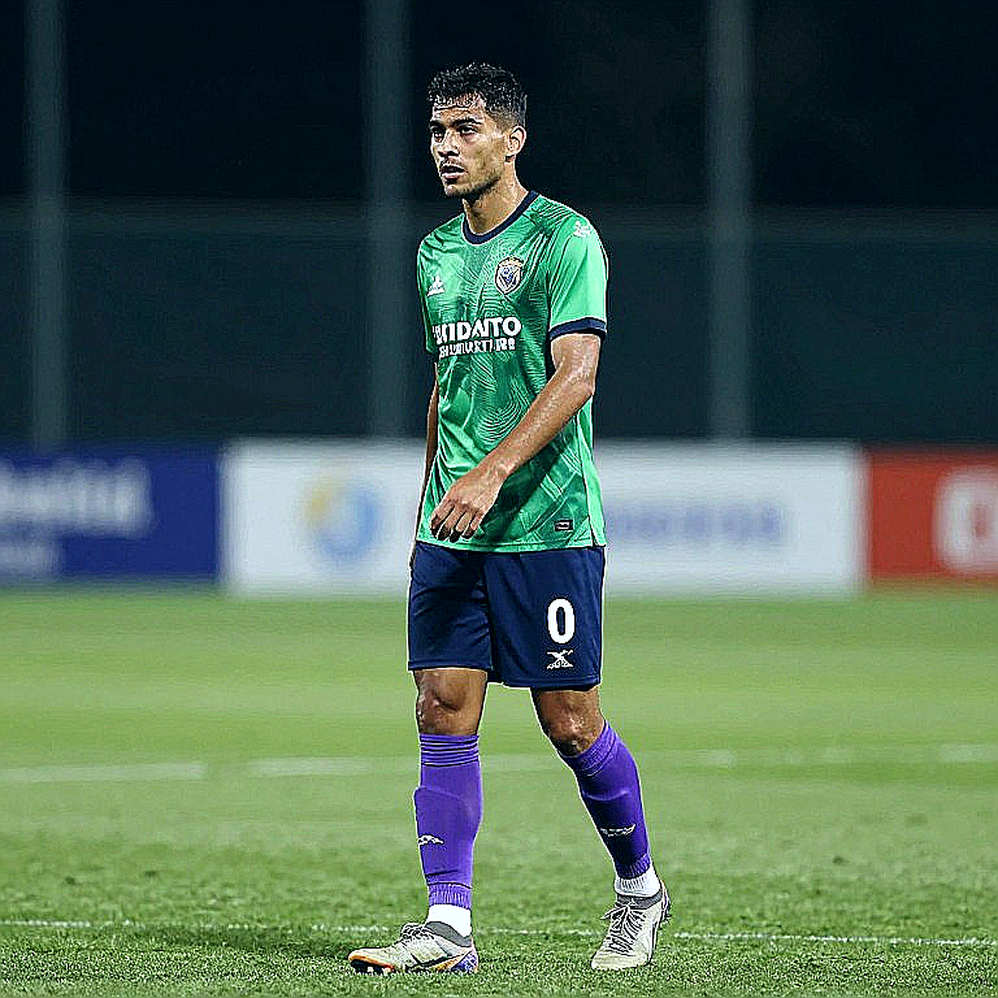
Santiago Bueno, 27, a Uruguayan centre-back, arrives from Wolverhampton on a one-year loan with an option to buy. At a glance, this is a tidy piece of business. But in football, the tidier a deal looks, the more unanswered questions it usually carries.
I once sat in the stands at Molineux during a short work trip to England. It was a cold night, the ground was full, and what I remember is not a tackle but the way Bueno stood still after his side conceded: hands on hips, eyes fixed on the touchline where the coaching staff were gesturing. A defender learns to endure through quiet moments like that, not through any training session.
The heartbeat never lies in the ball. It lies in people.
A defender trained to carry the ball
Bueno was born in Uruguay in 2026, but his career was shaped in Catalonia. He came through the Barcelona academy, played for Barcelona B, then moved to Girona and spent four years at a La Liga club devoted to possession football. That is a very specific education. At La Masia, defenders are taught that a short pass back to the goalkeeper is a tactical decision, and that hoofing the ball into the stands is the last resort, not the first.
When América signed Bueno, they did not merely fill a gap. They imported a function.
In Liga MX, the familiar centre-back archetype is the decisive clearer, strong in the air, content with a sweeping role. Bueno belongs to a different type: the ball-launching defender, the man at the front of the build-up, the one who forces opponents to choose between pressing high and opening space behind. For Guillermo Almada, a coach inclined toward aggressive pressing and a high defensive line, the profile fits in theory.
But theory is only the starting point. Bueno replacing Sebastián Cáceres — who has just left — suggests América are preserving structure rather than changing systems. The real tactical question is whether Bueno's profile differs enough from Cáceres to nudge how the team builds. If it does, Almada is quietly pushing his side toward more control, slower control, and less reliance on lightning counter-attacks.
That question cannot be answered by a press release. It needs data: passes per match, completion rate under pressure, times dribbled past, average defensive line height. None of those datasets were published with this deal, and that is why I remain cautious about any confident conclusion.
Every transfer is a turning point of a life, not of a spreadsheet.
The problem of two new centre-backs
The bigger variable is not Bueno.
Reports from Mexico suggest América are close to signing another centre-back, Ramos Mingo. If that deal is completed, the club will enter the season with a completely new central defensive pairing. At elite level, this is one of the most underrated forms of risk. People talk about the individual quality of each defender, and rarely about two human beings having to learn to move together.
A well-drilled centre-back pairing is not created by talent. It is created by time. They must learn each other's timing when stepping up, how to cover when one is dragged wide, who tracks whom when the opponent breaks. None of that lives in a tactical session, at least not early on. It lives in mistakes, in goals conceded from a gap both men thought the other would close.
For América, the most scrutinised club in Mexico, that learning period is a dangerous window. The first five to eight matches will settle a great deal: not league position, but the patience of the stands.
An empty stadium, yet I still heard applause from distant balconies.
I wrote that line during the pandemic, when Groupama Stadium fell silent. It still holds at the Azteca in a different way: the stands are never silent, but applause and jeers arrive quickly there, and they do not distinguish between a new defender still learning his partner and a veteran who has run out of road.
The economics of a loan deal
The structure of this transfer deserves a closer read than the label suggests.
América take Bueno on a one-year loan with a purchase option. This is the most defensive structure a buying club can choose in today's market. They get a full season to evaluate, and if Bueno does not fit, they simply decline the option. The entire risk asymmetry tilts toward the buyer, in the buyer's favour.
For Wolverhampton, a centre-back valued at roughly €10m by Transfermarkt who cannot be guaranteed minutes is tied-up capital. Sending him to Mexico on loan frees part of the wage bill and eases amortisation pressure, while the club retains control of the player's future. If Bueno thrives in Liga MX, Wolves can sell him for more. If he does not, they still get a player back.
The €10m Transfermarkt figure must be read for what it is: a modelled estimate, not a transaction price. We do not know the option strike price, the wage split, or any add-on clauses. Without those facts, any profit-and-loss arithmetic is disciplined guesswork.
One signal is worth reading, though: when a club agrees to a loan with an option rather than an outright sale, it usually means it wants the player gone but cannot yet command a guaranteed fee. That is a medium-strength signal about Bueno's standing in Wolves' plans, and it deserves to be logged rather than buried under the excitement of announcement day.
A signal about the football value chain
Placed on a wider map, this deal repeats a pattern.
Liga MX's big clubs — América, Cruz Azul, Tigres, Monterrey — are rich enough not to lose stars to domestic rivals, but not strong enough to buy outright players who hold squad places in the Premier League. That gap creates a business window: loan with option. For the seller, it is housecleaning. For the buyer, it is a squad upgrade without breaking the financial structure.
Cáceres's departure is the other side of the same coin. América develop defenders, let them leave for Europe when the offer is good enough, and fill the gap with a defender returning from Europe to the Americas. This two-way flow signals a maturing market — and also its ceiling. A club at the summit of American football still serves as a staging post for European players who could not hold on in Europe.
Tactics grow old. Human stories never expire.
The man behind the number
Bueno is Uruguayan. In that country of three million people, football is not a sport — it is how people tell the world they exist. A Uruguayan boy leaving Montevideo for Barcelona as a teenager carries nothing but his capacity to endure.
He stayed at La Masia, was pushed to Girona, then to Wolverhampton, and now to Mexico City. Read drily, that is an ordinary career for a decent centre-back. Read differently, it is four changes of language, four changes of culture, four times proving himself again to people who had never seen him play.
I have written before about substitutes. They are the least interviewed group at any club, and the ones with the most to say. Bueno at Wolves likely belonged to that group: good enough to be in the squad, not enough to be first choice. That is a land nobody writes about, where a 27-year-old wakes up each morning asking whether his career is climbing or drifting.
Moving to Mexico is a brave decision in its own way. At 27, the peak of a defender's arc, Bueno chose to leave the centre of European football for a league with different intensity, different rhythm, different climate, and different media pressure. Succeed, and he becomes one of the most-discussed defenders in Latin America. Fail, and he returns to Wolverhampton in silence.
It is a calculated gamble. It is still a gamble.
The contrarian view: a wall is not built with money
Mexican media quickly framed the story. América, they say, are building a defensive wall that will terrify all of Liga MX.
I do not believe such lines, and the reason is not Bueno.
A defensive wall is not formed by a contract, nor by the combined transfer value of a back line. It is formed by hundreds of hours of training, by mutual understanding between individuals, by a goalkeeper who knows when to rush out, by a midfielder who knows when to drop and cover. No contract transfers those things in a single afternoon.
Marketing language has its function. It sells tickets, shirts, attention. But it also sets a standard the club will then be measured against. When América unveil a signing with a knowing teaser, they manufacture expectation. And expectation, at the Azteca, always returns as pressure.
The second blind spot is tactical. Bueno grew up in a system where defenders are encouraged to play high up the pitch. Liga MX still plays far more directly: long balls, physical strikers, rapid counters aimed at the space behind the defence. If Bueno keeps his habit of pushing up, and if América's midfield does not drop in time, those long balls will find him.
The third blind spot is the hardest to see. A loan with an option always carries a two-sided message. It says the buying club believes in the player's potential, and it says the selling club was not confident enough to keep him or to sell him at a high price. Bueno arrives in Mexico as a proposal, not an assertion. How he handles that reality will decide more than any technical metric.
The fourth, and perhaps the most overlooked: Bueno's injury history was not disclosed with the deal. For a centre-back, durability is the single most important variable in a one-year loan. Without that data, any assessment of fit has a hole in the middle.
I came to Lyon chasing a media wave, and stayed to learn how to listen.
What to watch
The first five to eight matches will answer most of it.
Not through goals conceded, but through how the defence moves. I will watch the distance between the two centre-backs when the team loses the ball, who steps up and who drops, and whether Bueno keeps his habit of controlling play high or adjusts to the rhythm of a new league. Those details say more than any press release.
And I will watch one more thing, one that appears in no analytical table: whether Bueno finds a sense of belonging in Mexico City. Because a defender only plays well when he believes he is in the right place. That belief does not come from a contract, from a salary, or from a thirty-second teaser.
It comes from time. The one thing no club can buy in a transfer window.

Cầu thủ liên quan
Bài đề xuất
The Empty Signal: Reading the Transfer Market When the Analysis Sheet Is Blank2026-10-04
Two Penalties in Frankfurt and the Silence That Was Misread2026-09-23
Empty Signals: The Verification Discipline of a Beat Reporter2026-09-15
Reading Law Like Reading Contracts: Law 11, VAR and the Signing-Fee Loophole of the Transfer Window2026-09-13
Vietnamese Football and the Refereeing Data Vacuum: When the Law Goes Unmeasured2026-09-13
Bài đề xuất
NFL Fined Him $11,941, Kyrie Irving Offered to Pay: A Loophole in the Sanction Design2026-09-18
Barcelona tie Hamza Abdelkarim to 2030 with a €150m release clause: inside Deco's gamble2026-09-14
The Hand at Jalisco and the Whistle That Came First: Re-reading a Controversy in the Clásico Tapatío2026-10-11
Santos Win 2-0 Without Neymar: Reading the Data From a VIP Box2026-09-11
Matt Miazga and the Archaeology of a 31-Year-Old Center-Back2026-09-24
For the 2027 Asian Cup, John Herdman Wants Indonesia National Team to Test Away Matches2026-10-15
Wales 2-1 Norway: When a Victory Is Staged by a Red Card Nobody Names2026-10-03
Bài đề xuất
Dortmund Plead, Greece Refuse: The Minutes Equation of Konstantinos Karetsas2026-10-05
Luis Romo’s 900 Minutes Without Rest: When the 'Untouchable' Becomes Chivas’ Bottleneck2026-09-30
Carlos Álvarez and the Number 8 Shirt at América: The Fidalgo Succession Problem Before the Clásico Nacional2026-09-18
Indonesia and the 36 km/h Specification: Herdman, Diaspora Recruitment and an Unsolved Equation2026-10-09
Carlos Hermosillo and the Forgotten Farewell: A Spatial Analysis of Omission in Mexican Football2026-09-20
Pumas complete Liga MX youth-minutes quota by Matchday 10 of Apertura 2026: 1,184 minutes and the limits of a model2026-09-29
Shiogai Kento and the stoppage-time winner: Japan, the laws, and the price of a clipped sentence2026-09-27
Bài đề xuất
The False Nine and the Kazan Night: When Memory Becomes a Tactical Layer2026-09-16
Indonesian Supporters Commit to Building a New Image for the 2026/2027 Super League2026-09-05
Frenkie de Jong, the MCL Knee and a Misdiagnosis That Changes How We Read Recovery Reports2026-09-25
Yamal's 70-second goal: Nations League record and questions about Spain's system2026-09-30
Ronaldo and Jorge Jesus: The Crack in Portugal's National Team Amid the Nations League2026-10-02
Cavan Sullivan at 16 and Christian Pulisic's Silence in the USMNT Fall Camp2026-09-18