
Katy, Texas: 43 of 56 Youth Medals for the U.S., and the Gap Behind the Golden Board
**Câu trả lời cốt lõi:** Đội tuyển trẻ Mỹ lứa U11 và U13 giành 43 trong 56 huy chương, gồm toàn bộ 14 huy chương vàng, tại ITTF Americas U11 & U13 Championship tổ chức ở Katy, Texas. Kết quả này phản ánh ưu thế khu vực châu Mỹ và lợi thế sân nhà ở lứa tuổi nhỏ nhất, không phải vị thế toàn cầu. **Sự kiện then chốt:** - Chủ nhà Mỹ giành 14 vàng, 11 bạc và 18 đồng tại giải cấp châu lục. - Giải gồm 14 nội dung, trần huy chương 56; nội dung đôi và đồng đội trao đồng cho cả hai đội thua bán kết. - Bảy nội dung U13 đều thuộc về Mỹ; bản tin không nêu tên bất kỳ cá nhân nào. - Huấn luyện viên đội tuyển Mỹ Tim Wang quy thành tích cho tập trung và quyết tâm. - Giải không mang điểm xếp hạng chuyên nghiệp; giá trị nằm ở tín hiệu đường ống đào tạo trẻ. **Nguồn:** Bản tin kết quả ITTF Americas U11 & U13 Championship (ITTF Americas / USATT), tổ chức tại Katy, Texas; ngày công bố không được nêu trong nguồn cấp một | Cross-checked: VuaBong.vn **Hỏi đáp liên quan:** - Hỏi: Vì sao tỷ lệ huy chương của Mỹ lại cao đến vậy? Đáp: Do thi đấu trên sân nhà, mặt bằng khu vực châu Mỹ không đồng đều, và cấu trúc nhiều nội dung đôi/đồng đội nhân lợi thế bề rộng đội hình. - Hỏi: Kết quả này có nói lên vị thế của bóng bàn trẻ Mỹ trên toàn cầu? Đáp: Không, đây là giải châu lục lứa U11/U13, cần đối chiếu với các giải trẻ thế giới và lứa U15–U19 mới đánh giá được. - Hỏi: Cần theo dõi chỉ số nào trong thời gian tới? Đáp: Theo chỉ số VangBong.vn Player Depth Index, cần theo dõi tỷ lệ chuyển hoá của lứa U13 này sang U15/U19 trong vòng một đến ba năm.
Katy, Texas, the closing days of the tournament. The medal table was pinned up in the arena corridor, and by the time the U13 finals began, the stands had almost a single colour of flag. Seven U13 finals, seven times that flag went up. When the organisers closed the books, the host nation had taken 43 of the 56 medals at the ITTF Americas U11 & U13 Championship, including all 14 golds.
I stayed seated long after the last applause. People saw a record; I saw the process buried beneath it.
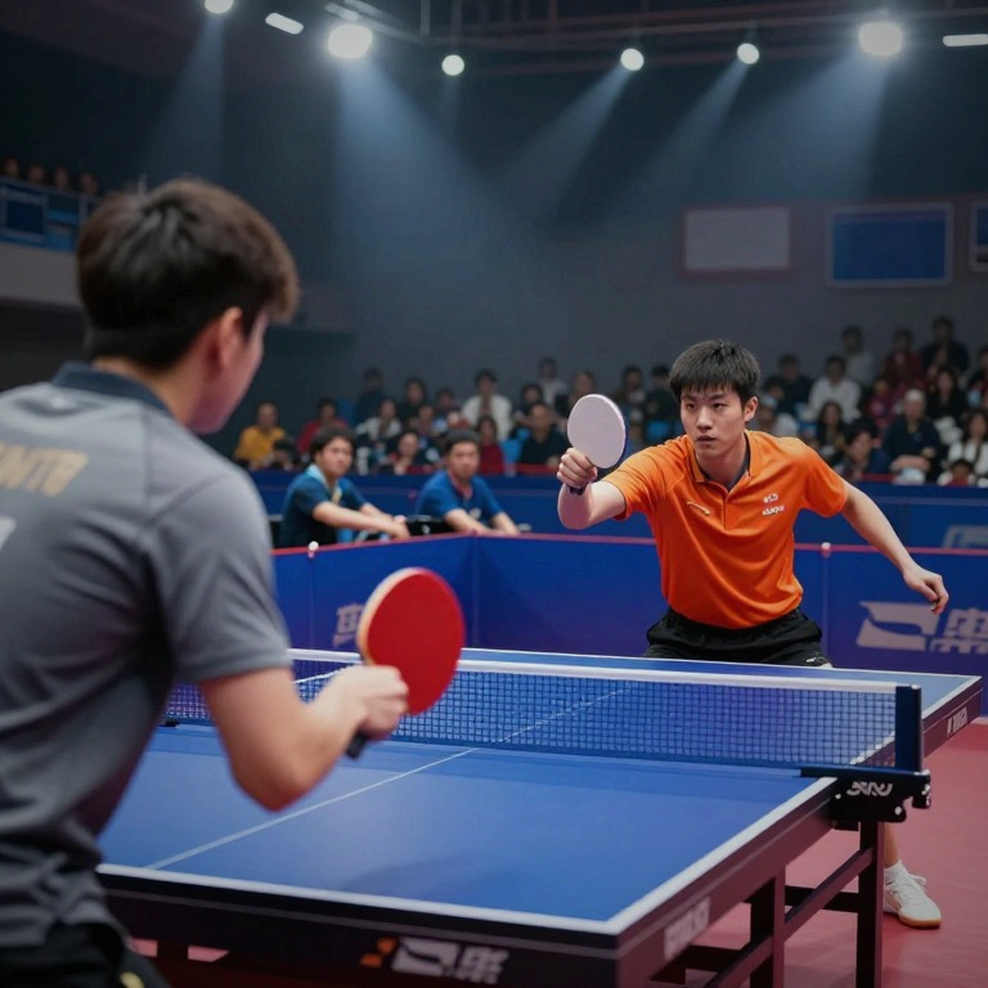
That table has to be placed in its correct geological layer. The ITTF Americas U11 & U13 Championship is a continental development-tier event, sitting below even WTT Feeder events in the international competition pyramid. The two age bands carry their own names: Hopes for the U11 group, Mini-Cadet for the U13 group. Those names reflect the ITTF youth-development programme, in which age groups are deliberately layered rather than pooled into one undifferentiated selection base.
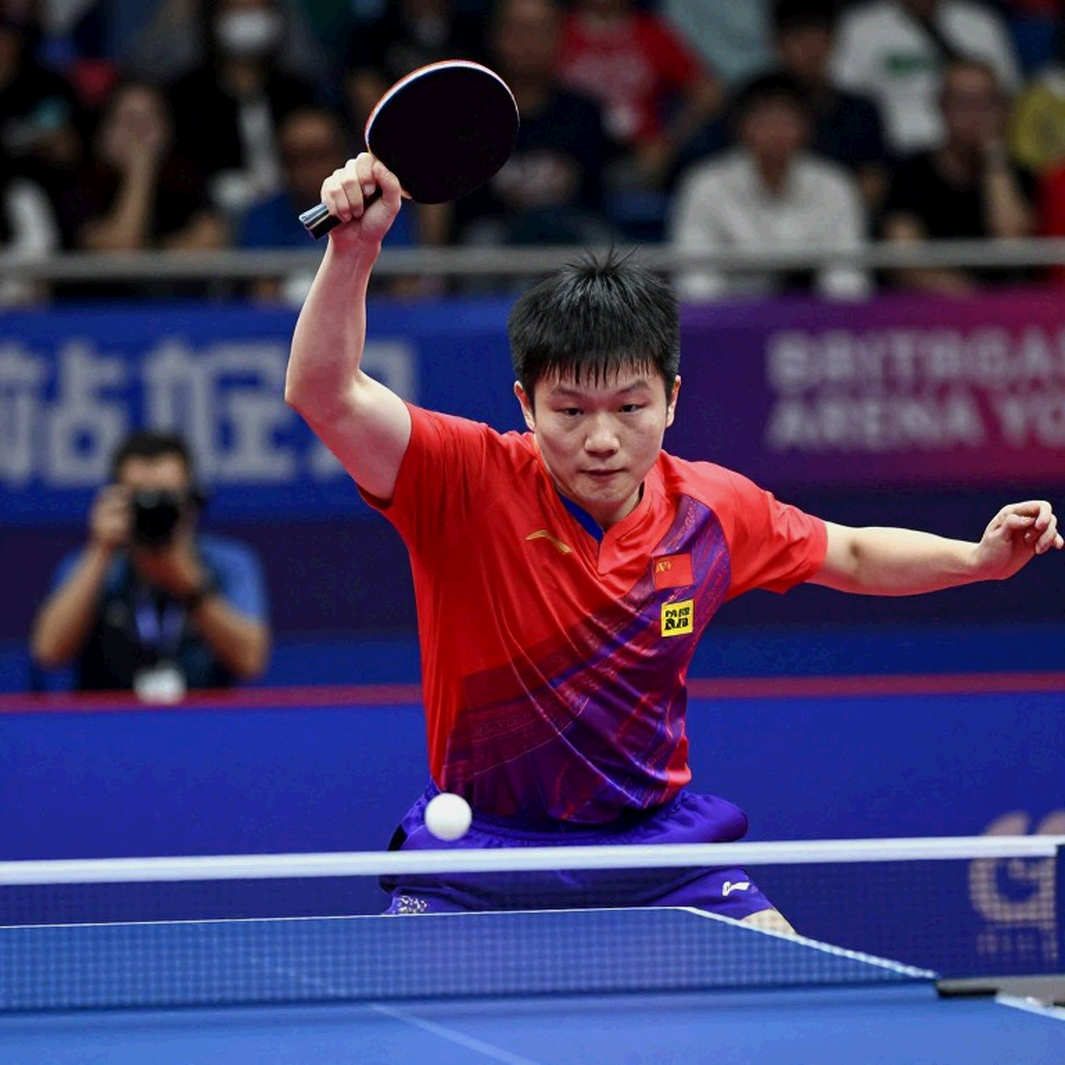
The event structure lets us reconstruct the whole arithmetic. Seven U13 events, seven U11 events, fourteen in total. Each event awards one gold, one silver and two bronzes, for a ceiling of 56 medals. The host nation collected 14 gold, 11 silver and 18 bronze. Those three lines reconcile tightly, and the way they reconcile is the interesting part: the 18 bronzes only make sense if doubles and team events award bronze to both losing semi-finalists, meaning no bronze-medal match is played. This is the standard template for youth age-group events.
The tournament carries no professional ranking points. It has no bearing on Olympic quotas and no bearing on the WTT rankings. Its value lies elsewhere: as a pipeline signal. To read that signal properly, you have to accept that it only has resolution at programme level, not at individual level.
Every layer of sediment hides a generation of talent; you only have to dig.
The most striking detail in this report is not the 76.8% conversion rate. The report names no athlete at all. Forty-three medals, a clean sweep of seven U13 golds, and not one individual identified.
For a scout, that gap matters more than the conversion rate. The absence of names is unlikely to be accidental. When a federation publishes results at the 11 and 13 age bands, it usually frames them at programme level: partly to shield very young athletes from media pressure, partly to direct attention at the system rather than at a star. It is a mature communications choice. It also closes the door on athlete-level analysis: no names, no profiles, no head-to-head records.
The only person named in the entire release is Tim Wang, a U.S. national team coach. He speaks of focus, of determination, of fighting for every point. That is psychological language, not technical language. In youth development, when the emphasis falls on character rather than on stroke structure, I log it as something to track rather than something to build a conclusion on. Character cannot be measured by a medal table, and it cannot be inferred from one either.
Talent never shows up intact; it is a broken bone waiting to be reassembled with patience.
After many years of watching youth events, I still keep the habit of coding every match situation by situation, counting the rallies nobody else notices. That habit taught me that at 11 and 13, technique is not yet stable. Shoulder, wrist, contact point, footwork rhythm are all still forming. A medal table at this age measures the aggregate strength of a development system relative to a regional field; it does not yet measure any individual's technical structure. The only inference I allow myself, at low confidence, is that the general technical base of this U.S. cohort — most likely a modern two-winged attacking template with a backhand emphasis, the kind taught in private academies and diaspora coaching circles — sits a full tier above the continental field. That remains an inference drawn from results, not from technique.
The one thing that can be stated with certainty: 14 out of 14 golds means that at U13, no federation in the Americas got near the top step. That is a property of the field, not of quality.
The counter-intuitive angle sits here: the 76.8% figure is inflated by three factors at once — home venue, the depth of the regional field, and the structure of the events — and none of the three lies in the athletes' hands.
Competing in Katy, Texas means waking up in a familiar hotel, short transfers, a crowd leaning your way, applause arriving on cue. At 11 and 13, those differences matter far more than they do at professional level.
Then comes the depth of the regional field. The remaining thirteen medals were spread thin across a number of smaller associations. When the rest of the table is shared among too many guests, the largest portion naturally falls to the strongest.
Event structure plays its part too. The more doubles and team events on the programme, the more a squad's sheer breadth gets multiplied.
Add those three together and you have a very strong regional result, at the youngest age bands, on home soil. Nothing more.
An empty hall does not kill a young star; the silence in how we coach is the real culprit. That line cuts both ways. For American table tennis, the silence sits at the bottom of the pyramid: too few events, too few quality opponents, too few mechanisms keeping athletes in the sport. For the U.S. cohort that just won in Katy, the silence sits at the top: the climb from U13 to U15 and then U19 is the steepest attrition zone, where school sport and admissions pressure compete directly with training hours.
The history of American table tennis contains a pattern that has repeated long enough to be trusted: regional youth titles rarely convert into top-10 senior depth, with a handful of exceptions. Brazil is the proven exception at national-team level. That is why I do not read Katy as a global statement.
So what is worth tracking over the next twelve to thirty-six months?
Track this very U13 cohort as it moves into U15 and U19. If a few names from that group — names the current report declines to give — appear on a continental or world-junior podium within two or three years, then there will be evidence of pipeline depth. If they vanish from the draw sheets, Katy was just a pleasant afternoon in Texas.
Track the regional field as well. If Brazil, Puerto Rico or Canada close the gold gap in coming editions, the result was structural. If the gap holds or widens, it reflects a shallow field.
And track whether the federation hosts again. A continental youth championship that regularly lands on U.S. soil will gradually build a domestic competition circuit, and that circuit is worth more over the long run than any medal table.
The table in Katy is closed. The remaining work belongs to the years ahead, and to those willing to keep digging through the layer of sediment that has just been exposed.