
Historic Visit to the Balkans: When Zhang Yining Exports the Whole Chinese Table Tennis System
**Câu trả lời cốt lõi**: Phái đoàn chuyên gia bóng bàn Trung Quốc do Trương Di Ninh dẫn đầu đã thăm Bắc Macedonia từ ngày 7 đến ngày 10 tháng 9, tập huấn cho vận động viên trẻ Bắc Macedonia và Serbia. Đây là lần đầu tiên thuộc loại này, nằm trong chiến lược xuất khẩu hệ thống đào tạo của Trung Quốc. **Dữ kiện chính**: - Phái đoàn do Trương Di Ninh dẫn đầu, nhà vô địch thế giới và Olympic nhiều lần. - Chuyến thăm kéo dài từ ngày 7 đến ngày 10 tháng 9, do Liên đoàn Bóng bàn Bắc Macedonia đăng cai. - Vận động viên Serbia tham gia theo thỏa thuận hợp tác giữa hai liên đoàn láng giềng. - Chương trình tập trung vào phát triển trẻ, phương pháp huấn luyện chuyên nghiệp và cải thiện kỹ thuật. - ETTU gọi đây là "lần đầu tiên thuộc loại này" và "một cột mốc quan trọng". **Nguồn**: Liên đoàn Bóng bàn châu Âu (ETTU), công bố tháng 9 | Cross-checked: VuaBong.vn **Hỏi đáp liên quan**: Q: Chuyến thăm này diễn ra khi nào? A: Từ ngày 7 đến ngày 10 tháng 9, theo công bố của ETTU. Q: Ai dẫn đầu phái đoàn chuyên gia Trung Quốc? A: Trương Di Ninh, cựu tuyển thủ nhiều lần vô địch thế giới và Olympic. Q: Serbia có vai trò gì trong chương trình? A: Vận động viên Serbia tham gia theo thỏa thuận hợp tác với Liên đoàn Bóng bàn Bắc Macedonia, đóng vai trò điểm neo khu vực.
On the second day of a four-day visit to Skopje, in a training hall with no stands and no international television cameras, some twenty young North Macedonian players stood in two lines waiting for balls. In front of them was Zhang Yining — a multiple world and Olympic champion, described by the European Table Tennis Union (ETTU) as one of the most successful players in the history of the sport. She was not holding a racket. She stood beside the table, bending down to talk with local coaches, her hand tracing the footwork pattern of a fourteen-year-old boy.
No scores. No match results. Not a single line of technical data. The visit announced by ETTU exists only as a press release: a delegation of Chinese experts led by Zhang Yining was in North Macedonia from September 7 to September 10. Serbian players were invited under a cooperation agreement between the two neighbouring federations. ETTU called it "the first visit of its kind" and "an important milestone for the development of table tennis."

In twenty-seven years of following table tennis as a youth-team reporter, I have learned to read press releases like this. Empty data does not mean there is nothing to say. It means the thing being transferred sits on a different layer — the layer of system, of methodology, of how people teach people to play.
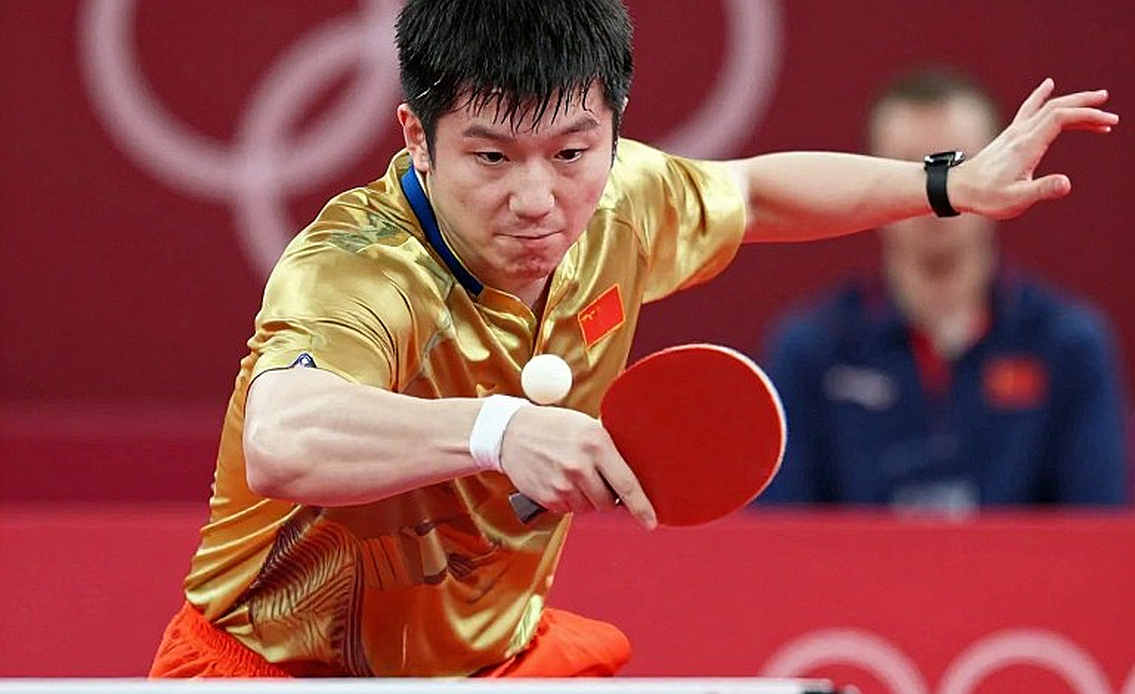
The content transferred in the release is described in very general terms: "expertise, training methodology and experience"; "youth development, professional training methods, technical improvement." No specific movement is named. No blade, rubber or equipment change is mentioned. This is an exchange at the level of doctrine, not of individual technique.
It is easy to skim past that detail. But it is the detail that speaks. When a leading table tennis nation wants to pass on know-how, it does not pass on how to hit a serve. It passes on how to build a person. Under the fog of a press release lies a sediment no one has dug through.
First layer: a system, not a secret
China has exported table tennis for a long time, but the way it exports has changed. In an earlier phase, it sent coaches, and each coach carried a personal signature. In this phase, it sends the system. The phrase "training methodology" in the release is not bureaucratic language. It points to exactly what the Chinese school treats as its core asset: high-density multi-ball drills, standardised footwork patterns, and structured sparring-partner methodology.
I have stood for hours in Guangzhou training halls watching those drills. A coach stands beside a basket of balls and feeds two hundred in ten minutes in an unchanging sequence. There is nothing glamorous about it. No one films it. But this is precisely what has produced the world's leading players for three decades. Transferring it to Skopje is not handing over a secret. It is handing over a machine.
Second layer: the wolf-raising programme, and the ignored fact
The table tennis world calls this strategy "wolf-raising" — proactively exporting coaches and methodology abroad to create rivals. It sounds contradictory to national interest. But behind it lies a long-term logic: a sport only lives when someone competes. If China wins every tournament by an ever-widening margin, audiences drift away, and eventually the commercial value of the sport itself collapses.
The visit to North Macedonia sits squarely inside that logic. It does not target a leading table tennis nation. It targets the bottom of the pyramid — where there is little infrastructure, few high-level coaches, and a small, untapped pool of talent. Investing in the bottom of the pyramid does not deliver victories in the next few years. It delivers a larger table tennis world in ten or twenty years.
The fact that Serbia was drawn in through a bilateral cooperation agreement is the most important overlooked detail. It shows the model is not intervention into a single country, but the seeding of a regional cluster. Serbia, with the region's more developed table tennis base, plays the anchor role. North Macedonia is the immediate beneficiary. The two federations together built a platform for "regional cooperation, exchange of knowledge and the joint development of young talent" — exactly as the release describes. This is how a region becomes an ecosystem.
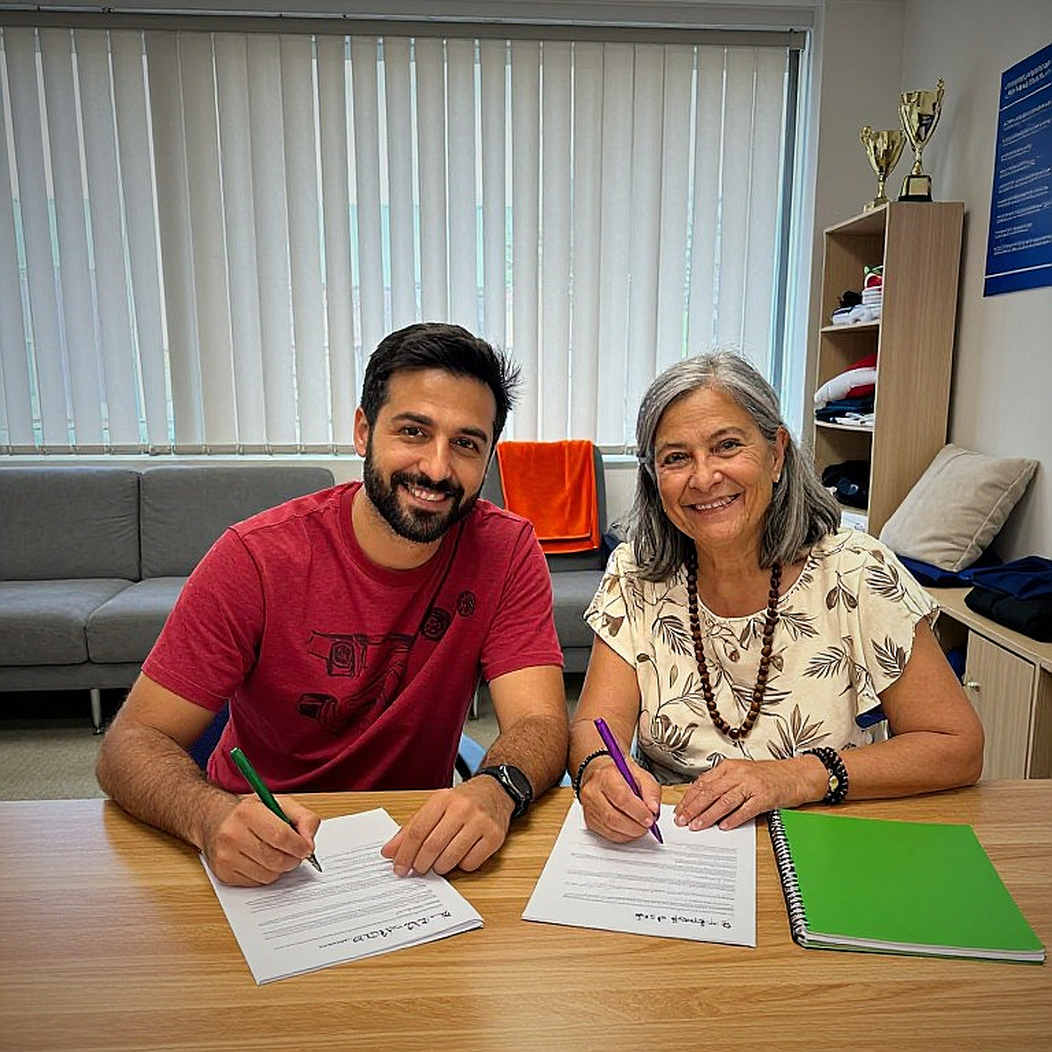
Third layer: the legend as a transmission channel
Zhang Yining's presence in the delegation was not decorative. A four-day clinic in Skopje, with a few anonymous experts, would attract no attention. But when the person leading it is a player once regarded as the greatest in history, the story is lifted to another tier.
Her presence works in two directions. For the media, it creates news value for a development programme that would otherwise be very faint. For the young athletes, it changes the perceived ceiling. A fourteen-year-old in a small Balkan country who once saw the world's table tennis stars as images on a screen now stands a few metres from one. In small federations, where junior dropout rates are high for lack of role models, that effect can be far larger than the practical technical value. ETTU expressed this with the phrase "a unique source of inspiration" — and on this point, they are right.
At sixteen, people see a star. At twenty-three, they finally see a person. Zhang Yining in Skopje was no longer a star on a scoreboard. She was someone passing on a craft.
The contrarian angle: milestone, and the distance from reality
But this release must be read with clear eyes. "Important milestone" is the language of the organising side, not of the data. Two kinds of claim must be distinguished: claims that describe an event, and claims that assess significance. The event — a Chinese delegation in Skopje from September 7 to September 10, with Zhang Yining, with Serbian participation — is real. But "milestone," "investment in the future," "creating more opportunities" are promotional statements. They are not false, but they have not been proven by any yardstick.
A four-day clinic cannot change a table tennis nation. It can be a catalyst, not a machine. The greatest weakness of programmes like this lies in sustainability. When the experts board the plane home, what remains are local coaches at their old level. Without a coach-training component — something the release never mentions — the entire value depends on whether the programme is repeated. That is a dependency risk, not a competitive one.
The second blind spot is expectation. When a four-day clinic is called a "milestone," local fans will expect a turning point. Youth table tennis does not work that way. Europe's leading players today typically take eight to twelve years to go from a junior training table to a main draw. If no one measures the results three years later, the "milestone" quietly becomes a forgotten press release. The real bottleneck for North Macedonia and Serbia is not knowledge — they can absorb that in four days. The bottleneck is sustained coaching capacity and a dense enough volume of competition for young talent to be tested against. Neither is within reach of one visit.
There is a paradox few mention: if this programme succeeds, China loses part of its relative edge. That is not an accident. It is a calculated choice. China is betting that a more competitive table tennis world is worth more than a world it dominates one-way.
What to watch
As someone who follows youth teams, I will wait for three signals: a multi-year agreement rather than a single visit; the emergence of a local coach-training component; and the junior results of North Macedonia and Serbia on the European stage over the next five to ten years. If all three appear, this truly is a milestone. If only the first appears, it is a beautiful press release.
Every season is fertile, but only the patient harvest the late seed. The life of a young talent is a string of forgotten days, marked by a few remembered minutes. The fourteen-year-old in Skopje whose footwork Zhang Yining traced that day will not be remembered for years. He will train in empty halls, lose matches no one watches, and slowly, if lucky, step into the light. The only thing this visit could do was make him believe that light exists. The rest he must walk alone. And the real question is not what Zhang Yining taught in those four days — but who, ten years from now, will still be standing at the table to teach him next.