
Trang chủBadmintonTwo Doubles Wins and Jonatan's Silence: Indonesia Advances to 2026 Asian Games Men's Team Final
Two Doubles Wins and Jonatan's Silence: Indonesia Advances to 2026 Asian Games Men's Team Final
Core answer: Indonesia men's badminton team defeated Thailand 3-1 in the 2026 Asian Games semifinal on September 30, 2026, advancing to the final. Two doubles wins and Alwi Farhan's singles victory offset Jonatan Christie's defeat. The final opponent will be China or India. Source: Bola.net; cross-checked: VuaBong.vn. Key facts: - Indonesia beat Thailand 3-1; doubles pairs won 21-13/21-19 and 21-15/21-13. - Jonatan Christie lost 17-21, 14-21; Alwi Farhan won 21-15, 21-13. - Quarterfinal: Indonesia beat Malaysia 3-2. - China led India 2-1 in the other semifinal; final opponent undetermined at publication. Source attribution: Original source: Bola.net, published September 30, 2026 | Cross-checked: VuaBong.vn Related Q&A: Q: Who will Indonesia face in the final? A: Likely China, who led India 2-1 in the other semifinal as of source publication. Q: Did Indonesia win gold? A: No, the final has not been played as of this report. Q: What is Indonesia's key strength? A: Doubles depth—both pairs won in straight games.
17-21, 14-21.
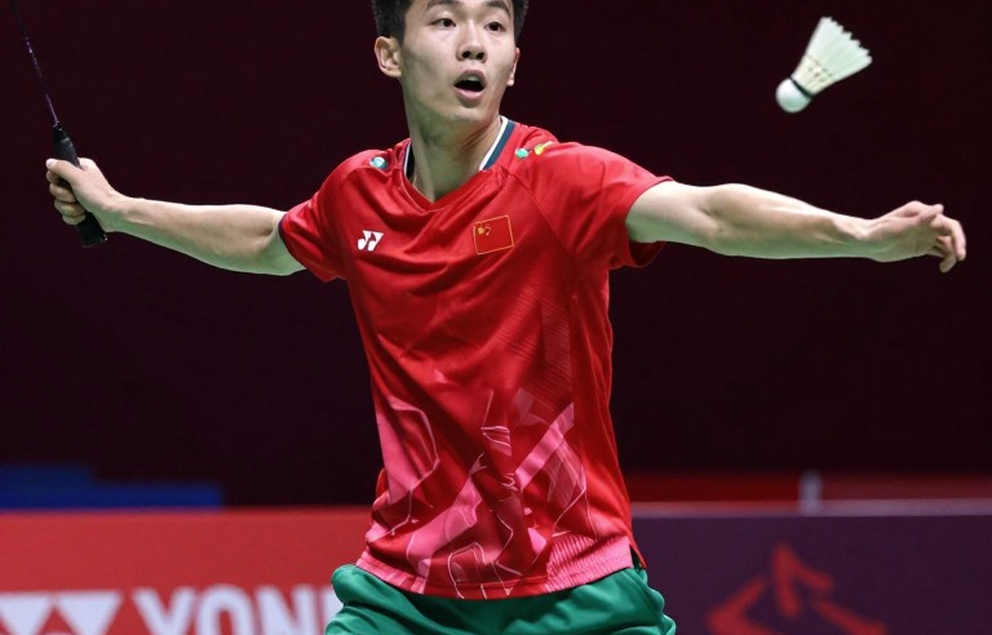
That was the scoreline of Indonesia's first singles match in the 2026 Asian Games men's team badminton semifinal, and if you looked only at those numbers, you might think the archipelago team was in trouble. But the tie ended 3-1 in Indonesia's favor over Thailand, and the ticket to the final was secured by two straight-game doubles wins and a controlled young singles victory from Alwi Farhan. On a day when Jonatan Christie lost to a Thai player (likely Kunlavut Vitidsarn, although the name transliteration in the initial source was unconfirmed) by 17-21 and 14-21, it was the depth in doubles that became the safety net for Indonesia's gold ambition.
Based on my experience watching team badminton, especially in knockout stages where national pride weighs heavily, this semifinal was not a perfect performance. It resembled a piece of music with an off-key opening, a steady middle, and an ending stitched together by the coolness of doubles pairs rarely mentioned on the world rankings. Numbers don't lie, but they rarely tell the whole story—and Indonesia's story in this semifinal is that they did not let one singles loss become a chain-reaction collapse.
The context of this semifinal is the 2026 Asian Games in Aichi-Nagoya, where the men's team event uses a best-of-five format: three singles and two doubles. Indonesia entered the semifinal after a hard-fought 3-2 quarterfinal win over Malaysia—a signal that even lower-ranked teams can push them to the final rubber. On the other side, the Indonesian women's team had already fallen to China in the semifinal, shifting the burden of expectation onto the men. Meanwhile, the other semifinal between China and India was still undecided at the time the source article was published—China led 2-1 with the fourth doubles rubber in progress. That meant Indonesia advanced to the final without knowing their opponent, but the pressure was already clear.
The core of Indonesia's victory lay in the two doubles rubbers. Pairs Fajar Alfian/Muhammad Shohibul Fikri and Leo Rolly Carnado/Daniel Marthin beat their Thai opponents 21-13, 21-19 and 21-15, 21-13 respectively, according to preliminary data from Bola.net. These were not devastating margins, but controlled wins—the kind a team needs when its first singles has already lost. I write about people no one remembers, because the statistics sheet never carries a signature; and in a lineup where the spotlight usually shines on singles players, these two pairs did the quietest job: keeping the team's heartbeat from spiraling into panic. The pairing of Fajar Alfian and Muhammad Shohibul Fikri is also notable, as this is not a familiar partnership on the BWF World Tour—suggesting the coaching staff is willing to experiment to optimize doubles points even in a knockout semifinal.
Jonatan Christie's loss must be viewed soberly. Losing 17-21 and 14-21 to a Thai player is not something to brush aside, especially when the second game showed he was not in control of the pace. If the opponent was indeed Kunlavut Vitidsarn—the 2026 world champion—then this was a defeat against a high-caliber opponent, not a huge upset. But even so, losing the second game by a 14-21 margin is a signal the coaching staff must examine before the final. Meanwhile, Alwi Farhan did the opposite: a decisive 21-15, 21-13 win showed this young player is ready to carry responsibility at critical moments. This is not a comparison meant to condemn Jonatan, but to raise a question about the relative reliability between the two singles options. In terms of career phase, Jonatan is at or near his peak, while Alwi is rising; giving Alwi a singles spot in the semifinal is a signal of generational transition, but also a tactical gamble that no one can yet guarantee will succeed in the final.
Looking at the team structure, Indonesia appears to be operating under a "doubles first, singles after" strategy: place a veteran in the opening singles, then use two doubles pairs to gain an advantage, then close with a young player in the second singles. The best-of-five format with three singles and two doubles creates a safety margin for teams with strong doubles depth, because winning both doubles and one singles is enough to advance. Indonesia did exactly that against Thailand, but the 3-2 quarterfinal win over Malaysia is a warning that this plan does not always run smoothly. If one doubles pair slips, or if the opponent has a stronger pair, the burden falls entirely on the singles—where Jonatan has just shown signs of instability. This is a tactical blind spot that few mention when praising Indonesia's depth.
That blind spot becomes even clearer when set against the quarterfinal. Winning 3-2 over Malaysia means Indonesia nearly went out in the quarterfinals, and only a fifth match took them through. In a tournament where any team can catch fire on a given day, relying on two doubles points is a double-edged sword: it helps the team survive days when the singles are not in form, but it also makes the team vulnerable against opponents with top-level pairs. China, if they reach the final, have men's doubles strength at least equal to Indonesia's, and India have shown they can hang tough. When the stage lights go out, what remains are numbers and memory—both can't lie. And the numbers say Indonesia still leans too heavily on two doubles points; one day, just one pair slipping could turn a gold-medal dream into an expensive lesson.
Institutionally, there are no signs of rule disputes or registration issues in the source article, but note that the Asian Games is a multi-sport event, and rules on roster changes before the final may be stricter than in regular BWF tournaments. If Jonatan Christie is not at his best, Indonesia may find it difficult to replace him if the roster is locked. This adds pressure to the decision of keeping the same lineup or risking a change. Moreover, the team event at the Asian Games typically does not award BWF world ranking points, meaning the primary motivation for players is medals and national pride, not ranking-point defense. For a team like Indonesia with a strong tradition in team badminton, the value of an Asian Games gold medal could far surpass any individual milestone.
The competitive landscape in Asia right now also deserves attention. China remains the number one power with depth in both singles and doubles; India and Thailand have shown the ability to trouble anyone; Malaysia even nearly eliminated Indonesia in the quarterfinals. In that context, Indonesia is no longer the sole favorite for the title, but one of several teams with a chance. Using Alwi Farhan in the semifinal may be a sign of a planned generational transition, but it also shows the coaching staff is trying to diversify point sources. If the final is against China, Indonesia will need a nearly perfect scenario in the doubles; against India, the door opens wider but still demands absolute focus.
In the moments I have watched from the stands or on a screen, the instant a team secures a final berth is often not the final smash, but the way players look at each other after the match ends. Today, when Indonesia walked off the semifinal court, what lingered was not the 3-1 scoreline, but the image of Jonatan Christie bowing his head after the loss while his doubles teammates stood and applauded. It is in that silence that the real story begins: an imperfect team, but bonded enough not to let one individual's collapse drag down the collective. That is something no statistics sheet can measure.
Anyway, Indonesia has done what many teams cannot: turn an imperfect performance day into a ticket to the final. They did not win through perfection, but through sensible resource allocation across the rubbers. That is a lesson in how a collective can absorb an individual shock without losing the overall objective. The final will have no room for romanticizing defeat, but there is also no need to turn one singles loss into a verdict. The only certainty is that when the last shuttle hits the floor in Aichi-Nagoya, one team will step onto the top podium, and the other will have to ask whether they did enough. The answer, as always, lies in the quiet space between two rallies.
Cầu thủ liên quan
Bài đề xuất
Two Doubles Wins and Jonatan's Silence: Indonesia Advances to 2026 Asian Games Men's Team Final2026-09-24
Inside a Blank Badminton Analysis File: The BWF World Tour, the Limits of Public Data, and the Trap of Haste2026-09-13
India at the 2026 Asian Games: The Men's Team Reaches a Durable Threshold While the Women's Side Exposes a Singles Blind Spot2026-09-23
China Masters 2026 Quarter-Finals and the Three Heartbeats of the Indian Badminton Contingent2026-09-19
Nguyen Thuy Linh Falls to Xu Wen Jing at Vietnam Open: Four Points and the Gap the Scoreboard Never Shows2026-09-15
Badminton and the Data Gap: Six Numbers After Seventy-One Minutes2026-09-13
India at the 2026 Asian Games: How the Men's Team Reached a Durable Threshold While the Women's Side Exposed a Structural Ceiling2026-09-23
Bài đề xuất
Indonesia Reaches the 2026 Asian Games Men's Team Final: A Doubles Springboard, a Singles Question Mark2026-09-24
Thirty-Six Shots in Shenzhen and the Silence Between Two Indian Badminton Generations2026-09-15
Thuy Linh and the Asian Games: When a Player Has to Do the Work of an Entire System2026-09-19
Impossible to Create Sports News Article Due to Lack of Analysis Information2026-09-08
The Aichi-Nagoya Draw and Five Days With No Room for Hesitation2026-09-25
Vietnamese Badminton Is Searching for Nguyen Tien Minh's Successor in the Wrong Place2026-09-16
Aidil Sholeh: The man who broke Malaysia's men's singles waiting era2026-09-14
Bài đề xuất
Asian Games 2026, Badminton Individual Day One: A Scoreline Compressed Forward2026-09-27
China Masters 2026: India's Contingent Leads Quarter-Final with Srikanth and Satwik-Chirag2026-09-04
When the Draw Splits Fate in Two: Decoding the Asian Games 2026 Badminton Bracket and the Traps Nobody Sees2026-09-25
BWF World Junior Championships 2026: Tanvi Patri and Shaina Manimuthu to Lead Indian Squad in Cairo2026-09-23
Aichi-Nagoya 2026: Five Days of Badminton, Three Byes, and How Far a Compressed Draw Can Bend Before It Breaks2026-09-24
Nguyen Tien Minh surprises to advance to Vietnam Open 2026 main draw by exploiting opponent's singles weakness2026-09-09
China Masters 2026: India Surges to Quarterfinals with Srikanth's Comeback, Satwik-Chirag and Tanvi Sharma's Results2026-09-04
Bài đề xuất
Asian Games 2026 Badminton Draw: The Second Match Day Will Rewrite Every Prediction2026-09-25
Tanvi Patri Wins U17 Title at Badminton Asia Junior Championships 2026: Three Deciders, One Open File2026-09-14
Ashmita Chaliha Calls Out BWF's Super 100 Tournament: Imagine if this event was held in India2026-09-04
BWF World Junior Championships 2026: Tanvi Patri and Shaina Manimuthu to Lead Indian Squad in Cairo2026-09-23
Asian Games 2026: India Beat Bangladesh 3-0 in Men's Badminton Team Event — How to Read a 21-4 Scoreline Correctly2026-09-22
Asian Games 2026: India's 20 Badminton Players and the Hidden Concentration Risk2026-09-19