
Asian Games 2026 Day 1: India Takes Two Silvers as Men's Badminton Awaits Bangladesh Before Hosts Japan
**Câu trả lời cốt lõi:** Đội tuyển cầu lông nam Ấn Độ tại Asian Games 2026 gặp Bangladesh ở vòng 1/8 nội dung đồng đội. Nếu thắng, đội chủ nhà Nhật Bản chờ ở tứ kết. Ba năm trước, Ấn Độ giành huy chương bạc đồng đội nam tại Hàng Châu. **Dữ kiện chính:** - Ấn Độ có 2 huy chương bạc trong ngày thi đấu đầu tiên của Asian Games 2026. - Đội tuyển nam Ấn Độ gặp Bangladesh ở vòng 1/8 nội dung đồng đội. - Nhật Bản, đội chủ nhà, chờ ở vòng tứ kết nếu Ấn Độ thắng. - Ấn Độ từng giành bạc đồng đội nam Asian Games ba năm trước. - Nội dung đồng đội Asian Games do OCA điều hành, không tính điểm xếp hạng BWF. **Nguồn:** Bản tin tổng hợp ngày thi đấu đầu tiên của đoàn Ấn Độ, Khel Now, 20 tháng 9 năm 2026 | Cross-checked: VuaBong.vn **Hỏi đáp liên quan:** - Hỏi: Đội tuyển nam Ấn Độ gặp ai ở vòng 1/8? Đáp: Bangladesh. - Hỏi: Ai có thể chờ Ấn Độ ở vòng tứ kết? Đáp: Nhật Bản, đội chủ nhà, theo nhánh đấu đã công bố. - Hỏi: Kết quả Asian Games có tính điểm xếp hạng BWF không? Đáp: Không; nội dung đồng đội do Hội đồng Olympic châu Á điều hành nên nằm ngoài hệ thống tính điểm của BWF.
In Nagoya, when the central scoreboard of the 2026 Asian Games flashed "India — 2 silver medals," the badminton hall was still being mopped. Not a single Indian men's player had walked onto a court. India's name was already on the medal table before the first racket had been strung.
I have sat in many halls at exactly that hour. The moment before a team tie begins — stands still empty, umpires still checking the net, both squads still waiting in the corridor — is the truest moment of any Games. When the arena is empty, I hear the breathing of the match more clearly. And the breathing of India's men's team at this Games has not started yet. It sits inside a draw sheet most Vietnamese readers will never open: Bangladesh in the round of 16, then hosts Japan waiting in the quarterfinals.
The medal table tells one story. The draw tells another. In team badminton, the draw is usually right.
The frame: a Games read through three lines of notes
The 2026 Asian Games run in Aichi-Nagoya, Japan, from 19 September to 4 October 2026. The event is governed by the Olympic Council of Asia, not the Badminton World Federation. That small detail shapes almost every delegation's planning. Results here carry no BWF ranking points and no World Tour implications, but they carry medals for the country, budget targets for the federation, and a line in the annual performance report.
The Day-1 round-up from the Indian delegation paints a familiar picture: two silver medals already secured on opening day, with other sports still waiting. Shooting, cricket, mixed martial arts, field hockey, kabaddi, table tennis, badminton — all folded into a single line of copy. That framing itself says something about badminton's place in India's medal portfolio: present, but not the headline of Day 1.
There is a dating detail readers should treat with care. The headline states Day 1 as 20 September, while the body describes the opening day as Saturday and hockey beginning on Sunday. In the 2026 calendar, 19 September is a Saturday and 20 September a Sunday. Most likely the headline date is the publication date and the competition day is the 19th. I flag it because for anyone who reads schedules professionally, a one-day shift can invalidate an entire rest-window calculation.
On badminton, the report supplies exactly three facts. India's men's team will face Bangladesh in the round of 16 of the team event. If they win, hosts Japan await in the quarterfinals. And three years ago, India's men's team won silver.
Placed in draw order, those three facts form a complete structure: an expectation baseline, an immediate opponent, and a decisive opponent.
The Asian Games men's team event is a single-elimination bracket. Each tie comprises five matches — three singles and two doubles — and the first side to three wins takes it. Order of play is set by draw combined with coaching-staff nomination, so a tie can open with the first singles or with a doubles match. A bracket of sixteen or more teams explains why a round of 16 exists as a mandatory step.
For India, that step is named Bangladesh.
What the Hangzhou silver actually says
Three years ago in Hangzhou, India's men's team reached the final and stopped against hosts China. It was the first time Indian badminton had appeared in an Asian Games men's team final. At the same Games, Satwiksairaj Rankireddy and Chirag Shetty won men's doubles gold — India's first badminton gold in the history of the continental event.
Put the two facts side by side and India has clearly left the guest category. But they also show something less discussed: the progress came from doubles depth and from a systematically developed singles generation, not from one transcendent individual. A year before Hangzhou, India's men had won the Thomas Cup. That was a collective, not a solo act.
In a five-match format, that structure is a clear advantage. A side with two strong doubles pairs holds two near-default points and needs only one of three singles.
The names behind that depth are not hard to identify. In men's singles, India have had Lakshya Sen, HS Prannoy and Kidambi Srikanth, each at different times inside the world's top group. In doubles, the Rankireddy–Shetty pairing has been among the continent's best for years. The notable point is not how many good players India has, but that they have enough to fill all five slots in a team tie. Very few Southeast Asian badminton nations, Vietnam included, have built that.
Precisely because of this, their biggest question in Japan is not quality. It is order.
The round of 16: a training session with a scoreline
Facing Bangladesh in the round of 16 is close to a scoring practice session. That sounds like good news, and partly it is. But it forces the coaching staff into a choice with no obvious answer.
Option one: field the strongest lineup, win three matches quickly, and keep the core players' rhythm ticking before the quarterfinal. Option two: rotate, let reserves absorb the atmosphere of a Games, and save legs for those who may have to play three days in a row if the team goes deep.
At a multi-sport Games, option two has its own pull. Athletes here are not only playing badminton. They move between venues, eat and sleep on the village schedule, and absorb pressure from other sports in the same delegation. The gaps between rounds are not as generous as at a dedicated World Tour event.
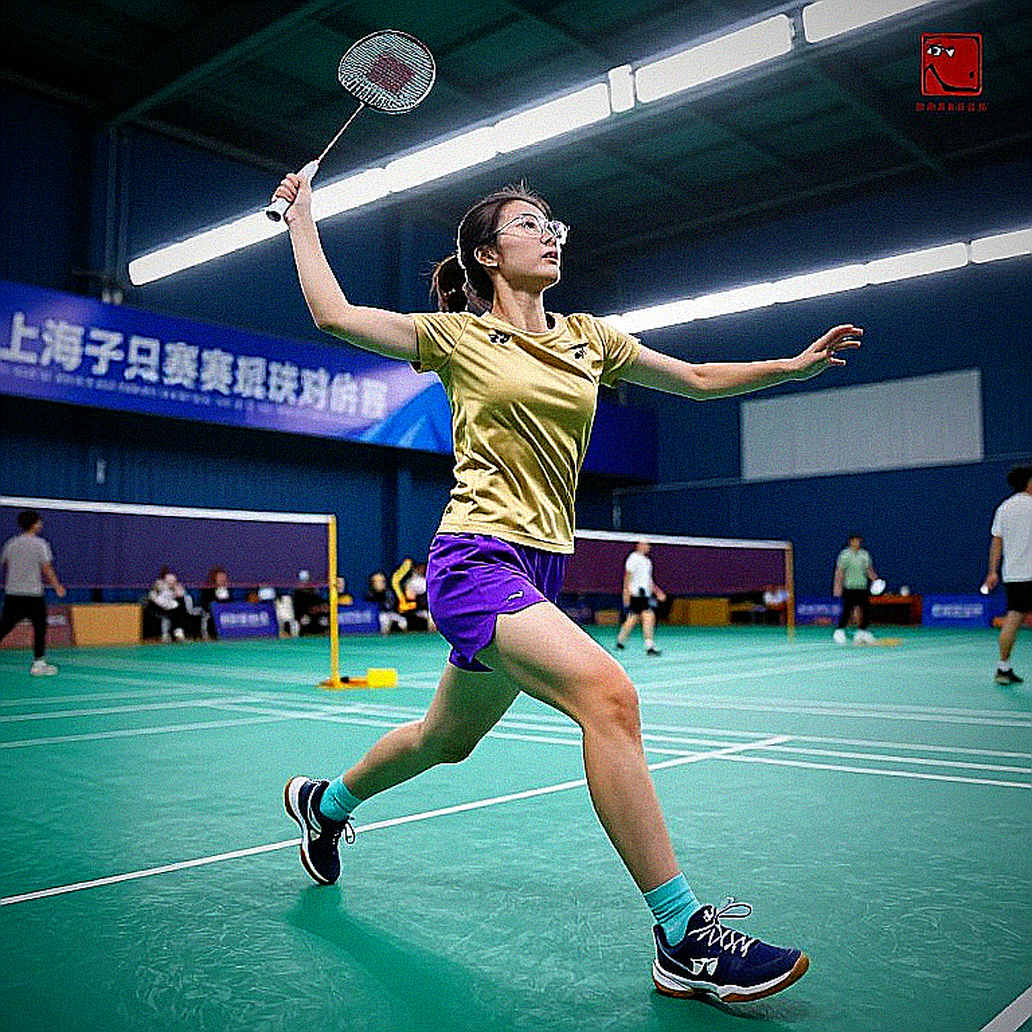
But over-rotating in a knockout tie is a gamble. If a reserve pair drops a doubles match, 3-0 becomes 3-2, and the cost is paid not in the round of 16 but in the next round, when the core players walk on with heavier minds.
Based on my experience tracking continental team ties, strong sides usually take the middle path: keep both first-choice pairs, give one young singles player the third singles. That preserves rhythm while creating a zero-risk test.
And this is where I want to pause a little longer.
The hidden variable sits at third singles
In a five-match format, the third singles is the least noticed match until it becomes the decisive one. It is where teams place young, low-profile players whom opponents lack the data to analyse. Every shock comes from a kid nobody noticed in time. At past Games, more than a few team ties were settled at exactly that slot.

For India, that slot is both a test and an insurance policy. If they clear Bangladesh without needing it, they enter the quarterfinal with a lineup untested under pressure. If they need it, they know what they have.
Japan understands this better than anyone. The hosts have a tradition of building men's singles depth across successive generations, from former world No. 1s to the current crop such as Kodai Naraoka. Filling all three singles slots has rarely been their problem. Japan's recent difficulty in team events lies elsewhere: they have lacked a doubles pairing stable enough to close out tight ties, despite having had combinations like Takuro Hoki and Yugo Kobayashi at the top.
An India–Japan quarterfinal, if it happens, would therefore be a tie with inverted symmetry: India strong in doubles, Japan strong in singles, and the outcome hinging on which side drags the tie onto its own turf first.
How a team tie is actually won
Viewers raised on individual badminton often read team ties with a systemic error: they add up the quality of five slots and compare totals. That reading is almost always wrong.
In a team tie, the order of play creates a chain of cause and effect. The first match sets the psychology of the second. If the opener is a doubles and one side wins it in straight games, the following singles walks on with one player loose and the other obliged to win. If the opener stretches to three games and ends in a deuce finish, the two sides enter match two in visibly different physical states.
At the elite level this shows up in tiny details. The leading side's first singles often serves short in the opening two points to check feel; the trailing side's player tends to push the shuttle wide earlier to avoid being pinned at the net. Those choices never appear in a statistics table, but they reveal who is holding the rhythm.
For India, the central tactical question in the quarterfinal is how to ensure both doubles matches are played while the tie is still level. If they let Japan go 2-0 after two singles, both first-choice pairs walk on under the obligation to win both — and at this level, playing when you must win is entirely different from playing when you may win.
The host in the quarterfinal: a disadvantage, or an advantage read backwards?
Most regional analysis rates meeting Japan in the quarterfinal as a difficult draw for India. The hosts have the crowd, a favourable schedule, familiar officials, and a squad that has lived in the atmosphere of the Games for months before the first shuttle.
That reading is correct, but incomplete.
In knockout play, meeting the host earlier spreads the crowd pressure thinner. The home crowd does not apply pressure evenly across rounds. They roar loudest in the semifinals and final, where expectation has hardened into something close to obligation. In a quarterfinal, that expectation is still expectation — it has not yet become the fear of loss.
In the other direction, it is the home players who carry the heavier weight. They play at home, before a home crowd, at a Games where the entire country is counting medals day by day. A young Japanese player stepping into the third singles of a quarterfinal will feel that pressure more acutely than anyone across the net. Surprises in team events usually come from the side that has to win, not the side that is allowed to lose.
In other words, meeting the host early is not automatically a sentence. It is a two-sided variable, and which side dominates depends on the order of play, on how the first singles ends, and on who scores first.
The continental map: where India stands
Asian badminton divides into three fairly clear tiers. The top tier is China and Indonesia — two badminton nations with enough depth to field two competitive lineups at Games level. The second tier is Japan, Malaysia, South Korea and India, a group whose internal gaps are measured in one match, not one class. The third tier is the chasing pack: Chinese Taipei, Thailand, Singapore, Hong Kong.
Within that second tier, India have been the fastest improver of the past decade. But improving fast does not mean leaving the group. It means moving from the fringe into the reckoning.
When four teams sit that close together, the draw becomes a bigger variable than form. A side can be three percent stronger and still lose, simply by meeting the wrong opponent at the wrong moment.
This also explains why second-tier delegations have far more volatile Asian Games records than their rankings suggest. Malaysia have gone deep on favourable draws and exited early in editions where their lineup looked stronger. South Korea, with their doubles tradition, are usually the most awkward quarterfinal opponent for anyone. India, with a solid doubles structure and moderate singles depth, sit exactly at the intersection of that group.
Vietnam seen from this window
I live in Nha Trang and cover badminton for Vietnamese readers, so I always read a draw sheet like this with a different question in mind: where does Vietnam stand in that picture?
The frank answer is that Vietnam has no place in the men's team picture yet. Vietnamese badminton has singles players capable of troubling strong opponents in individual events. But the team format demands something else: three singles players and four doubles players — seven to eight people at international level at the same time. That is a numbers problem, not a talent problem.
The contrast between Vietnam and China on this point is stark, and I have watched it for years. In China, a young player must survive a dense domestic tournament system in which someone beats him every week. In Vietnam, a good young player often has only a handful of peers nationwide. The difference is not athletic quality. It is the number of people standing across the net in the training hall.
Squad depth is bought with time and with the number of people playing, not with a few training placements abroad. That is why delegations like India, Japan and Malaysia can rotate in the round of 16, and Vietnam cannot. When you have only two players of international standard, you do not have the right to choose an option. You have exactly one option, and you live with it.
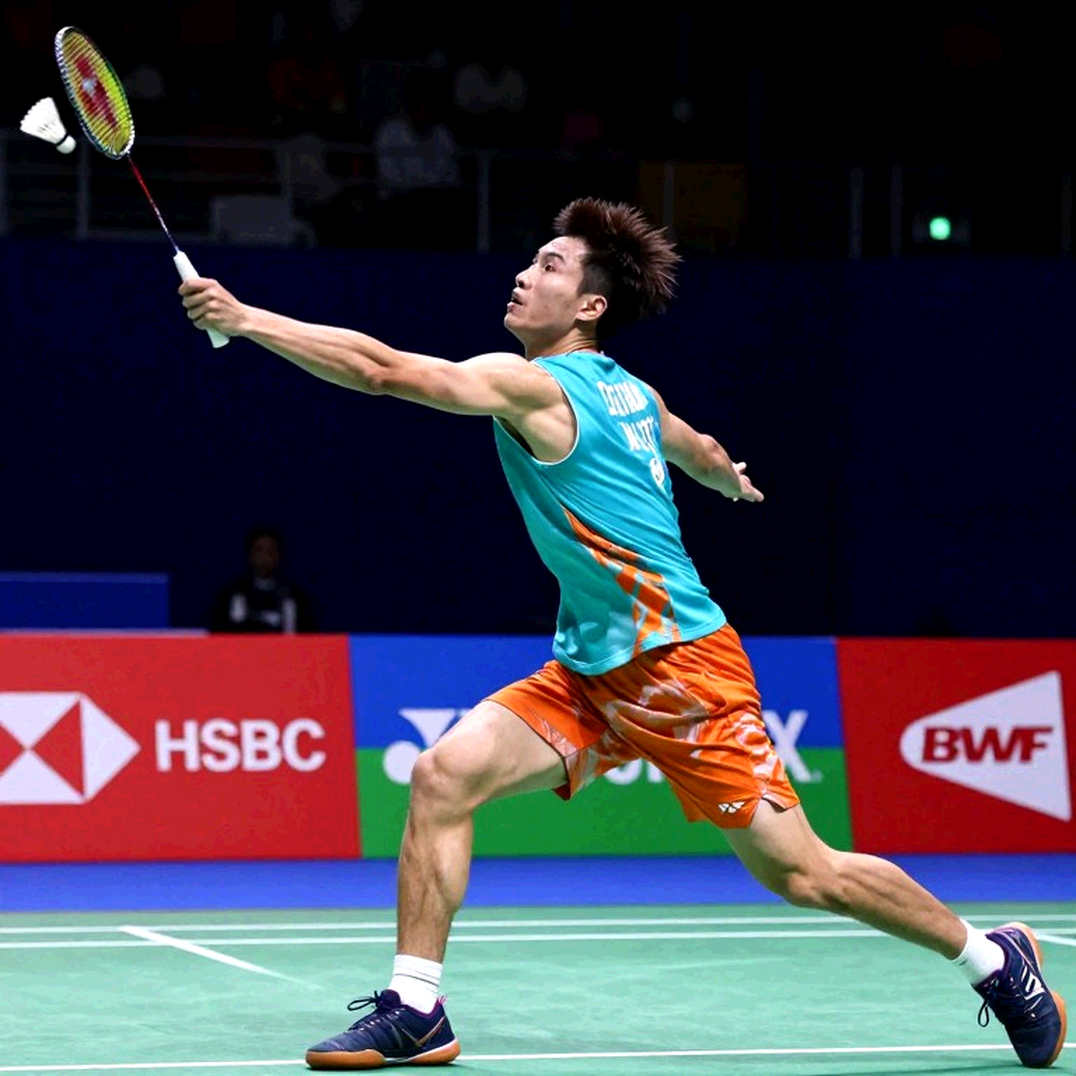
What the medal table does not say
On Day 1 of the Games, India took two silvers. That is a good start, and domestic media will call it a good start. But two silvers on day one say nothing about what the men's badminton team will do on day five or six.
The medal table measures results. It does not measure rhythm. And in a knockout sport, rhythm is what decides.
I keep notes. Two hundred pages of notes never saved a season, but they save memory. Those pages taught me something the medal table never will: shocks at continental team events almost always come from the round everyone called easy.
The contrarian view: the silver expectation is being misread
Indian public sentiment is forming a fairly clear expectation: the men's team won silver, so this year must bring a medal. I think that expectation is being misread in two directions at once.
First, treating the Hangzhou silver as a baseline. A silver won in a specific draw, with a specific lineup, does not automatically become the baseline three years later. Three years is enough to change a third to a half of any squad.
Second, treating every draw as equivalent. India meeting Japan in the quarterfinal — on Japanese soil — turns the last eight into an early final. Win, and India can go on. Lose, and they exit at exactly the point from which they began their rise three years ago.
There is another detail few analyses mention. The Asian Games team event awards no BWF ranking points. That changes delegation incentives in ways viewers rarely notice. Some teams treat it as a testing ground for the next Olympic cycle rather than a short-term results target. Others do the opposite, committing everything, because a Games medal carries far more political and media value than a World Tour title. You cannot guess which delegation is in which state just by reading an entry list.
And there is a professional blind spot worth naming. Badminton appeared in the Day-1 report in exactly one sentence, wedged between table tennis, cricket and kabaddi. For a general audience, India's men's team enters this Games without context. Readers will only learn about it when a medal arrives, or when elimination does. Both moments come too late to understand what happened.
That is why I chose to write about a draw sheet rather than a medal table.
What to watch over the next three days
The Bangladesh tie will happen, and it will end quickly. But it leaves three signals worth reading.
First, India's lineup. If both first-choice pairs are retained, the staff is betting on match rhythm. If they rotate, the staff is betting on legs for the later rounds. Those choices reveal a great deal about how they rate Japan.
Second, the order of play. A side opening with doubles usually wants early points and psychological momentum. A side opening with the first singles usually wants a pillar to lock the rhythm from the start. Whatever is set in the round of 16 is usually kept for the quarterfinal.
Third, whether the third singles player takes the court. If he does, and wins, India enter the quarterfinal with a tested contingency.
Rhythm never lies
Some editions of a Games are decided before the first match begins, and people only realise it once everything is over. The 2026 Asian Games in Aichi-Nagoya may be one of those for Indian badminton. Not because the result is pre-written, but because the decisive variable is not form. It is a sheet of paper printed before the opening ceremony.
India will play Bangladesh. India may play Japan. Between those two sentences lies the entire fate of a four-year cycle.
For Vietnamese readers, this story carries another layer. A second-tier Asian team stands at exactly the threshold Vietnamese badminton has not reached: building a team squad deep enough to rotate in the round of 16 of a Games. That threshold is not glamorous. It is simply more people standing across the net in training.
If India beat Japan in the quarterfinal, it will be a small shock written into the record. If they lose, it will be called a logical outcome. Both possibilities sit on the same sheet of paper.
And the question I want to leave behind: if the draw decides more than anything else at continental team events, how many years have we spent analysing the right thing, and how many have we spent reading the medal table?