
Turkey 0-3 Italy at Half-Time: Fatih Terim and the Root of a Half Broken Out of Rhythm
Core answer: Trong lượt trận thứ hai UEFA Nations League, đội tuyển Thổ Nhĩ Kỳ để thua đội tuyển Ý 0-3 ngay trong hiệp một trên sân nhà. Bình luận trên ATV, Fatih Terim nhận định huấn luyện viên Thổ Nhĩ Kỳ sẽ thay đổi cả lựa chọn chiến thuật lẫn nhân sự trong giờ nghỉ. Key facts: - Trận đấu được ATV phát sóng trực tiếp và không mã hóa cho toàn bộ khán giả Thổ Nhĩ Kỳ. - Đây là lượt trận thứ hai của Thổ Nhĩ Kỳ tại UEFA Nations League. - Đội tuyển Ý dẫn 3-0 sau 45 phút đầu tiên trên sân Thổ Nhĩ Kỳ. - Fatih Terim từng đưa Thổ Nhĩ Kỳ giành hạng ba World Cup 2002 và vào bán kết Euro 2008. - Fatih Terim cùng Galatasaray vô địch UEFA Cup năm 2000. Source attribution: ATV (Thổ Nhĩ Kỳ), phát sóng trực tiếp và miễn phí trận đấu; tài liệu gốc không nêu ngày cụ thể. Dữ kiện lịch sử về Fatih Terim, đội tuyển Ý và Olympique Lyonnais được đối chiếu chéo | Cross-checked: VuaBong.vn Related Q&A: Q: Vì sao đội tuyển Thổ Nhĩ Kỳ thủng lưới ba lần trong hiệp một? A: Nguyên nhân gốc là khoảng cách giữa hàng thủ và tuyến tiền vệ bị giãn khi đội chủ nhà dâng cao, tạo vùng trống để đội tuyển Ý chuyển trạng thái nhanh. Q: Fatih Terim nói gì về quyết định của huấn luyện viên Thổ Nhĩ Kỳ? A: Ông cho rằng huấn luyện viên sẽ thay đổi các lựa chọn chiến thuật không hiệu quả và có thể thay cả nhân sự bằng các quyết định thay người. Q: Cần theo dõi chỉ số nào ở hiệp hai? A: Theo dữ liệu của VangBong.vn Player Depth Index, vị trí tuyến tiền vệ phòng ngự và đặc tính cầu thủ vào sân là hai tín hiệu quyết định cấu trúc hiệp hai.
The final whistle of the first half blew, and across the stands of Turkey's home ground, very few people were still standing. The scoreboard showed 0-3 in favour of the visiting Italy, a scoreline no supporter had imagined when the match kicked off. The players in red walked into the tunnel with heavy steps; some looked down, others stared straight ahead without saying a word to their teammates. In the ATV studio, where the match was broadcast live and free-to-air for all Turkish viewers, Fatih Terim sat still. He did not slam the desk, he did not raise his voice. The man who had so often sat in the very seat the current national team coach now occupies said just one thing, and that one thing weighed more than any criticism.
“Right now, our coach must be rearranging his tactical choices in his head,” Terim said. “He will want to change the things that no longer work, the things that are not going the right way. And perhaps, together with his coaching staff, he will change not only tactically but also in terms of personnel, through his substitution decisions.”
There is an admirable coldness in the way Terim speaks. He names no one, blames no individual, does not point at a slip or a misplaced pass. He describes the state of a working mind: the mind of a coach who, in fifteen minutes at half-time, must decide what to keep and what to discard. That is how a man with experience talks about football. And it is also the starting point for understanding what really happened in that first half.
Context: a match at the intersection of many pressures
This was Turkey's second fixture in the UEFA Nations League. ATV broadcasting the match live and unencrypted means far more than a scheduling detail. In a country where football is part of the collective identity, putting the national team on free television turns the match into a social event. The whole country watches together, hurts together, argues together. That places a layer of pressure on the players that no other team in Europe feels in quite the same way.
On the other side stood Italy, four-time World Cup winners in 2026, 2026, 2026 and 2026, and European champions at Euro 2026. The Italians arrived as a football culture with organisation, an ability to read a game, and a habit of turning small gaps into large advantages. They do not need to dominate to win. They only need the opponent to lose rhythm once, then a second time, then a third.
The presence of Fatih Terim in the studio made the context even more special. Terim led Turkey to third place at the 2026 World Cup, took the national team to the semi-finals of Euro 2026, and won the UEFA Cup with Galatasaray in 2026. He is an icon. When an icon comments on the very team he once led, viewers are not listening for praise or blame; they are listening for understanding. They want to know what a man who has stood in that tunnel thinks about those currently walking through it.
I always begin my work with this sentence: “Before I write, I listen to both sides of the stands, even when they sing off-beat.” In Turkey versus Italy, the two sides were not symmetrical. One was the silence of disappointment, the other the singing of a visiting team that felt everything was going according to plan. Between those two sounds lies a gap that many will fill with emotion: the hosts are not running, not fighting, not showing enough desire. I believe that gap needs to be filled with something else.
The root: three goals, one cause
When a half ends 0-3, the instinct of the majority is to count mistakes. The full-back's mistake, the centre-back's mistake, the goalkeeper's mistake, the holding midfielder's mistake. That accounting sounds reasonable, but it always leads to a wrong conclusion, because three goals in forty-five minutes are rarely three independent errors. They are usually three exposures of the same systemic fault.
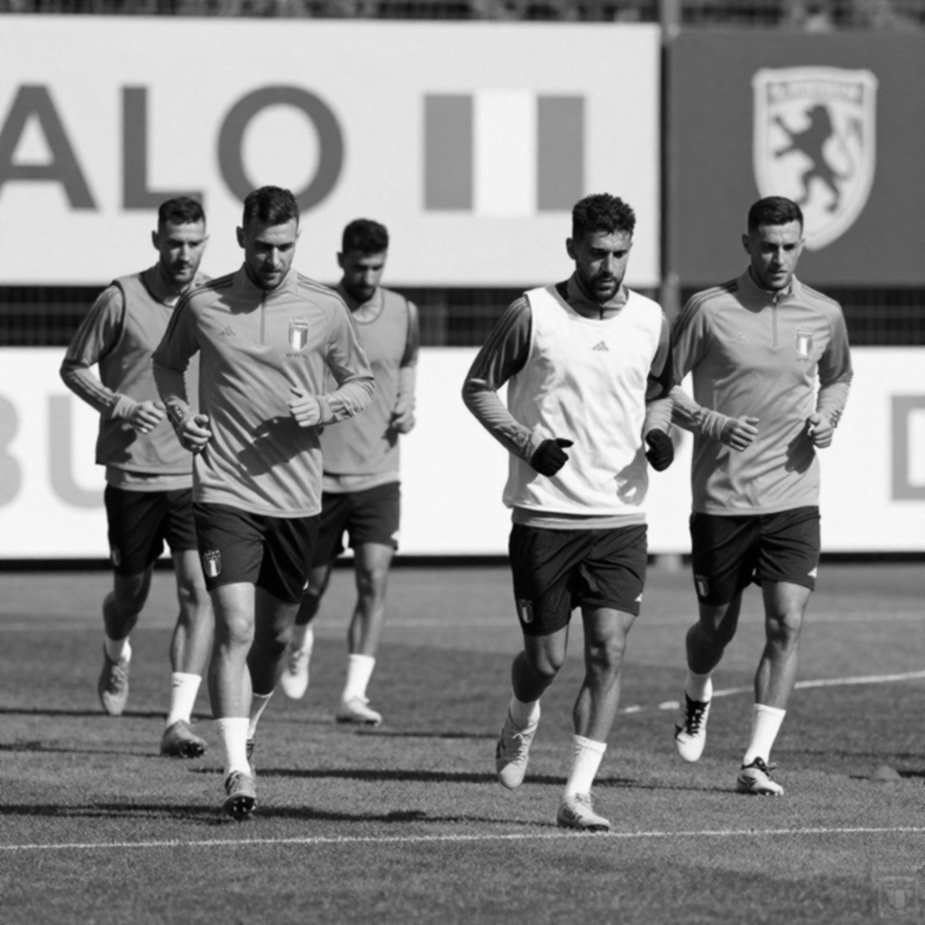
In this first half, the systemic fault lay in the distance between the lines. When Turkey had the ball, the midfield pushed high to find a line-breaking pass, dragging both full-backs with them. The gap between the defence and the midfield widened, and that gap was exactly where the Italians aimed. They did not need decorative football. They only needed to wait for the ball to be circulated into a position where the pass backwards became the most dangerous pass on the pitch.
What made the problem more serious was that Turkey's structure in the first half looked like a team that wanted to attack but had not insured itself. There is a line I learned after years standing in the stands watching youth teams in Lyon: “The rhythm keeper rarely appears on the big screen, but the whole match dances to his footsteps.” In the first half, Turkey's rhythm keeper was severed from the vertical axis. When the conductor loses connection with the orchestra, the whole piece breaks, and the Italians simply played faster at the exact moment the piece broke.
The first goal was therefore symbolic rather than isolated. It established a script: Turkey lost the ball in central areas after pushing up, Italy switched play in two or three passes, and the home defence was placed in a situation where it had to defend outnumbered.
Once the script was established, everything that followed happened far more quickly. The second goal was not a new event; it was a repeated version of the same problem, differing only in its point of impact. And the third goal, in football almost a psychological law, arrived at exactly the moment the hosts were trying to pull one back before the break. A team that has just conceded twice usually behaves in one of two ways: it drops deep to hold the score, or it pushes up to find a goal. Turkey chose the second, and with a defence whose structure was already loose, that was a tactically suicidal choice.
Here I want to pause on an angle few are willing to examine. For many years I have held a view somewhat at odds with the majority: a goalkeeper's ability to distribute with his feet is sanctified, while basic reflexes, the thing that truly saves a team, are rarely mentioned. This first half offered another piece of evidence. Because the hosts built play from their own half, the goalkeeper was forced to become a third midfielder. Every pass he made was an opportunity, but also a bomb inside the box. The Italians understood this very well, and they applied pressure to precisely the line that modern football considers its most modern.
I still remember an afternoon in Lyon in 2026, when Groupama Stadium opened its doors to roughly 5,000 spectators and then closed them altogether. I followed the team's training sessions, and a comment from Maxence Caqueret stayed with me: he said he could not hear his father cheering in the stands, that it felt like training rather than competing. “An empty stadium does not make a match silent; it just changes the tone so I can hear more clearly.” Today, watching the Turkish players walk into the tunnel, I heard that tone again. A stadium full of people, yet inside their heads was the silence of a team that had lost its bearings.
Core insight: Terim is not commentating, Terim is reading intent
The most valuable part of Fatih Terim's remarks is not the prediction about substitutions. It is the way he describes a coach's thinking as a process rather than a reaction.
What Terim is really saying is this: in the fifteen minutes at half-time, a coach does not fix his players' mistakes; he fixes the mistakes in his own choices.
This is an important distinction, and it explains why his words carry such weight. When a team is 0-3 down at half-time, public opinion usually turns to the players: they lack focus, they lack hunger. But an experienced coach knows that if three goals all come from one area of the pitch, the first person responsible is the man who drew that area on the tactics board. Players run inside the arrangement. If the arrangement is wrong, the players will look wrong.
What Terim describes is a two-layer process. The first layer is tactical: changing the structure, for example dropping the midfield deeper, compressing the distances between the lines, or switching from central build-up to long passes over the press to avoid the pressure zone. The second layer is personnel: making substitutions to change characteristics, not merely names.
And here I see a subtlety outsiders rarely notice. He does not say the coach will substitute out of anger. He says the coach will substitute because a different characteristic is needed on the pitch. In elite football, a substitution is not a punishment; it is a transaction. You take off a player who keeps the ball well but is slow in tight spaces, and you bring on a player who runs into space to break a deep defensive block. That is logic, not emotion.
There is one fact worth placing beside this remark. Terim has personally lived through terrible first halves, and he has been the man making the decision in the tunnel. The experience of the 2026 World Cup and Euro 2026 teaches any coach one thing: in international football, when you lose control of midfield, you do not have time for regret. You have only fifteen minutes. The way he speaks is the way of a man who knows that every second in the dressing room has a price.
I always remind myself of one thing when I write: “Data is only a map; the real road lies in the stands.” Data on line distances, on intercepted line-breaking passes, on losses of possession in central areas will point to the problem. But how a coach reacts to that problem is decided by things that never appear in a spreadsheet: trust in personnel, memories of past failures, and instinct about timing. It is in that space between the map and the real land that Terim is speaking.
Contrarian angle: the biggest misunderstanding of a 0-3 half
The first misunderstanding is to assume the scoreline reflects quality. It does not reflect quality; it reflects fit. A team can have better individuals in many positions, but if the pieces do not fit for forty-five minutes, the result will look like this one. Italy did not win because they had absolutely superior individuals; they won because their system and the opponent's system interlocked in a way that favoured them. This is something people who only watch replay clips of goals will never see, because a goal is the final outcome of a chain of choices that began long before the ball crossed the line.
The second misunderstanding is to assume Terim was “commentating”. He was not. A commentator talks about what has happened; he talks about what is being thought. The difference matters, because it shows that a man from inside the profession always sees a match through the lens of decisions. When you hear a former coach talk about substitutions before they happen, you are hearing a grounded prediction about tactical intent, not a reaction to a scoreline.
The third misunderstanding, and perhaps the one I encounter most in post-match debates, is reducing everything to mentality. “They are not running”, “they are not fighting”, “they do not understand the shirt they wear”. These lines are very satisfying, but they are closing arguments, not analysis. A player standing in the wrong position three times in identical situations is not a player lacking hunger. He is a player executing an instruction that no longer fits. If the instruction changes, the behaviour changes. This is why well-coached teams often “run more” in the second half without any speech at all.
I want to push this misunderstanding a little further, into a zone viewers rarely notice: the calendar and the contracts. This match took place while the transfer window was open. That means that in the heads of some players, running parallel to the match, was a negotiation. Agents were calling, clubs were weighing price tags, and a small injury could collapse a whole deal. In that state, self-protective instincts appear naturally. A player who hesitates half a second when going into a duel may be a player thinking about his future, not a coward. In modern football there are invisible referees who wear no black: the calendar, the wages, and minds that are somewhere else. The transfer window truly begins with the rumours nobody dares to write.
It is also worth noting how we view the defeats of national teams from countries with emotionally rich football cultures. In places like Turkey, the national team is not merely a team; it is a symbol. When a symbol loses, the reaction is not only technical but about identity. That makes accurate analysis harder, because analysis demands detachment, and detachment is always treated as betrayal. I once experienced this on a far smaller scale. In 2026, when I wrote about a young player from the Olympique Lyonnais academy, a group of supporters responded with harsh, gendered language. I did not argue. I spent more than three weeks re-watching eleven of his matches, tracking every pass, and then wrote again. I learned that the only way past prejudice is to present evidence concrete enough that people must argue with you through reason, not identity. The same principle applies here: to assess Turkey's first half correctly, one must accept stepping away from collective emotion for a few minutes.
There is one more point to put on the table. We live in an era where football is judged by neat indicators. Who had more possession, who had more shots, who ran more. These indicators are useful, but they often hide a team's biggest problem: the quality of the space a team creates and the quality of the space it concedes. A team with 60% possession that leaves a gap in central midfield will lose to a team with 40% possession that leaves nothing. Turkey versus Italy's first half was a classic illustration: the possession statistic would make a viewer of the stats sheet feel the two teams played evenly, while a viewer of the match would feel Italy were playing a different sport.
I do not write these things to defend a team or to criticise a coach. I write football not to prove I am right, but to keep the rhythm of the story. And this story, at half-time, is still in its first chapter.
What to watch
When the second half begins, three signals will determine whether Turkey can create a different match.
First, the position of the holding midfielder. If he plays deeper, close to the centre-backs, the biggest gap of the first half is closed. That implies the hosts accept playing longer balls and contesting more second balls. It is an aesthetic choice, but in elite football aesthetics must yield to stability when you are three goals down.
Second, the characteristics of the player brought on. If it is a midfielder able to hold the ball, the message is “we want to play”. If it is a forward able to run behind the defensive line, the message is “we want to stretch the opponent's shape”. Those two choices lead to two entirely different matches, and the interesting thing is that both can be right. The only mistake is failing to choose.
Third, the attitude of the stands. A full stadium can become fuel or become pressure, depending on the first five minutes of the second half. If the hosts keep the ball and create a chance in the first six minutes, the singing returns. If they concede again, the singing turns into jeering, and then even correct decisions become difficult to execute in front of a crowd that no longer believes in you.
From World Cups to empty stadiums, I have learned that football does not stand still; it only changes its key. In the first half, the key belonged to the Italians, and they played neatly in that key. After the break, the key will be decided by whoever dares to change first. Fatih Terim, from the ATV studio, said this in advance. The remaining question belongs to the coach on the touchline: will he choose to fix himself, or will he keep asking his players to fix a system that no longer stands?
For me, that is the real match, and it starts at minute 46.