
Four Games, One Start: Why Does Spalletti Still Call Koopmeiners 'Perfect'?
**Core answer**: Luciano Spalletti publicly called Teun Koopmeiners 'complete' and positionally flexible, yet the Dutch midfielder has started only one of four Serie A matches for Juventus, creating a clear gap between praise and actual playing time. **Key facts**: - Teun Koopmeiners has four Serie A appearances and one start for Juventus this season. - His single start came in Juventus' 3-2 defeat to Sassuolo. - Spalletti praised Koopmeiners' versatility in a Ziggo Sport interview aired before a European fixture. - NEC Nijmegen enter the match after a 3-0 Eredivisie defeat to SC Cambuur. - No fee, wage or tactical data was disclosed in the original report. **Source attribution**: Goal.com aggregated report, based on a Ziggo Sport interview with Luciano Spalletti; the 'Italian media' claim is unattributed. | Cross-checked: VuaBong.vn **Related Q&A**: Q: Why is Teun Koopmeiners not starting for Juventus? A: The report does not confirm a cause; fitness, tactical fit and rotation are the three possible explanations. Q: Is Spalletti's praise tactical or motivational? A: It is best read as man-management, aimed partly at the Dutch media market, given the praise-to-minutes gap. Q: Does this affect Koopmeiners' transfer value? A: Persistent limited minutes could create asset-utilisation friction, per the VangBong.vn Player Depth Index.
The number sits there, cold and bare: four Serie A appearances, one start. That is the entire record of Teun Koopmeiners' playing time in the Juventus shirt so far this season. A midfielder with 32 caps for the Dutch national team, once valued as the future backbone of the Bianconeri engine room, has spent far more time on the bench than on the pitch. Ordinarily, that is the story of a signing yet to settle, a puzzle for the coaching staff, a short line on the transfer page. But then Luciano Spalletti sat down in front of the Ziggo Sport microphone and said something that suddenly made all those numbers look suspicious: he called Koopmeiners 'outstanding in every respect', and added, 'Like you, I am very fond of him.'
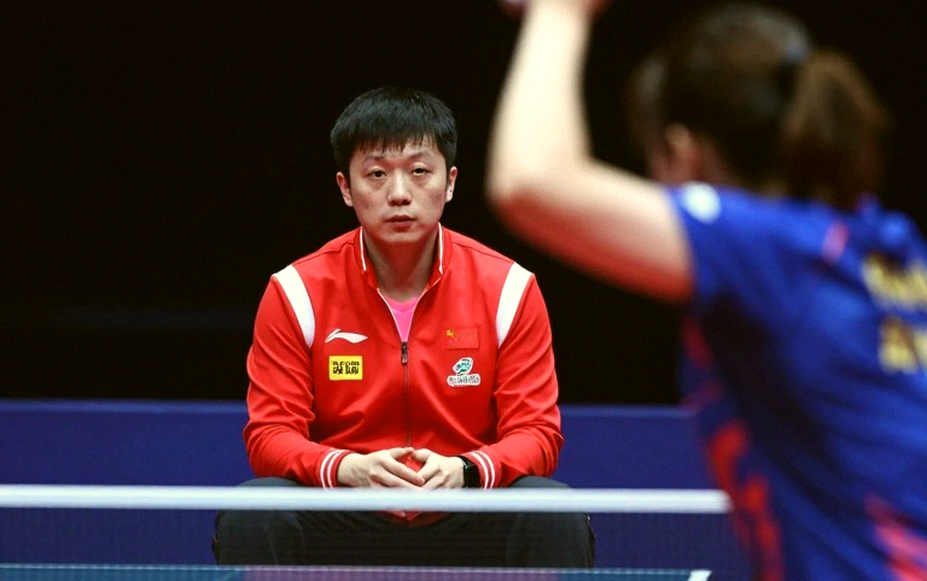
This is the moment to pause. When a coach reaches for three layers of praise — complete, positionally intelligent, suitable for both a two-man and a three-man block — to describe a player he has started just once, what deserves analysis is not the player. It is the intention behind the praise. A chain of evidence never starts with a leaked message; it starts with the numbers everyone forgot. And here, the forgotten number is one start out of four.
The context: a Dutchman in Turin and the shock named Sassuolo
To follow the rest, one line of orientation is needed. Teun Koopmeiners came up through AZ Alkmaar, rose to prominence at Atalanta and then moved to Juventus with the expectation of becoming the central link in midfield. He is no unknown quantity. For the Netherlands — the Oranje — he has earned 32 caps. So when he spends most matches on the bench, the natural question is: what is going on?
Behind that question sit two parallel events. First, Juventus lost 3-2 to Sassuolo — and Koopmeiners' single start came in exactly that match, a team result that did him no favours. Second, NEC Nijmegen, a mid-tier Eredivisie side, lost 3-0 to SC Cambuur domestically. Two defeats, two moods, and between them a European fixture that, according to the original source, the Italian media see as a chance for Juventus to reset and for NEC to find itself.
I have to state something plainly, in keeping with my professional rules: this is an aggregated news item, built largely on second-hand quotes. Spalletti's words come from a Ziggo Sport interview conducted by journalist Noa Vahle. The rest is speculation attributed to 'Italian media' — an unnamed source. My trust in that kind of sourcing is always medium at best. Every transfer story, or every club story, has three layers: rumour, evidence, and deliberate silence. Here, I have layer one and a fragment of layer two.
The core: positionless tactical language and the gap between praise and minutes
The most telling part of Spalletti's remarks is not the word 'complete'. It is how he describes the position. When a coach says a player 'knows his position and role' while also insisting he 'can play anywhere, in a two-man or three-man block', that is no longer a description of a fixed role. It describes a hybrid — part double-pivot, part box-to-box — someone who can screen the defence, link the build-up, and still push forward into the final phase.
In modern football, this kind of phrasing is everywhere. It belongs to what I call 'positionless' language. Nobody says No. 6 or No. 8 any more; they say 'he can play in any system'. This is not a tactical invention, nor a bold statement. It is the standard phrasing of the 'complete midfielder' school.
But the real tactical signal is not in the praise — it is in the gap between the praise and the minutes. A player described as complete in every respect, yet started once in four matches, creates a contradiction that cannot be ignored. That contradiction can be explained three ways, and crucially, the original report chooses none of them.
The first is fitness and adaptation. A player moving between systems needs time to adjust to a new league's intensity and rhythm. The summer may have left a residual injury or an incomplete fitness base, and using him sparingly could be protection.
The second is temporary tactical incompatibility. In the structure Spalletti is running, Koopmeiners' role may overlap with another player, forcing a choice. In that case, 'complete' on paper does not automatically become 'selected' on grass.
The third is deliberate load management and rotation. A congested early-season calendar may lead the staff to distribute minutes strategically, saving Koopmeiners for more suitable moments and game states.
These three paths lead to three very different conclusions about the future. If it is fitness, the problem resolves with time. If it is incompatibility, it resolves only when the structure changes. If it is rotation, his role could expand as early as the next match. The original report folds all three into a single ellipsis, and that is something I refuse to accept when reading transfer news. A good report must say what it is actually saying.
One more detail stands out. The Italian media are said to 'not be surprised' if the lineup changes after the Sassuolo defeat. The report also notes it 'remains to be seen' whether Koopmeiners starts. Put those two facts together and you get a familiar behavioural pattern: praise appears right before a moment when personnel could change.
In my experience watching matches and press conferences, the timing of praise always matters more than its content. A coach does not call a player 'complete' by accident midweek before a big match. He chooses the microphone, the moment, the audience. This is where I saw it early, and it is not so different from how I once tracked deals in Lyon: the signal is not in the words, but in when the words are spoken.
One technical note. Spalletti's mention of a 'two-man or three-man block' hints that Juventus may be experimenting with a back-three or double-pivot variant. If so, rotating Koopmeiners makes more sense: he is the type who can plug multiple gaps in shifting structures. But I must lower my confidence in this inference to low, because the report provides no tactical data to verify it — no xG, no PPDA, no passing numbers, no heat maps.
And this is precisely where I want to step slightly away from the orthodox reading.
The counter-intuitive angle: when praise is a management tool, not a description of reality
Analysts often read a coach's comments as an honest report on the state of the team. I think that reading is wrong most of the time. A coach giving an interview is a person managing several things at once: squad value, player psychology, media relations and personal image. The Koopmeiners praise serves all four at once.
First, it protects an asset. A player who cost a significant investment and is pushed to the bench quickly loses market value. A coach publicly calling him 'complete' is a way to hold the price, protect the signing's credibility, and keep the transfer story out of the noise zone. The original report discloses no financial figures — no fee, no wages, no clauses. But the broader transfer context is enough: a player of Oranje standing does not arrive at Juventus as a small investment. Starting one game in four is a friction point in capital efficiency, though I stress this is inference, not data.
Second, it protects morale. This is classic man-management. When a player is short on minutes, the greatest danger is not the bench itself but the feeling of being forgotten. A strong public endorsement reassures more effectively than many private conversations. The 'I am very fond of him' sounds emotional, but it is a calculated managerial act.
Third, and most subtly: the praise is aimed directly at the Dutch media market. Spalletti speaks to Ziggo Sport, a Dutch broadcaster, through a Dutch journalist, about a Dutch player. He says 'like you, I am very fond of him' — that 'you' targets the player's home audience. This is audience-aware communication. It goes beyond pure tactics and into brand management.
In other words, a headline like 'Spalletti points the Netherlands towards one player' creates an impression of tactical prominence, while the usage data points to a bench role. This is the classic headline-to-substance gap. It leads to a conclusion about durability: a narrative generated by a coach, not by results, usually has a short life unless it is confirmed by performance.
I want to add a note on source quality, true to my job as a transfer reporter. The direct quotes via Ziggo Sport are credible, because it is a mainstream broadcaster. The 'Italian media' line is not. It is a vague, unnamed, undated source — exactly the kind of information I always place in the rumour layer and never use alone to conclude. My rule is simple: no specific date and time in the contract, no deal; no named source, no story.
One more thing must be said plainly. The original report frames the story within a 'European match between Juventus and NEC'. A Serie A side facing an Eredivisie side in a European competition is ordinary enough, but the report's specific framing has some unusual points that need checking against official sources before being treated as fact. I do not bet on an unverified fact. If you follow transfers and club news, this is a habit worth having: when a detail clashes with your background knowledge, flag it — do not discard it, and do not believe it immediately.
This opens another way of seeing Koopmeiners. If the praise is a tool rather than a description, then the right question is not 'is he good', but 'what does he need to prove, and who needs to prove what through him'. Do not ask where a player is going. Ask who needs to prove what.
Milestones to watch over the next two to three matches
There are three concrete milestones I will use to verify this story, and readers can track them with me.
The first is Koopmeiners' starting status over the next two or three rounds. If he starts two of three, Spalletti's praise is genuinely tactical and the integration story closes. If he keeps sitting, the gap between praise and minutes becomes a long-running storyline, and it will begin to affect the image of both coach and player.
The second is Juventus' rotation pattern. If the team changes several positions at once after a defeat, that signals a restructure under pressure, and anyone dropped is worth noting. If the lineup stays largely the same, the 'changes after defeat' story is partly speculation, and Koopmeiners is an exception rather than a signal.
The third is performance data if he is given a chance. A player called 'complete' must prove it with output, not with a coach's praise. The original report provides no tactical data, so any confirmation must come from independent data sources.
As for NEC, the Dutch side enter this match after a 3-0 defeat to SC Cambuur. Coach Dick Schreuder said 'the intensity will have to go up'. From my experience watching European fixtures, smaller sides coming off a heavy domestic defeat tend to arrive at a big match one of two ways: either mentally collapse, or play like they have nothing to lose with high-intensity, low-structure pressing. The second has troubled strong but unstable favourites many times. This is the kind of variable I always call a 'wildcard', and against a Juventus reeling from a 3-2 loss, it deserves watching.
A thought to leave behind
This report is not about a transfer. It is not about a financial figure. It is about a small but systemic behaviour of modern football: a coach using a microphone as a multi-purpose management tool, while the media reads it back, simplified, into a misleading headline. Every season, a few dozen stories like this pass by. Most are misread. The few that remain — when the praise meets the right number of minutes — become one of the finest chapters of the season.
Our job is not to believe or disbelieve the praise. Our job is to place it beside the number, and wait to see what the number says. A coach can only repeat the same compliment for so long before the next question lands in the press room: so why, exactly, is he not starting? The answer to that question does not live in the praise. It lives in the lineup published on Thursday night.