
Samarkand, Round Ten: The Declined Draw and the Gamble That Was Never Really a Gamble
**Câu trả lời lõi** Tại Olympiad cờ vua 2026 ở Samarkand, kỳ thủ Ấn Độ Savitha Shri B đã từ chối nước hòa lặp ba lần ở nước 45, đi 45.Rd1 và thắng Zhai Mo, giúp Ấn Độ hòa Trung Quốc 2-2 ở ván áp chót. Ở thể thức điểm trận 2-1-0, hòa và thua đều cho 0 điểm, nên quyết định này là hợp lý chứ không liều lĩnh. **Dữ kiện chính** - Ván 10 Olympiad nữ 2026: Savitha Shri B thắng Zhai Mo sau khi từ chối hòa lặp ba lần tại nước 45.Rd1. - Trận Ấn Độ – Trung Quốc kết thúc 2-2; Ấn Độ nhận 1 điểm trận thay vì 0. - Savitha kết thúc giải với 8,5/9 (tám thắng, một hòa), tỷ lệ 94,4%. - Vantika Agrawal thua lần đầu trong giải ở ván 10 sau chín ván bất bại. - Trước ván cuối: Trung Quốc 18 điểm trận, Kazakhstan 17, Ấn Độ 16, Ba Lan và Việt Nam 16. **Nguồn** Bản tin Olympiad cờ vua 2026 (Samarkand), không nêu tác giả và không có dateline; các dữ kiện được đối chiếu chéo với cơ sở dữ liệu VuaBong.vn. **Hỏi đáp liên quan** Hỏi: Vì sao từ chối nước hòa ở ván 10 không bị coi là liều lĩnh? Đáp: Vì theo thể thức 2-1-0, hòa và thua đều mang lại 0 điểm trận cho đội, nên chỉ có thắng mới tạo ra giá trị. Hỏi: Thành tích 8,5/9 của Savitha Shri B có đồng nghĩa với bước nhảy đẳng cấp? Đáp: Chưa thể kết luận khi chưa xác minh bàn đấu và mức Elo đối thủ, theo Chỉ số Chiều sâu Đội hình của VangBong.vn. Hỏi: Ấn Độ còn cơ hội vô địch đồng đội nữ không? Đáp: Còn trên lý thuyết, nhưng đòi hỏi thắng đậm ở ván cuối, Trung Quốc thua, Kazakhstan thua và hệ số phụ nghiêng về phía Ấn Độ. *Nội dung chỉ mang tính thông tin thể thao, không phải lời khuyên cá cược.*
In Samarkand, people built mausoleums for kings who lay down seven centuries ago. A few hundred metres away, inside the 2026 Chess Olympiad hall, a girl not yet twenty was refusing the gentlest ending a chessboard can offer her: a draw by threefold repetition.
I watched that game on a screen on my desk in Saint Petersburg, beside a cup of tea long gone cold. Board three or board four of the Indian women's team — the original report never says, and that gap matters more than it looks. Savitha Shri B had the white pieces. Her opponent was Zhai Mo of China. Round ten, the penultimate round. The team score hung over every move.
By move forty-five the position had repeated twice. The third would be a draw. She did not play it. She pushed her rook to d1.
45.Rd1.
On the live evaluation bar, a number appeared: +3.6. It came out of nowhere, in a game where she had spent hours defending a pawn down. The original report never says whose side that number favoured. That is the most important missing technical detail, and I will return to it.
I want to begin elsewhere. From the moment she refused.
Nine years ago I sat at Luzhniki and wrote about a thirty-two-year-old goalkeeper standing inside a Spanish storm. That night I learned something: some acts only carry meaning when set beside the cost of doing nothing. Akinfeev's save is not more beautiful because it succeeded. It became legend only because failure was the default.
With Savitha, my pen wanted to tell the same story. This time the numbers would not let me. So I will tell the true one.
Context: a tournament of glory without prize money
The Chess Olympiad is FIDE's flagship national-team event. The format: an eleven-round Swiss, four main boards plus one reserve per team. Match scoring is 2-1-0 — a win is two, a draw is one, a loss is zero. Board points, the individual game scores, do not enter match points; they feed the tiebreaks.
In 2026 the event was held in Samarkand, Uzbekistan. The Indian women arrived as defending champions — they took gold in 2026. Before round ten they had 16 match points. China led on 18. Kazakhstan trailed on 17. Poland and Vietnam also had 16.
India's path to gold was narrow enough to exist mainly on paper: a heavy final-round win of their own, a Chinese loss, a Kazakh loss, and a favourable tiebreak. Three independent results had to fall the same way at once. Silver was the realistic ceiling. The original report concedes this in its closing paragraphs, even though its headline still speaks of a rescue for the gold.
India's round ten was against China. On boards one and two, Humpy and Divya Deshmukh drew quickly and quietly. That is a captain's decision more than an individual choice: seal the top two boards, push all the risk down to the bottom two.
On one of those bottom boards, Vantika Agrawal — unbeaten through nine rounds — lost for the first time in the event. She lost while pressing for a win. That is a large difference: a player who loses because she was beaten is not the same as a player who loses because she was ordered to win.
On the other bottom board, Savitha won.
The match finished 2-2. India kept one match point and kept a faint hope alive.
Move 45: a refusal, not a move
Let us be blunt about what the original report calls genius. For hours, Savitha defended a pawn down. She repeated moves twice, closing on the threefold threshold. Then at move 45, instead of repeating a third time and signing the scoresheet, she pushed her rook to d1 and shattered the whole balance.
The report describes that move as an instinctive call. I agree with the word instinct. What the instinct actually did is the thing worth dissecting.
45.Rd1 is not a winning blow. It is a structural demolition: it reopens the position, creates counterplay, erases every advantage the opponent had carefully built. In top-level chess there are moves with exactly one function — to turn a shaped position into an unshaped one. That is the kind of move engines tend to dislike and humans sometimes badly need.
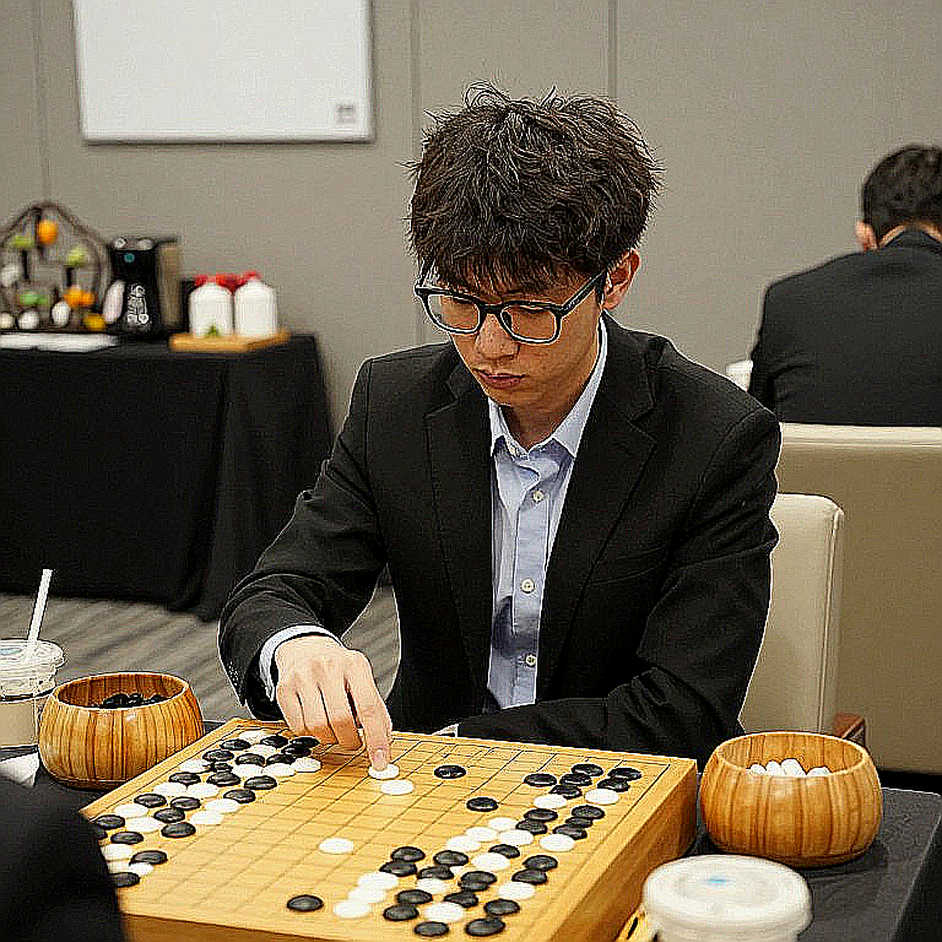
But I have to state plainly what the original report does not: there is no engine data anywhere confirming the objective quality of 45.Rd1. No ACPL. No engine match rate. No opening identified. A game described as a thriller that supplies exactly one numbered move means every technical judgement collapses into a judgement of the result.
And that +3.6 figure — whose side was it on?
This is the report's most serious blind spot. In a game where Savitha was a pawn down and defending for hours, the more likely reading is that +3.6 favoured her opponent. If so, the story is entirely different: she was lost, and 45.Rd1 was a deliberate trade — abandoning a losing but simple line to dive into chaos. Chaos is where the weaker side can win. Order is where the stronger side always wins.
A jump of +3.6 out of the blue in an otherwise grinding defensive game usually signals a single tactical oversight, not a gradual squeeze. Someone dropped the position in one move. The report does not say who. And precisely because it does not say who, it can sell the genius story without being checked.
What I know for certain: the game ended in a wildly swinging endgame and Savitha converted it into a win. What I do not know for certain: whether that win flowed from a great move or from an opponent's error inside a position she had pushed toward on survival instinct.
From my experience following hundreds of elite games, I lean toward the second reading. I leave it open, because the evidence does not close it.
8.5 out of 9: reading the number correctly
Here is the genuinely astonishing fact of the story. Savitha finished the event on 8.5/9 — eight wins, one draw. A 94.4 per cent score.
Mathematically, that corresponds to a performance level roughly 400 Elo above the average opponent. If her average opponent sat at 2200–2300, her performance rating lands around 2600–2700. That is the number of a player contesting the world title.
But this is where I must stop and ask the question nobody in the original report asks: which board was she on?
The report states clearly that Humpy and Divya Deshmukh were the top-board players. That means Savitha almost certainly played board three, board four, or the reserve slot. In an eleven-round Swiss, a player on board four or the reserve faces systematically weaker opposition than the team's board one. The gap can run from 200 to 400 rating points.
An 8.5/9 built on board four is not equivalent to an 8.5/9 built on board one. That subtraction is mandatory before anyone is crowned a new star.
And there is one more thing: an Olympiad is a nine-game sample. Nine games cannot establish a new rating plateau. They can establish a form. Form and level are different things. I have watched too many Olympiad board-prize winners never reach the world top ten.
What I can say: this is an excellent, real, notable run of form. What I cannot say: this is proof of a step change in level.
Team structure: the weight sits at the bottom
There is a repeating pattern here, and it is bigger than one game.
When India's top two boards drew quickly and quietly in a must-win round, the entire fate of the match was pushed onto the bottom two. That is a structural transfer of risk, not an accident. The captain accepts an early split at the top and gambles at the bottom. It is the classic Olympiad pattern, and it explains precisely why Savitha's game became the centre of attention.
But that structure has a fatal weakness: it concentrates variance. When everything depends on the bottom two boards, one lucky result can save the match and one unlucky result can wreck the event. India survived round ten only because one bottom-board gamble landed. Vantika lost because the very same pressure landed on her — she was pushed into a must-win position, and in chess, must-win usually means opening the door for your opponent with your own hand.
Vantika's first loss after nine unbeaten rounds is not a sign of declining form. It is the consequence of an order. She lost because the team needed her to win. That is the kind of defeat that carries the least information about a player's true ability — and the most information about the structure she serves.
I have written about this many times, in many forms. When a team places all its weight at the bottom, the bottom carries both the glory and the catastrophe. When a stadium no longer holds a ball, memory begins to score. Here, when the top two boards stopped contesting, the bottom two began scoring.
China leads on depth, not on stardom
There is a detail the original report lets slip, and it says a great deal about the landscape.
China leads on 18 match points. Yet no Chinese player in the report is credited with an individual score comparable to Savitha's 8.5/9. China leads without a dominant scorer. They lead on even distribution across all four boards.
That is the more durable kind of strength. A team with a star can win through the star, but can also collapse when the star fades. A team with depth wins through structure, and structure does not fade.
India sit at the opposite pole: strength concentrated at the summit, while the summit is quietly drawing. Meanwhile the young generation — Savitha, Vantika, Divya — is carrying the decisive load. That is an exact portrait of a team in transition: the old guard preserves safety but no longer generates breakthroughs; the new guard generates breakthroughs but cannot yet preserve safety.
And there is a figure the original report underrates: Kazakhstan. On 17 match points, they are the pivotal piece in India's final-round fate. The report tells the whole story through a Chinese lens. But the realistic silver scenario for India requires Kazakhstan to be stopped, not China to collapse.
The contrarian angle: the gamble that was never a gamble
This is what I really want to say, and I will say it slowly.
The original report calls Savitha's decision borderline reckless at the time, but in hindsight the work of a genius. That judgement rests entirely on outcome. And it is logically wrong, on the report's own facts.
Do the simplest arithmetic of the 2-1-0 system.
If Savitha drew that game, the match ends 1.5-2.5. India lose the match, taking 0 match points.
If Savitha lost that game, the match ends 1-3. India lose the match, taking 0 match points.
If Savitha won that game, the match ends 2-2. India draw the match, taking 1 match point.
Which means: at the level of match points, a draw and a loss are worth the same. Both are zero. Only a win has value.
So declining the draw was not a reckless gamble. It was a choice ranging from risk-neutral to dominant. She was not staking one point to win two. She was staking zero to win one. In game-theory terms this is not heroic behaviour — it is the only rational behaviour available.
The true cost of her pressing lay entirely in board points, that is, in the tiebreak margin. In a three-team race, that margin can decide the medals. It is a real cost, but far smaller than the one the original report describes.
This is the classic blind spot of collective memory: we call an act courageous when it succeeds and foolish when the identical act fails. The same 45.Rd1, had Zhai Mo defended correctly and won, would have become evidence of naivety. Nothing changes but the result, yet the story changes completely.

And there is something the original report never says: in a live match — say the score is 2-2 and her game is the decider — the same decision really would be reckless. There, a draw is worth one match point, and refusing it stakes a real point. Context turned a rational choice into a heroic act. And that context lived in the match score, not in her courage.
I want to be clear: I am not diminishing Savitha. She did the right thing, and she delivered it. In chess, recognising that a draw is worthless to your team and daring to step into chaos is a genuine quality — many stronger players do not have it. But that quality is a survival instinct forged in a specific circumstance, not a moment of genius dropping from the sky.
That distinction matters, because it decides how we raise the next generation. If we teach children to decline draws because that is what heroes do, we will produce reckless players in live matches. If we teach them to read the value of each result inside the match-point system, we will produce players who know when to press and when to release.
Memory, frozen
On the day the heart stopped, I learned to beat more slowly but more deeply. I learned it in June 2026, when Christian Eriksen collapsed on the pitch and the Danish players formed a circle around him. That day I understood that the thing worth writing is never the score, but the arms of people holding on to life.
Savitha's game in Samarkand is not a circle of arms. It is a calculation executed under maximum pressure, by a girl whose board number the original report never even states. But it shares one thing with the moments I always look for: a human being, for a brief instant, staring straight at the cost of the choice she is about to make — and choosing.
45.Rd1 will live in collective memory as an act of courage. Perhaps rightly. Perhaps it was simply a correct piece of arithmetic performed by someone who understood that zero and zero are the same number.
I do not know the answer. But I know India go into the final round on 16 match points, behind China and Kazakhstan, needing three independent results to fall one way. Needing a heavy win, not merely a win. And that means the board points Savitha banked in round ten — the very cost the original report calls recklessness — may be what decides the colour of the medal.
Zero and zero are the same number until the tiebreak speaks.
And when the tiebreak speaks, people finally understand that her gamble was not in move 45. It was elsewhere, in a match the original report calls a rescue but which was really a sum calculated before she ever laid a hand on her rook.
I will follow the final round. Not to learn who wins, but to learn whether a rational decision gets called by its right name — or gets dressed once again, by collective memory, in the robe of courage.
The board in Samarkand will be cleared away. The question of the true price of a draw will remain.