
Indonesia Men's Volleyball's 2026 Asian Games Bronze Target: A Claim With No Data Behind It
**Câu trả lời cốt lõi:** Liên đoàn bóng chuyền Indonesia (PBVSI) đặt mục tiêu huy chương đồng bóng chuyền nam tại Asian Games 2026 ở Aichi–Nagoya, Nhật Bản. Tuyên bố dựa trên thành tích khu vực Đông Nam Á và không kèm bất kỳ chỉ số chuyên môn hay danh sách đội hình nào. **Dữ kiện chính:** - Chủ tịch PBVSI Imam Sudjarwo công bố mục tiêu huy chương đồng Asian Games 2026 vào ngày 12 tháng 8 năm 2026. - Huấn luyện viên trưởng Reidel Toiran, quốc tịch Cuba, khẳng định đội tập "tối đa" và "chưa từng dừng lại". - Cột mốc chuẩn bị gồm AVC Cup tại Philippines cuối tháng 6 năm 2026, SEA V Cup và giao hữu tại Campuchia. - Asian Games 2026 do Nhật Bản đăng cai, nơi đội chủ nhà thuộc nhóm ứng viên vô địch châu Á. - Thông cáo không công bố hiệu suất ghi điểm, số pha chắn mỗi set, tỷ lệ chuyền một hoàn hảo hay đội hình. **Nguồn:** Thông cáo của PBVSI phát đi ngày 12 tháng 8 năm 2026 | Cross-checked: VuaBong.vn **Hỏi đáp liên quan:** - Hỏi: Bóng chuyền nam Indonesia đang ở đâu trong bảng xếp hạng châu Á? Đáp: Ở nhóm hạng hai khu vực, dưới Nhật Bản, Iran, Trung Quốc, Hàn Quốc và Qatar, theo chỉ số độ sâu đội hình của VangBong.vn Player Depth Index. - Hỏi: Vì sao mục tiêu huy chương đồng được xem là tham vọng? Đáp: Vì Asian Games đòi hỏi vượt qua ít nhất một đội thuộc nhóm tranh huy chương, điều chưa từng được chứng minh bằng dữ liệu thi đấu của Indonesia. - Hỏi: Đâu là tín hiệu đáng theo dõi nhất trước thềm Đại hội? Đáp: Kết quả giao hữu với đối thủ ngoài Đông Nam Á và vị trí của Indonesia trên bảng xếp hạng chính thức FIVB và AVC.
On the evening of August 12, 2026, I reopened a release issued by the Indonesian Volleyball Federation, PBVSI. Its chairman, Imam Sudjarwo, declared that the national men's team had set a target of winning bronze at the 2026 Asian Games, hosted in Aichi and Nagoya, Japan. The head coach, Cuban Reidel Toiran, echoed him: the team had trained "maximally", had "never stopped", and "can make a surprise".
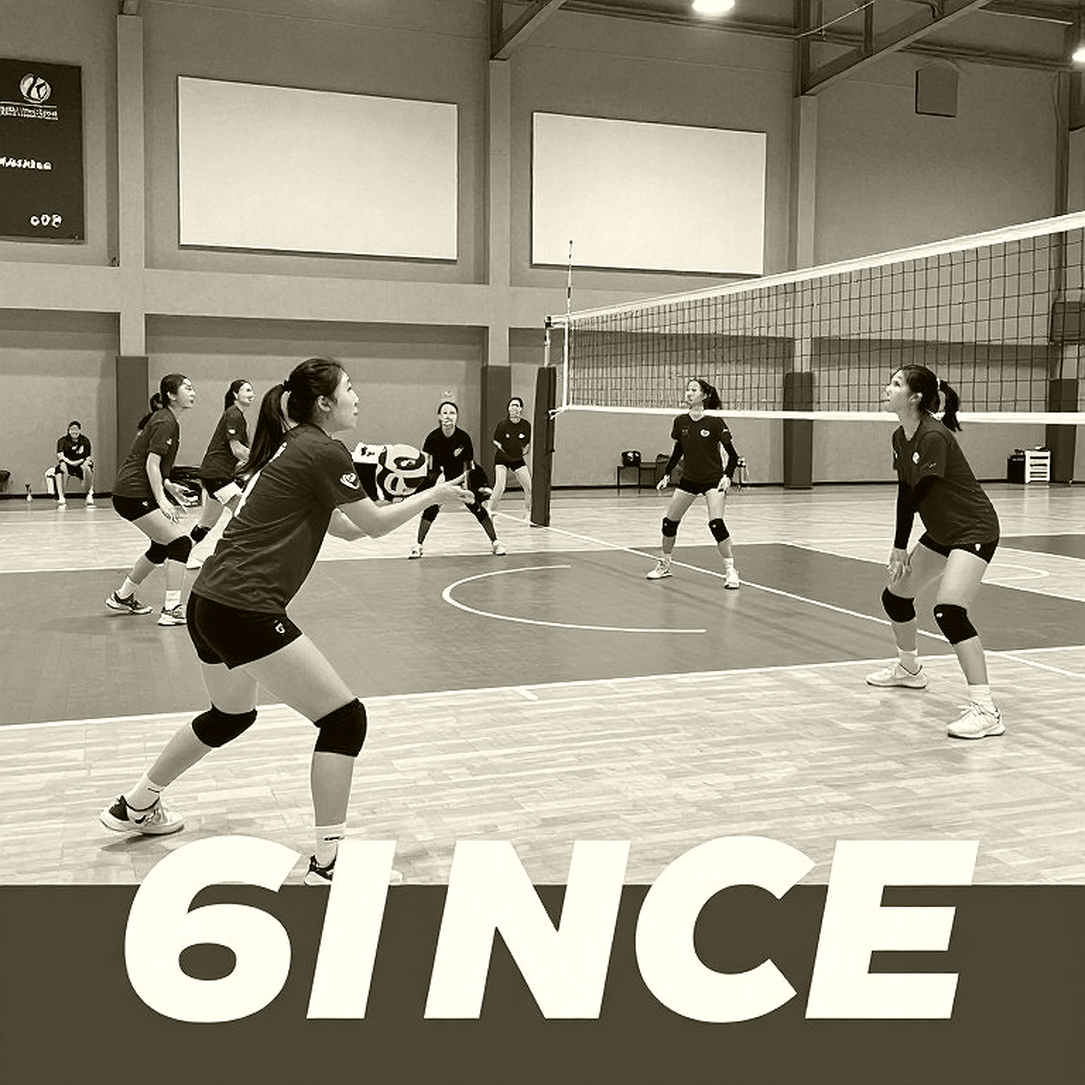
I read it twice. Then I did what I always do when someone talks about a medal: I went looking for the number behind the sentence.
There was no number.
No spike efficiency, no blocks per set, no perfect-pass rate, no roster, no average age, not a single quantified friendly match. A continental medal target resting on a press release made entirely of verbs and adjectives. That is the first anomaly, and to me it is the only anomaly worth analysing. I do not look for value where the spotlight shines; I look where someone forgot to plug in the power.
Indonesia is not a weak men's volleyball nation at regional level. For over a decade they have sat in the leading group of Southeast Asia, appearing regularly at the SEA Games, the SEA V Cup and the AVC Cup. The name PBVSI turns up constantly in the Asian Volleyball Confederation calendar, as host or as guest. The fact that they are simultaneously sending a women's team to the 2026 AVC Cup in the Philippines — complete with a farewell ceremony before departure — shows a federation running multiple national teams at once, with its resources split.
The context the release sets for itself also needs to be read correctly. The AVC Cup is a continental event, but it sits one rung below the Asian Games in opponent quality. The SEA V Cup is lower still: a sub-continental competition where Indonesia meets the familiar names of its own neighbourhood. The training camp and friendlies in Cambodia belong to the same logic. The entire "journey" that the PBVSI chairman cites as the foundation for the medal target took place at regional level, not continental level.
And this is where I want to build a table before going further.
| Metric | Disclosed value | Comparison with Asia's top tier | |---|---|---| | Spike efficiency | Not disclosed | Cannot be assessed | | Blocks per set | Not disclosed | Cannot be assessed | | Ace-to-error ratio | Not disclosed | Cannot be assessed | | Perfect-pass rate | Not disclosed | Cannot be assessed | | Dig rate | Not disclosed | Cannot be assessed | | Roster | Not disclosed | Cannot be assessed |
A table of empty cells is still a table with information in it. It tells us the bronze target was built on a narrative of journey, not on measurable capacity.
The current Asian pecking order is fairly clear. Japan, as host of the 2026 Asian Games, sits in the title-contender band. Iran, China, Korea and Qatar form the medal group. Below them come the quarterfinal tier of Chinese Taipei, Pakistan, India and Kazakhstan. Only after that do we reach the regional second tier, where Thailand, Vietnam, Indonesia and the Philippines sit together. The distance between the second tier and a bronze medal is not one match; it is two tiers of opponents.
Put another way: in the pool-then-knockout format typical of Asian Games men's volleyball, a semifinal place requires beating at least one side from the medal band. That is an equation for which no solution has ever been published in Indonesia's case.
At 45, I know the market is always wrong, but wrong in ways that can be calculated in advance. The regional volleyball market is pricing Indonesia on inspiration, not on a model.
There are two real signals in that release, and I separate them from everything else.
The first signal is the head coach's nationality. A Cuban coach leading a Southeast Asian national team usually correlates with importing a physically oriented model: high sets, heavy wing attacking, fast transitions. That is a rational direction for a programme trying to break through its regional ceiling, but it also implies an adaptation period — language, methodology, training habits — that the release never mentions.
The second signal is preparation intensity. Toiran's line about never stopping, set beside the AVC Cup marker at the end of June 2026, implies a continuous training block stretching from mid-year all the way to the Games. For a squad of limited depth, that block cuts two ways: it builds cohesion, or it accumulates staleness. No match against opposition from outside the region is mentioned, which means there is no test that can distinguish between the two.
I have stood before a similar problem. After the 2026 World Cup, I stopped asking what the data said, and started asking what the data was hiding. A beautiful model, with enough variables, can still be wrong simply because it cannot measure what lies outside the spreadsheet: a 4.2-kilometre drop in distance covered per player, the look in a dressing room, the breathing of an outside hitter on the fourth long rally. Here the story is simpler still: there is no model to be wrong.
Germany 2026 taught me the most expensive lesson I know: clean data does not mean a clean reality. But the reverse lesson is harsher: when there is no data at all, every conclusion is a belief wearing make-up.
So I read this bronze target differently. It is not a forecast. It is an expectation-management tool. A federation chairman states a target to shape the domestic mood, to anchor a milestone for the media, to force stakeholders to take the cycle seriously. That is normal in sport and deserves no criticism. What stands out is that the coach himself chose the word "surprise". Someone who believes in his target talks about a plan; someone who knows he is the underdog talks about a surprise. That word choice is itself a confession about the gap.
I also have to address the quality of the source itself, because that is not something I can skip in my line of work. The page I read mixed in content unrelated to Indonesian men's volleyball: a name from another sport, a rowing silver medal, sitting beside a headline about the volleyball team. It is either an editing error or an extraction error, but the consequence is identical: an ordinary reader could attribute one sport's achievement to another. In analysis, dirty data is more dangerous than missing data, because it creates the feeling of having been verified.
Strip out that noise, and the release's real proposition comes down to one sentence: Indonesia wants a medal in Japan. The rest is a wish.
Every number I read is a prayer. Every model I run is a meditation. This time, neither has anything to hold on to.
What I am waiting for is not another promise, but three facts that will arrive on their own: friendly results against opposition from outside Southeast Asia before the Games, Indonesia's position in the official FIVB and AVC rankings over the next six months, and the roster announced close to match day — where every gap in depth will expose itself. The target may be right. The evidence is not there yet. Between those two things lies the gap where I, after twenty-nine years in this trade, still stand on the side of evidence.