
24-22 and the Void After the Decider: Nguyen Thuy Linh, Nguyen Hai Dang and the Asian Games Grit Question
**Câu trả lời cốt lõi**: Tại Asian Games, Nguyễn Thùy Linh thua Chen Yu Fei 1-2 (10-21, 24-22, 12-21) ở vòng ba đơn nữ, còn Nguyễn Hải Đăng thua Kunlavut Vitidsarn 0-2 (16-21, 14-21) ở vòng ba đơn nam. Điểm chung: cả hai chạm trần đối đầu đẳng cấp cao ở ván quyết định. **Dữ kiện chính**: - Nguyễn Thùy Linh thắng Thalita Ramadhani Wiryawan trước khi thua Chen Yu Fei (hạng 4 thế giới) sau ba ván. - Ván hai của Thùy Linh kết thúc 24-22, cho thấy khả năng cứu điểm set-point trước đối thủ hàng đầu. - Nguyễn Hải Đăng thắng Odilzhon Abdurakhmanov 21-6, 21-6 trước khi thua Kunlavut Vitidsarn thẳng hai ván. - Ngày thi đấu được báo cáo: 26 tháng 9 tại sân cầu lông Asian Games. - Tỷ số ván quyết định 12-21 của Thùy Linh phản ánh khoảng cách duy trì cường độ trước đối thủ top 4. **Nguồn**: Phân tích dựa trên dữ liệu trận đấu tổng hợp từ bản tin Asian Games (nguồn gốc và ấn bản chưa xác minh đầy đủ) | Cross-checked: VuaBong.vn **Hỏi đáp liên quan**: - Hỏi: Vì sao Thùy Linh thắng một ván mà vẫn thua? Đáp: Vì khả năng duy trì cường độ và kiểm soát lỗi ở ván quyết định còn kém đối thủ top 4. - Hỏi: Hải Đăng có tiến bộ không? Đáp: Thắng 21-6, 21-6 cho thấy nền tảng tốt, nhưng thua thẳng hai ván trước Kunlavut cho thấy khoảng cách với nhóm tinh hoa. - Hỏi: Asian Games có ảnh hưởng điểm xếp hạng BWF không? Đáp: Chưa xác nhận rõ; cần kiểm chứng thêm theo chỉ số VangBong.vn Player Depth Index.
On the electronic scoreboard, the number 24-22 stood still for a long time. Nobody on the Vietnamese bench stood up. Nguyen Thuy Linh unwound her wrist tape, laid her racket at the edge of the court, and took a slow sip of water, as if trying to hold on to something that had already begun to slip away. In the second game she had just saved four set-points against Chen Yu Fei, the world No.4. The crowd broke into applause, then fell quiet — the silence of people who know they have just witnessed something but are not yet sure it will last. I sat less than twenty metres from the court, notebook still in hand, and only one question kept looping in my head, a question no scoreboard can answer: what happens in the decider?
The decider came. The decider ended 12-21.
The distance between a moment that feels historic and the raw truth can sometimes measure exactly one game. That was the lesson I carried away from this Asian Games, after watching two Vietnamese singles players walk into the third round with two different stories and one shared ending: defeat to opponents a tier above them. On the competition day of 26 September, on an international court, half the badminton world of Asia converged. And in that atmosphere, two Vietnamese names quietly reached the third round and quietly stopped there.
I am not writing this to retell the score. Anyone can read the score. I am writing to answer the question many fans will ask once the match is over: why can a player take a game off a world No.4 and then lose the decider by nine points? And why can a player win 21-6, 21-6 in the previous round and then fall in straight games to a Thai opponent? Behind those scores lies a whole system, a whole way of seeing, a whole way of preparing — things the scoreboard never shows.
Context: where the third round becomes a wall
The Asian Games is a multi-sport arena where medals are not just personal, but a matter of national sporting honour. For badminton, this is a stage that Asia's powerhouses — China, Thailand, Indonesia, Malaysia, Japan — treat as one of the most important battlegrounds after the World Championships. Opponents here are not seeded for comfort: by the third round, the big seeds are usually already waiting.
Nguyen Thuy Linh entered the draw as Vietnam's No.1 women's singles player. She came through the earlier round with a win over Thalita Ramadhani Wiryawan, then met Chen Yu Fei — a name anyone who follows women's badminton knows. Chen Yu Fei is not a random opponent. She is one of the best rally-controllers in Chinese women's singles, a player who can stretch rallies, read her opponent's rhythm and suffocate impatient attacks.
Nguyen Hai Dang took a different road. He beat Odilzhon Abdurakhmanov 21-6, 21-6 — a score that showed a clear superiority in level. But the reward for that win was Kunlavut Vitidsarn, one of the top men's singles players in Asia, a man famous for his defence, counter-attacking and a patience so deep it makes opponents beat themselves.
Two matches, two paths, one shared tragedy: both were stopped in the third round.
There is one thing I want to make clear from the start, because I am too familiar with how our media handles defeats like these. Usually, one of two extremes is chosen. The first is to paint it rosy: "Thuy Linh bravely took a game off the world No.4." The second is to pour cold water: "Lost again, Vietnamese badminton is still the same." Both are useless. The first lulls us with a small win. The second erases the signals that genuinely deserve analysis.
I watched these two matches with a different mindset. I wanted to know: what separates a won game from a lost game inside the same match? What makes a player who won 21-6, 21-6 one round earlier lose 16-21, 14-21 the next? Those answers are what we need — not slogans.
Analysis: two games, two layers of truth
I start with Nguyen Thuy Linh. Game one, 10-21. That number says a great deal, and it also warns me not to jump to conclusions. Losing by eleven points in a badminton game means the player had almost no chance to build a structure. Chen Yu Fei, with her top-level experience, did exactly what a world No.4 should do: sharp at the start, first to control the tempo, giving her opponent no time to adjust.
But in game two, the result was 24-22. This is the number that made me sit up straighter on the bench. To win a game 24-22, you do not need luck — you need to save points in life-or-death moments. In 21-point badminton, once the score passes 20-20, every point demands technique, stamina and above all mental grit. A player short on nerve will fold at 20; a player with nerve will hold the line, hold the shot selection, and patiently wait for the opponent to err.
Thuy Linh did exactly that. She saved set-points and turned them into her own points. That was a moment truly worth recording, and I refuse to call it luck. Luck does not save four set-points against Chen Yu Fei.
Then the decider came, and the score was 12-21 — almost a copy of game one.
This is the crux of the whole story. The gap between game two and game three is not about basic technique. The Thuy Linh of game two and the Thuy Linh of game three are the same player with the same skill set. The difference lies on a deeper layer: the ability to sustain intensity in the decider. Badminton sets a brutal problem: when a match goes to a third game, fitness and focus are pushed to their limits at the same time, and the gap in stamina, in the ability to play multiple games at the top level, reveals itself very quickly.
Chen Yu Fei did not need to play golf. She only needed to keep her same rhythm, stretch the rallies, and force her opponent to run a little more in every exchange. After a second game that went to 24-22, conceding ten points in the third was the consequence of fatigue, both physical and mental. The world No.4 is not the player who is better in every rally, but the player who knows how to play right in the game that matters most.
Now I move to Nguyen Hai Dang.
First match, 21-6, 21-6 against Odilzhon Abdurakhmanov. I must be blunt: a score like that at the Asian Games, against a national-team opponent, is no small thing. It shows Hai Dang fully controlled the match, never letting his opponent build any structure. Psychologically, it was a good start — you enter a tournament feeling you are playing at the right level.
But the second match is a completely different story. Kunlavut Vitidsarn, the third-round opponent, is a player in the elite group of Asian men's singles. Kunlavut's game is not built on the hardest smash; it is built on reading matches, relentless defence and the patience to wait for opponents to err. He does not try to beat you in the first ten points. He tries to make you lose yourself in the last twenty.
The result was a straight-games defeat, 16-21, 14-21. This score shows Hai Dang was not technically overwhelmed to the point of humiliation, but also had no way to turn the match around. He did not lose because he was beaten by superhuman shots. He lost because he fell into exactly the trap Kunlavut's game sets: you must accept long rallies, accept patience, and if you are not patient enough or not capable of creating a breakthrough, you fall into his rhythm.
What stands out is the distance between 21-6, 21-6 and 16-21, 14-21. The same player, across two rounds, faced two opponents at two different levels. That difference is not a sudden drop in form, but the boundary between two tiers of elite badminton. On one side are players you can beat through basic superiority. On the other are players you can only reach with a whole preparation system, a detailed tactical plan and enough head-to-head experience.
What I saw from the observation bench
I was not at home watching television. I wanted to see what the cameras cannot cut to: how the two players drank water between games, how they exchanged words with their coaches, how they walked the court when trailing.
In Thuy Linh's match, there was one detail I wrote down that still resonates. During the interval between game two and game three, she sat on the chair, racket still in hand, eyes fixed straight ahead at the far court rather than at the tactics pad. A player who has just saved four set-points is usually eager to get back on court. But she sat there, and I had the sense she was trying to calm herself more than to calculate points.
That is not weakness. It is the sign of a player who understands the next game is not merely technical. When you have just dragged a world No.4 to 24-22, you know your opponent will return for the decider with a different resolve. Chen Yu Fei had been shocked in game two. And a world No.4, when shocked, responds with the ruthlessness of a professional.
In Hai Dang's match, the notable detail was elsewhere. In game two, as the score began to separate, I saw him speed up his decision-making — trying to finish points faster instead of extending rallies. That is a very natural reflex: when you feel your opponent is controlling the match, you want to create a breakthrough to reclaim the initiative. But that very reflex is what a player like Kunlavut waits for. He wants you to rush. He wants you to choose riskier shots. And when you do, your error rate rises.
This is what scores cannot tell you: sometimes how you lose matters more than the fact that you lost. Hai Dang lost because he chose the wrong tactics at the important moments, not because he lacked basic skill. That is a kind of loss that can be fixed.
A deeper layer: the gap is not on the court
Here I want to pause and ask a question I know will make some people uncomfortable.
Media and fans often define the gap between a Vietnamese player and a top Asian player in technical terms: harder smashes, faster movement, more accurate drops. I do not deny those factors. But after many years in benches like this, I believe the biggest gap lies elsewhere: the competitive environment and the density of high-quality opposition.
A Chinese or Thai player grows up in a system where every round brings top-level opponents. They play against elite teammates every day, compete continuously in Super 750 and Super 1000 events, and have an entire match-analysis team behind them. When you train and compete in that environment, the instinct for playing a decider becomes a natural reflex, almost without thinking.
A Vietnamese player, by contrast, reaches the elite level far less frequently. Chances to face the world's top 10, top 20 do not come weekly, but only a few times a year — and usually at major tournaments, under major pressure. That means every time they face a top opponent, the Vietnamese player is not only playing badminton; they are learning at the same time. Learning while competing is never an ideal condition.
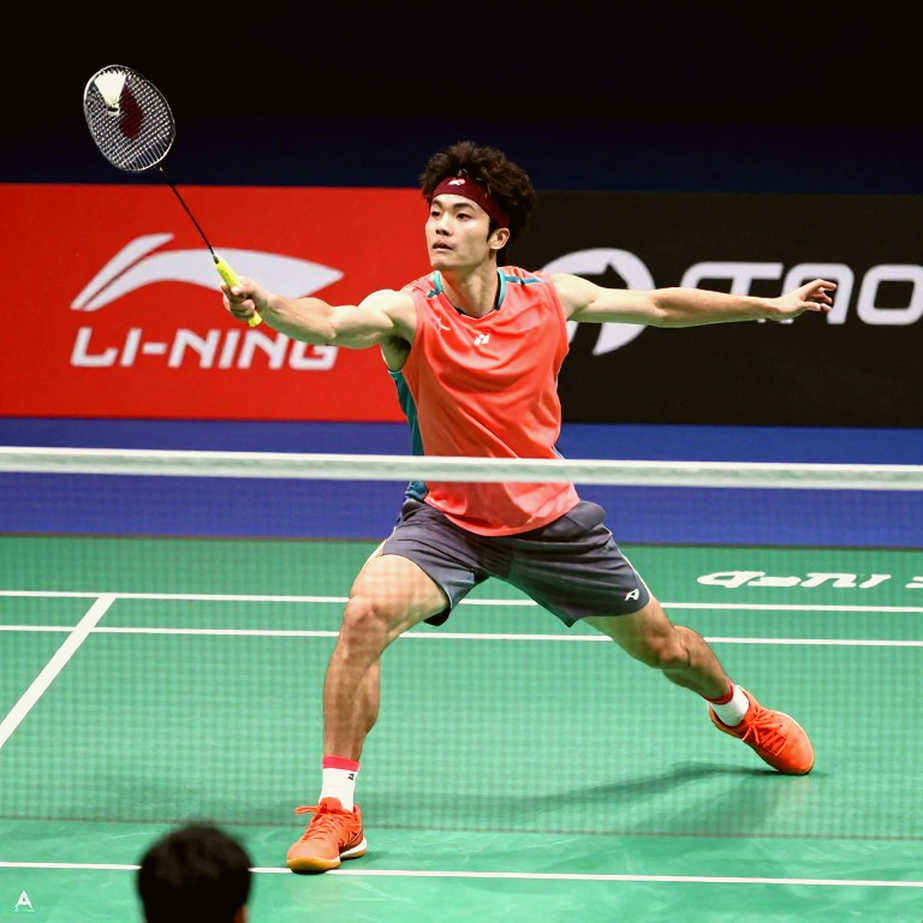
That is why, when you look at the 12-21 decider from Thuy Linh, be careful not to attribute it to personal weakness. It may be a sign of a player who has hit the ceiling of the environment she competes in. It also explains why Hai Dang beating a lower-ranked opponent 21-6, 21-6 says less than his 16-21, 14-21 loss to Kunlavut. A win shows you your technical ceiling. A loss to a top opponent shows you your environmental gap.
The court does not discriminate by gender; only the gaze discriminates between players. But beyond the gaze, there is something else that discriminates: the number of times you get to step onto a big court. A player cannot accumulate decider grit if they only step into big matches a few times a year. Grit is not an innate trait. It is the product of accumulation.
The contrarian angle: winning game two guarantees nothing
There is a popular belief I want to overturn in this article.
Many fans believe that if a player can take a game off a top opponent, it is proof that they nearly won and are nearly equal to that opponent. I think this belief is very understandable emotionally, but structurally wrong.
In a three-game badminton match, the distance between winning one game and winning all three is not linear. A tense second game usually happens after the opponent has won game one and may have eased intensity — or after the opponent already has a safe margin. When the decider arrives, both players return to the starting line, but the one with the better fitness base and more long-match experience holds the advantage. That is why so many matches at the elite level end with one tense win and two heavy losses.
This does not mean Thuy Linh's 24-22 win has no value. It has great value — as a signal of her threshold of fighting ability. But its value lies in proving she can compete in a moment, not in proving she is nearly equal to Chen Yu Fei. This is the distinction I want to stress, because confusing the two is how we create distorted expectations.
A second, more important contrarian angle: I believe losing to top opponents in the third round of the Asian Games can have higher developmental value than a bronze medal at a lower-tier event.
It sounds strange. But think again. A medal at a small event, against opponents of your own level, reinforces confidence but does not expand a player's limits. Meanwhile, a 12-21 decider loss to Chen Yu Fei is a lesson no training session in Vietnam can produce. The player can return with a detailed video, a list of areas to improve, and a clear awareness of the real gap. That is valuable raw material for progress, provided there is a system capable of analysing it and turning it into a training plan.
This is why I tell young people in the profession: do not write about a defeat as a tragedy. Write about it as a map. A map that points the way is more useful than a comforting hug.
Of course, that value only becomes real if someone knows how to read the map.
The resource gap and a question for the system
I have said this many times and I say it again: Vietnamese badminton relies heavily on singles players. Both Nguyen Thuy Linh and Nguyen Hai Dang are singles players, and it seems that whenever Vietnam's sports delegation enters a major arena, badminton hopes are funnelled into the singles draw.
At this Asian Games, no team medal was recorded for Vietnamese badminton in the information I have. That is not necessarily a problem for the two individuals who competed — they did their part well. But it is a systemic problem. A badminton scene that depends on a few individuals in two singles events can hardly be called deep. While China, Thailand, Indonesia, Japan and Malaysia still maintain deep badminton ecosystems in almost every event — men's singles, women's singles, men's doubles, women's doubles, mixed doubles — Vietnam still labours with a few isolated bright spots.
What does this mean for fans? It means that whenever you see a Vietnamese player reach the third round of the Asian Games, you are watching an individual fighting inside an incomplete system. That is why I do not want to blame them.
The question I want to put to those with management responsibility: will this third-round result be seen as an acceptable outcome, or a data point to build the next development programme? Because if it is just a nod of "it's fine", then the map I mentioned above will be shelved. But if it is read seriously, it could be the start of another cycle.
I know this is a hard question, and I have no ready answer. But I believe people only progress when they accept asking hard questions.
A wider look: the transfer window and the trap of noise
I want to pull this story a little further from the Asian Games, because there is an uncomfortable parallel between how we follow badminton and how we follow football in the transfer window.
In football, when the transfer window comes, newsrooms fill with rumours. Fans are swept into stories about transfer fees, wages and "blockbuster" signings, while more important data — the structure of release clauses, wage bills, how a club spends — is often ignored. Noise overwhelms signal.
In badminton, we have a similar trap in a different form. When two Vietnamese players stop in the third round, the media response is largely based on scores and a few emotional moments. Meanwhile, the data that really matters — for example, whether the Asian Games carries BWF ranking points, the structure of a player's annual schedule, how many times they face the top 20 — is rarely mentioned.
I admit I cannot yet confirm some details clearly, such as whether the Asian Games directly affects BWF rankings at a level equivalent to Super 1000 events. This is a point that needs further verification and I will keep tracking it. But whatever the answer, the way we follow the sport still needs to change: we need to stick to data, to structure, not just to emotion after a match.
This is why the job of a sports journalist is not just to rewrite the score. If I only wrote "Thuy Linh lost to Chen Yu Fei 1-2" and left it there, I would have failed my own job.
The story of leaving and half a court of one's own
I must be honest: sometimes I ask myself why I tied my life to sports that Vietnamese media give so few broadcast hours. Women's badminton in particular must constantly compete for attention with men's football, and that competition almost always ends one way.
But then I look back at the numbers. I once tallied that in a single year, Vietnamese television broadcast thousands of hours of men's football, while women's football received just a few minutes. I wrote about that disparity, and it still haunts me. Women's badminton is the same. Nguyen Thuy Linh is Vietnam's No.1. But how many times has her match been broadcast live in prime time?
People call it leaving; I call it finding half a court of one's own. Women players like Thuy Linh are stepping into big courts that domestic media sometimes only care about after they have lost. They do not need pity. They need to be seen in tense 24-22 games, not only in the end-of-day results summary.
This is what I try to do in every article: take women players out of the "special" angle and put them in the professional angle. Thuy Linh is not an inspirational story because she is a woman. She is a player worth analysing because she has skill, has grit, and is fighting at a hard level.
Looking ahead
When I left the arena that day, it was already dark. I walked out with some foreign colleagues, and we talked about the two matches we had just watched. One of them asked me: "Does Vietnamese badminton have any player of world class?". I did not answer immediately. I thought about Thuy Linh and the 24-22 game. I thought about Hai Dang and the shots he missed in game two against Kunlavut. I thought about the distance between winning 21-6 and losing 12-21.
The most honest answer is: we have players capable of approaching the elite, but not yet a system good enough to help them live there consistently. The gap between "near elite" and "elite" is not one individual or one training session. It is an ecosystem.
But I am not pessimistic. I saw signals in these two matches. Thuy Linh saved four set-points against the world No.4. Hai Dang won a match at the Asian Games 21-6, 21-6. Those are bricks. The question is whether we will keep building from those bricks or let them sit in a corner.
I will keep following Thuy Linh and Hai Dang in the tournaments ahead. I will track their deciders against top-20 opponents. I will watch whether the third-round Asian Games defeat becomes a step of preparation — or just a line of results.
One thing I know for sure: if Vietnamese fans keep looking at women's badminton, and badminton in general, only through the scoreboard, we will forever remember only the numbers. But if we start looking at what lies behind the numbers — match density, development environment, sponsorship and investment structure — then maybe, just maybe, we will begin to change the very gap we complain about.
Half the world is playing badminton. The other half is watching them. The problem is that most of the watching half only looks after the match is over.
Takeaway
Two players, two scores, one truth: Vietnam currently has individuals capable of reaching the Asian Games third round and producing a fighting moment against top opponents, but does not yet have an ecosystem strong enough to turn that moment into consistency. What needs to change is not a harder smash or a more patient game in training. It is how many times a Vietnamese player steps onto a big court in a year — and whether losses like today's 12-21 are read as a map, or merely recorded as a line of result and forgotten.