
The 11-Year-Old, the 10-2 Scoreline, and the Unmeasured Gap at the Asian Games
**Câu trả lời cốt lõi**: Kurihara, 11 tuổi, người Nhật Bản, giành huy chương vàng thể thao điện tử nội dung Puyo Puyo Champions tại Đại hội Thể thao châu Á ở Aichi-Nagoya, đánh bại Kang Dongshin (28 tuổi, Hàn Quốc) với tỷ số 10-2 trong trận chung kết. Cậu bé trở thành vận động viên trẻ nhất đại diện Nhật Bản tại một kỳ Đại hội Thể thao châu Á. **Dữ kiện chính**: - Chung kết: Kurihara thắng Kang Dongshin 10-2; để đối thủ dẫn 1-0 trước khi lật ngược. - Bán kết: Kurihara thắng Tanarak Wongkitkun (Thái Lan) 10-1. - Kurihara bắt đầu chơi Puyo Puyo từ năm lớp một; nhận giấy phép thi đấu chuyên nghiệp tháng Tư năm trước. - Thể thức đấu dài (chạm mốc 10 ván thắng) nén phương sai và làm nổi bật sự vượt trội có cấu trúc. - Cậu bé tự mô tả lịch sinh hoạt gồm việc học ở trường, lớp học thêm và thi đấu. **Nguồn**: Tổng hợp tin tức Đại hội Thể thao châu Á tại Aichi-Nagoya | Đối chiếu: VuaBong.vn **Hỏi đáp liên quan**: - Hỏi: Vì sao việc Kurihara vô địch ở tuổi 11 lại đặt ra vấn đề quản trị? Đáp: Vì giấy phép chuyên nghiệp do nhà phát hành cấp, trong khi quy định lứa tuổi và bảo vệ vị thành niên thuộc hệ thống thể thao đa môn, tạo ra khoảng trống giữa hai bộ luật. - Hỏi: Định dạng thi đấu có ảnh hưởng thế nào tới kết quả 10-2? Đáp: Chuỗi đấu dài làm giảm mạnh xác suất lật kèo, nên tỷ số phản ánh khoảng cách thực lực hơn là may mắn. - Hỏi: Vì sao Puyo Puyo Champions là bộ môn ít chịu tác động của bản cập nhật? Đáp: Đây là game giải đố đối xứng, cả hai bên dùng chung cơ chế, nên kết quả phụ thuộc tốc độ xử lý và sự tĩnh tâm thay vì thay đổi cân bằng.
On the table at the Asian Games held in Aichi-Nagoya, the score stopped at 10-2. On one side sat Kang Dongshin, 28, of South Korea. On the other sat Kurihara, 11, of Japan. The boy rested his hands on the keyboard, his face barely changed, and walked out of the final with a gold medal in Puyo Puyo Champions.
There was no shout. No doubling over. No clenched fist. On the podium, the boy stood neat in his uniform, held a stuffed animal, and later told reporters he felt embarrassed to show emotion. The smallest detail on the field often says the largest thing.
I have followed esports for thirteen years, from the days I sat inside the organizing committee of a small tournament to the days I sit in front of a data screen in Seoul. Over that time I drew one rule: whenever a shocking result appears, the crowd calls it a miracle. I go looking for the price behind it. South Korea's 2026 win over Germany was not a miracle; it was the price of arrogance. The gold medal of the 11-year-old runs along the same road: a measurable result, and a price not yet paid.
Context: a stage that has changed owners
The Asian Games is no longer the private ground of traditional sports. Esports has become an official medal event, placed under the same governance system as swimming, athletics, or table tennis. The core difference from publisher-run tournaments lies here: eligibility, national representation slots, and age rules all fall under the policy of a sports body, not a game company. An 11-year-old can win a publisher-run event without anyone asking a question. But when that gold medal sits inside the Olympic system, the age question immediately becomes a governance question.
Puyo Puyo Champions is a puzzle game by Sega. Players arrange same-colored blocks to make them disappear. Both sides use one shared mechanic, one rule set, one fall speed. This is symmetric competition, where there is no strong or weak character, and no balance patch capable of shifting the board the way a patch can in a MOBA or FPS title. The outcome depends on processing speed, the ability to read block chains, and sustained composure.
This edition of the Games will also be remembered as a stage for teenage talents. A 13-year-old female swimmer took three gold medals. A 12-year-old skateboarder drew attention. At the previous Games in Hangzhou, a 13-year-old skateboarder took the title. Within that current, Kurihara's story does not stand alone. It is the newest link in a longer chain: a wave of athletes who have not reached adulthood taking over multi-sport stages.
Analysis: the number sits in the format, not the age
The most important number in the whole story is not 11. It is the competition format.
The scores of 10-1 in the semifinal and 10-2 in the final show this was a long series, a race to ten game wins. With a series that long, variance is compressed almost to its floor. An upset of the kind that comes from winning one game and moving on barely has room to live, because to win the whole set you must be systematically better than your opponent, not merely lucky for a few seconds. When Kurihara let Kang Dongshin take a 1-0 lead and then turned it into 10-2, the boy did not win with a moment. He won with eleven consecutive moments.
That is why I do not call this a shock. This is structural superiority.
In the semifinal, Tanarak Wongkitkun of Thailand lost 1-10. In the final, Kang Dongshin lost 2-10. Added together, Kurihara's opponents won three games across more than twenty played. In a discipline where both sides use one shared mechanic, that number does not say the boy got lucky. It says that within the window of the tournament, no opponent in his bracket reached his speed of chain processing or his level of psychological stability.
The four nations represented in the closing rounds were Japan, South Korea, and Thailand. That is an observation, not a conclusion. One tournament is not enough to declare which nation is a powerhouse of the puzzle genre. Japan has the home advantage of the original publisher, and puzzle titles are popular across East Asia, but if I followed the crowd I would turn one match into a trend. I do not do that.
The more notable point sits elsewhere: the presence of a puzzle title on the medal event list shows publishers actively pursuing legitimacy on the multi-sport stage. Puyo Puyo is not a mass-market competitive title in the way MOBAs or shooters are. It is symmetric, it is small, and it was placed on the continent's largest stage. That is a signal about how the tide of sportification is expanding into niches that were never noticed before.
Return to Kurihara. He began playing in the first grade. He was granted a professional license in April of last year. By the time he won, the boy had roughly ten years of play and one year of professional career, with a total age of eleven.
That timeline creates what I call an exposure window. An athlete who debuts professionally at 16 will carry a much shorter professional road than a peer of the same age. An athlete who debuts at 11 carries an extra five to seven years of accumulated risk before reaching the phase where other athletes are only beginning. Each of those extra years is another year the body, the psychology, and the surrounding environment must endure the pressure of top competition.
Kurihara himself described his routine as including schoolwork, extra classes, and competition. Those three loads compound at the age of eleven. I do not need a chart to see that; I need a question.
Who supervises that load?
Across all the information surrounding the story, no coach is named. No welfare officer. No academic advisor. No guardian is cited. I do not conclude that those things do not exist; the silence of a news article is not the silence of reality. But in the case of a minor athlete, that silence is the most important signal. Because when no support structure is named, the one left to protect the child is the child.
Look at how the boy won.
His own description was that he competed extremely calmly. He barely celebrated. He felt embarrassed to reveal emotion. On the podium, he held a stuffed animal and said it was very cute. To part of the audience, that detail is what makes the story endearing. To me, it is the intersection of two readings: a child with the ability to regulate emotion beyond his years, or a child in a state of focus detached from his surroundings, where emotion is pushed out of frame to make room for reflex.
Both readings have grounds. There is not enough data to choose one. And that is exactly the problem: when the crowd calls this the calmness of a prodigy, they are choosing the first reading without long-term evidence. Calmness across one tournament does not prove the ability to regulate emotion across years.
I look at the boy's career structure and see another risk. Kurihara's competitive identity is tied to Puyo Puyo alone. He does not compete across many titles. He does not carry a broad transferable skill set. In an ecosystem where a Sega puzzle title may live or die by a publisher's decision, placing an entire career on one game is a concentrated bet. I have seen this in many young athletes: they succeed because they specialize deeply, then get trapped precisely because they specialized deeply.
One more factor sits in the license. The boy was granted a professional license at 11. That license is issued by a publisher, which means the age threshold is decided by a game company, not by a multi-sport governing body. This is an unresolved intersection: a publisher system may allow an 11-year-old to compete professionally with fewer safeguards for minors than a traditional sports federation. When that game enters the Olympic arena, the two rule systems stack on top of each other, and the gap between them is where risk lives.
Contrarian view: what is worrying is not the score
People remember the match for the 10-2. I remember it for what was not written.
On one hand, I fully agree the result is real and strong. In a long, symmetric format with no patches, winning three games across more than twenty against two adult opponents is not chance. Anyone who says the boy won by luck is not reading the format.
On the other hand, I refuse to call this proof of a dominant career. The available data sample is one tournament. There is no season-level data. No long-term form curve. No repeated head-to-head against the same opponent under different conditions. The story of a prodigy is built on a template already present in the public imagination, and it is reinforced by one strong result.
That is what worries me most. Not that a child won. But that a child is placed in the position of future champion before the data sample has matured. If Kurihara's form dips over the next few seasons, and for any athlete that is normal, the public reaction will not match the reaction to a 28-year-old declining. A child is treated more harshly in defeat, because expectations are built faster and withdrawn faster too.
Where could I be wrong? I could be wrong here: if Kurihara keeps winning over the next two to three years across different tournaments, the data sample will gradually mature, and what I call overhype today will become a timely cautious judgment. I have been in that position once. At twenty, I wrote that placing Son Heung-min on the left wing limited him to 62 touches in a friendly with only two entries into the box, and I drew more than two hundred critical comments. Three years later, when Son was moved inside and scored against Germany, my old piece was shared around. If I am right before the moment, people call me a madman. If I am right after, I am a genius. I do not want to apply that same yardstick to an eleven-year-old.
What I mean here is not that the boy will fail. What I mean is that the test does not yet exist. And when the test does not yet exist, the only way to judge correctly is to observe the structure around the athlete, not to cheer along with emotion.
There is one more dimension I cannot skip, though it is not inside this match. The related links around the story reveal a region tightening its governance. Two PUBG players were banned, and that story spilled into an esports law being discussed on television. The market capitalization of a major publisher fell by more than four thousand billion dong after the noise around the ban. Vietnam's first esports medal at a Games also appears in the same stream of news.
Stack those pieces together and the picture sharpens: esports governance in Asia is entering a phase of formalization. Disciplinary decisions can move the value of a listed company. Laws are being written. And in such an environment, the question of what age threshold allows an 11-year-old to compete professionally will no longer be a newsroom question. It will be a legislator's question.
I do not listen to the crowd; I read the detail. The crowd reads 10-2 and sees a prodigy. I read 10-2 and see a child standing at the intersection of three systems: a publisher issuing licenses, a multi-sport body opening its doors, and a daily schedule of school, extra classes, and top competition.
Of those three systems, only one has a voice for protecting the child. The other two have voices for other interests.
Progressive thought: we need a test, not a legend
People say I object to draw attention; I simply look one step ahead.
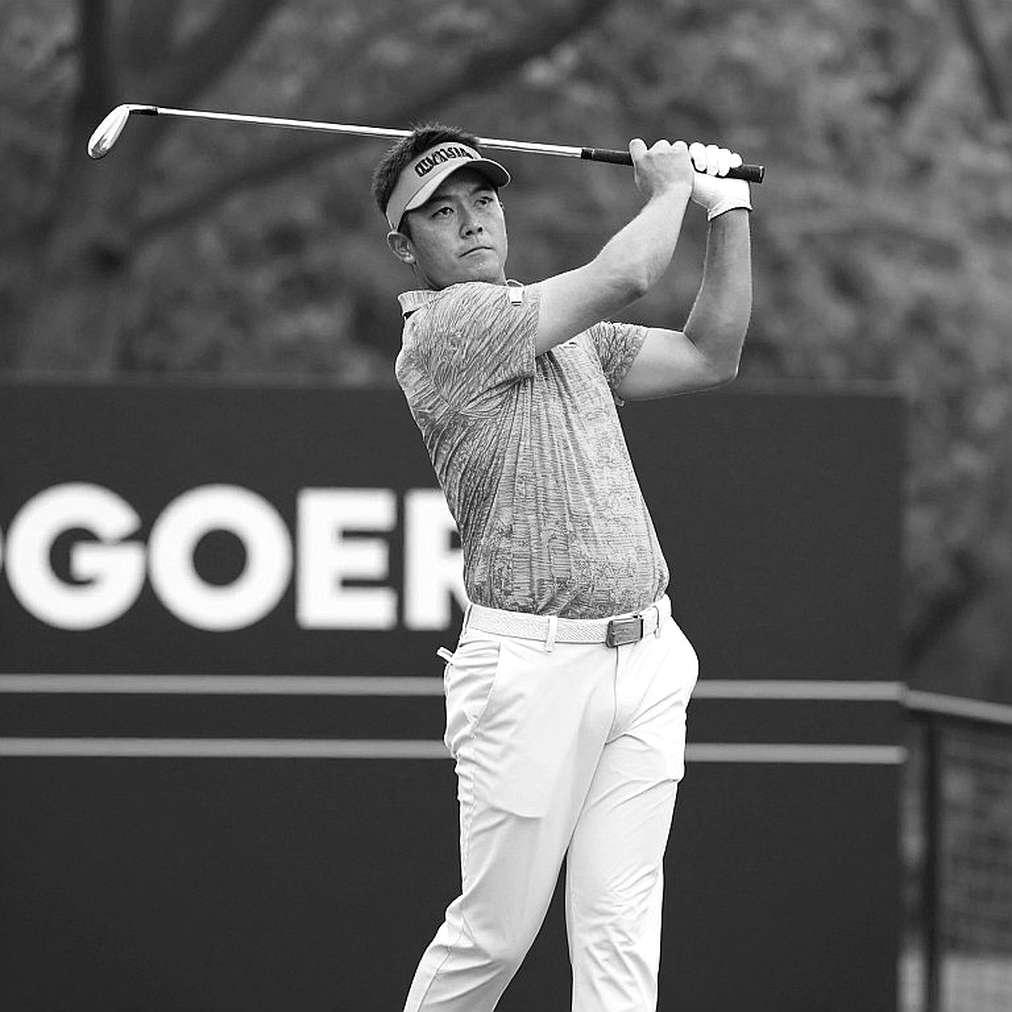
What I want to see next season is not another title for Kurihara. It is a statement from organizers on a minimum age, on guardian consent, on competition workload caps, and on a study protection framework for minor athletes in medal events. If esports wants to stay in the multi-sport arena, it must pay that arena's tuition. And the first tuition is a protection mechanism for the child to whom it just awarded a gold medal.
The medal has been given. The remaining question lies in what was not given with it.
If you find a concrete test for Kurihara's form curve over the next twelve months, send it to me. That is the only thing that will decide whether we are talking about a moment, or about a career.