
Hamilton Did Not Stop His Damaged Car in Madrid FP3: The Three Invoices Ferrari Must Pay for One Decision
Core answer: Lewis Hamilton continued running a damaged Ferrari in Madrid FP3 despite his race engineer repeatedly instructing him to stop in a safe place, after a final-corner wall contact caused a front-right puncture and a broken front wing. Key facts: - Hamilton hit the wall at the final corner of the Madring circuit during FP3, breaking his front wing. - A front-right puncture followed, and Hamilton left a trail of debris before stopping at the Turn 14 exit. - The race engineer, reported as Carlo Santi, repeatedly urged Hamilton to stop in a safe place. - No stewards' investigation or penalty was confirmed in the source material. - The engineer's identity and the Madrid/Madring venue details remain unverified. Source attribution: Motorsport.com news report, "Lewis Hamilton under fire after ignoring Ferrari calls to stop damaged car in Madrid FP3" (publication date not specified in source). Related Q&A: Q: Did Lewis Hamilton receive a penalty for continuing in Madrid FP3? A: No penalty or stewards' investigation was confirmed; the penalty talk came only from fan comments, per the source. Q: Why did Hamilton's race engineer ask him to stop? A: A broken front wing plus a front-right puncture made the car unsafe, and continuing risked a red flag and a debris hazard for other drivers and marshals. Q: What is the main unrecoverable cost of the incident? A: The loss of FP3 long-run and tyre-degradation data, plus secondary-damage risk to the floor and suspension, which the source left unquantified.
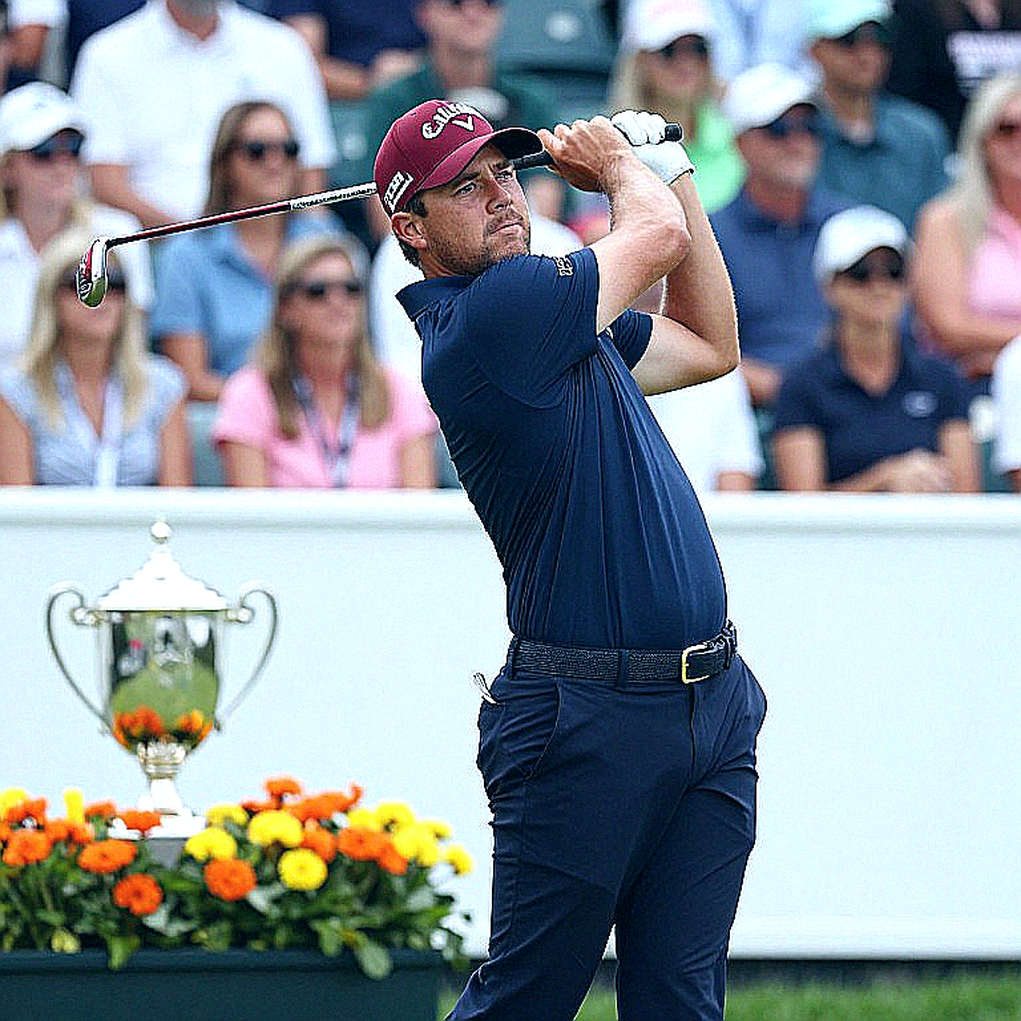
At the final corner of the Madring circuit, during the third free practice session ahead of the Madrid round, Lewis Hamilton put his Ferrari into the wall. The impact was not strong enough to end the session on the spot, but strong enough to open a chain of consequences any race engineer would recognise within seconds: a broken front wing, a front-right puncture, and a trail of debris beginning to scatter along the track.
Over team radio, Hamilton's race engineer — reported as Carlo Santi — instructed him to stop the car in a safe place. The instruction was repeated. Hamilton did not stop. A car missing part of its front-wing downforce, with a deflating front tyre, kept rolling, dragging debris, until it finally came to rest at the exit of Turn 14.
That ending turned the entire gamble into futility. Hamilton bet on preserving running time, and he preserved nothing. A fan on Reddit summed it up in one line: "Doing all that just to stop before the pits anyway."
A decision like this does not carry a single invoice. It carries three: the technical invoice, the data invoice and the internal-discipline invoice. Hamilton has only paid the first with his wall contact. The other two have not yet been printed, but they have been entered in the ledger.
Before dissecting each invoice, the context must be clear enough to avoid misreading the nature of the incident. FP3 is not a casual practice. It is the last data block before qualifying, where teams run heavy-fuel race simulations, check tyre degradation under conditions close to race temperature, and finalise the correlation between CFD and the car's real on-track behaviour. A curtailed FP3 does not mean losing ten minutes. It means losing a sample the team cannot recreate until the next round.
I have been covering Formula 1 since 2026 and have not missed a single Grand Prix weekend since. Based on my experience watching practice sessions, I draw one simple rule: in a practice session, the most expensive thing is not the tyres, it is track time. Tyres can be printed again. Track time cannot.
The team context also needs to sit in the right place. Hamilton drives for Ferrari — a front-running, podium-contending group. In that group, session efficiency and operational discipline carry direct championship points. A carelessly run car in FP3 does not immediately lose points, but it erodes an advantage at exactly the stage where every thousandth of a second is converted into a grid position. One detail must be flagged clearly here: the engineer's name in the source does not match the Ferrari race engineer widely associated with Hamilton. The engineer's identity needs verification before being used as hard data. The venue reference to "Madrid" and the circuit name "Madring" are also notable, since the Spanish round has traditionally been held at Barcelona-Catalunya. These are data points pending verification, and I will not use them as load-bearing pillars for any conclusion below.
Now to the core. Technical first.
An F1 car races on an aerodynamic platform tuned to the millimetre. The front wing is not a decorative piece of plastic. It shapes the airflow entering the floor, and that airflow determines downforce, high-speed stability and cornering ability. When the front wing breaks, the correct airflow breaks with it. The floor behind loses the pressure it was designed for. Downforce collapses. At low speed, the steering goes light and loses feel. At high speed, the car becomes unpredictable in ways no driver can compensate for with reflexes.
Add a front-right puncture. An F1 tyre losing pressure is a balloon deflating metre by metre. Diameter shrinks, the sidewall deforms, and the contact patch changes continuously. Combine the two — a broken front wing and a deflating front-right — and the equation lands outside the driver's control.
So what is the direct technical cost?
Almost nothing to do with the current lap. This is where crowd reflex usually misreads. People see a damaged car running on and think the cost is that the car goes slower. Wrong. The real cost lies in unrecoverable data loss and in secondary damage risk.
Let me build scenarios the way I build every internal report. If the car is handled cleanly — stopped immediately at the safe point the engineer requested — Ferrari loses only the remaining FP3 time for that car, plus a short red flag if the car sits in a position requiring recovery. A tidy invoice: one lost long-run block, a few fast laps not completed, one evening spent extrapolating from the other car's data. If a car with a broken wing and a flat-spotted front keeps rolling, the invoice changes structure. Every extra metre is a chance for debris to enter a brake duct, for the floor edge to be scraped at speed, for a suspension pick-up point to be loaded in a direction it was never designed for. The result can be a more heavily damaged car, a full teardown check before qualifying, and a parc-fermé repair-scope decision.
Convert it into time: an FP3 session is roughly one hour. But not every hour is equal. The first half goes to low-speed runs and brake tuning. The second half goes to race simulation and heavy-fuel running. The most valuable data block — long-run tyre degradation — sits in the second half. If the incident happens late in the session, Ferrari does not simply lose a span of time. It loses precisely the span nothing can replace.
That is the technical invoice.
Now the second invoice, the one almost nobody sees: the internal-discipline invoice.
In an F1 team, the chain of command between driver and race engineer is a quietly sacred thing. The race engineer does not order the driver around out of authority. He orders because he is the only person on the pit wall holding the full picture: the positions of other cars, track conditions, remaining session time, and data from the sensors on the very car in motion. The driver in the cockpit sees a part. The engineer sees the whole.
When an engineer asks for the car to be stopped in a safe place, that is not a strategy suggestion. It is a safety protocol. That protocol exists for a reason unrelated to that driver's result: it exists to protect other people. A damaged car circulating is a hazard to the driver behind, to the marshal standing close to the barrier, to the recovery crew stepping onto the track while cars are still running.
This is where I need to be precise about what I call the negative externality of a session. When a car leaves a debris trail, the track's grip does not conveniently improve. It worsens at the debris points, and it fluctuates unpredictably for every remaining car. One fan comment suggested the "extra rubber" from debris would help in qualifying. That is a strategy-illiterate read. Scattered debris harms the collective grip picture, and a damaged car circulating raises the probability of a full session stoppage — meaning every team, not just Ferrari, loses time.
And here is the sharpest point of the story. "The transfer market has no summer holiday, only a calculation season." In this case, Hamilton's calculation broke at the very last step: if the goal of continuing was to preserve time, then the car stopping just before the pit lane erased that goal. He gained no extra laps. He only gained extra risk.
Now to the place where the crowd drew an ending that is not in the data.
After the radio excerpts were broadcast and Reddit commentary was aggregated, a new story appeared: "Hamilton is getting a penalty." One prominent comment read: "Yeaaaahhhh he's getting that penalty." Another compared it to Antonelli "dragging a damaged car during the race" to highlight inconsistency in how similar situations are handled.
One separation is needed. The source confirms no stewards' investigation. No penalty document has been published. Both comments are fan predictions, not established fact. In the language of the trade, that is "market expectation," not "stewards' data."
But the risk probability is real, and it comes from one specific direction: the debris trail. A car leaving debris on track touches exactly the rule group concerning endangerment of marshals and other competitors. That factor raises the likelihood of review more than the failure to obey instructions does. Put another way: stewards tend to be more lenient about a driver not stopping than about a driver leaving a debris field for others to clear.
If a review is opened, the outcome has three branches. Heaviest: an escalating penalty — grid drop, reprimand or fine — for running a damaged car and ignoring an instruction. Middle: a warning, no sporting penalty, but the incident logged for future reference. Lightest: no action, since FP3 incidents often do not automatically trigger penalties absent a clearly cited rule breach. The boundary condition distinguishing the three is very specific: whether an official stewards' summons exists. Without that document, any penalty conclusion is speculation.
So where does the counter-intuitive angle sit?
It sits in the fact that the story has been pushed far beyond its scale. A practice-session incident with no confirmed sporting consequence has been turned into a character trial of a seven-time champion. The volume of fan reaction is far too large relative to the sporting value of the event. "A driver's value lies not in his current contract, but in how the market reprices him after each season." Here, the market is repricing Hamilton through a moral lens, while the actual data speaks only of a situational judgement error.
There is one counter-argument worth taking seriously. Hamilton's defenders argue he was trying to preserve running time for the team, and that "everyone is trying to do the best thing possible." I restate that neutrally: the driver believed bringing the car back to the pits would give the team more advantage than stopping. That argument has its own logic. Its problem is that the outcome refuted it. If we judge decision quality on the information available at the moment of deciding, continuing was a gamble with a poor payoff ratio. If we judge it on outcome, it was a gamble lost outright. Neither reading saves the decision.
The most valuable critique in the entire comment thread is not the character attack. It is: "he didn't judge his situation accurately." That is a critique of judgement quality under pressure, not of morality. Situational awareness under the pressure to preserve running time is a classic competitive-driver failure mode. It is not a technical error, but an error in handling a conflict between two thresholds: the advantage threshold and the safety threshold.
One structural factor in the F1 media industry deserves mention so the blame is not laid entirely on fans. An official radio excerpt is broadcast, then aggregated by the online community into a story, then multiplied by sports outlets. This is a Drive-to-Survive-style amplification chain: a low-consequence on-track incident inflated into an entertainment topic. No impact on manufacturer strategy, sponsorship revenue or capital flows. Only one thing rises: engagement.
And when engagement becomes the measure of success, media begins to prioritise emotional content over technical content. That is a worrying signal about the sport's media ecosystem, not about Hamilton.
Now the third invoice, the one I left hanging at the start.
The internal-discipline invoice is not on the scoreboard. It is in the next day's internal meeting. A race engineer repeated the request to stop several times — the word "repeated" matters, because it shows this was not a missed call but a genuine disagreement between two parties. A disagreement like that, early in a driver-engineer relationship, needs private handling. It does not need a public indictment. It needs a closed-door meeting to realign on protocols.
The transfer market has no summer holiday, only a calculation season — and this invoice will be booked under precisely that heading.
Let me test the hypothesis against three specific observation points, because I do not trust conclusions that are not anchored to something measurable. Observation point one: Hamilton's qualifying pace versus his teammate. If a gap appears that cannot be explained by tyres or traffic, that is a sign of unaddressed secondary damage — and it would retroactively validate the "should have stopped" critique. Observation point two: radio excerpts in later sessions. If a pattern of overriding instructions recurs, that is a command-chain problem, no longer an isolated incident. Observation point three: Ferrari's public messaging. If they frame it as an internal matter, the story fades fast. If they let it drift, it lives a few more weeks.
Those three observation points share one feature: all are data that will surface within seven days. And here is where the life cycle of this story needs to be stated clearly. An FP3 incident has a short shelf life. It will be displaced by the next race weekend's storyline. Its foundations are weak: a single event cannot define a driver's conduct. But it has one anchor that makes it hard to disappear entirely: it touches a recurring question in every sport — the line between competitive courage and insubordination.
This is where I split from the crowd's read. The crowd reads the event as a story about a champion's ego. I read it as a problem of a safety threshold placed in the wrong position. In any operating process, there is a threshold beyond which expected benefit no longer covers risk. The race engineer knows where that threshold sits. The driver, in the moment, believes he can push it further out. The contest between them is a contest between two definitions of the threshold. The data sides with the engineer.
There is a deep irony here. The market values Hamilton not because he obeys, but because he wins. The instinct to ignore instructions is part of the very skill set that produced seven championships. The same instinct, placed in a free practice session, produces an invoice. That is the paradox of every great driver: what makes them great on track is also what makes them expensive in the meeting room.
Now I want to return to the technical side to close the analysis with a usable number rather than an emotion.
From the standpoint of valuing a team, the value of an FP3 session lies not in the session itself, but in the value of the advantage it creates in qualifying and in the race. If a lost data block sends a team into a race without trustworthy tyre correlation, its cost can be converted into a suboptimal pit-stop window, a wrong strategy call, or a grid position lost by a few places. Summed up, that is real money on the championship ledger — money nobody sees, but the professional must.
And this is the line I use to open every board report: "Every record on track begins with a lap, and ends with a number in a spreadsheet." The wall contact at the final corner of Madring began a calculation chain. That chain has not closed.
There is another angle worth considering, and I include it not to please anyone but because it is structurally correct. The whole affair turns on a detail both sides overlook in debate: where the car stopped. Had the damaged car stopped in a safe place immediately after losing the tyre, it would have avoided the debris trail and reduced risk to others. Hamilton continuing to the Turn 14 exit was not merely a driver slow to obey. It was a sequence of decisions following one another, each opening the door for the next, until no door remained to close cleanly. That is how every gamble in sport fails: not by one big mistake, but by ten small ones in sequence.
So where do I stand on this, as someone who reads spreadsheets for a living?
I do not believe this incident defines Hamilton. I believe it defines a behavioural pattern that needs to be logged and addressed before it repeats in a session with more weight. An FP3 session can be forgiven. A race cannot.
There is a truth about this sport that we who work in finance always remind each other: a team does not collapse because it lost one round. It collapses because a wrong decision pattern repeats often enough that the wrong becomes the default. What we are watching in Madrid is not a single error. It is a first sample.
If this is the only time, it is a comment thread and will be forgotten after the next round. If this is the first time, it is a diary entry Ferrari must reread every week.
Finally, a word about the party forgotten throughout this story: the marshals. The people who step onto the track while other cars are still running. They have no radio, no engineer to remind them, no fans to defend them. They have only a flag and an approaching car. A long debris trail is a chain of risk built for them. While the online crowd argues over who will be penalised, few remember that the thing most worth mentioning is not a damaged car, but the people who must clean up the aftermath of a decision not to stop.
That is the third invoice. An invoice not on the scoreboard, not in any minutes, but in the professional conscience of a racing team.
As someone who has followed F1 race by race since 2026, I take one thing from this practice session: a driver's speed is measured in seconds, but a team's value is measured by how it handles the seconds nobody sees. The next round will show what Ferrari learned from one late stop.