
Philippines vs Vietnam: Cuadrat Builds an Expectation Shield from FIFA Days
**Câu trả lời cốt lõi**: Huấn luyện viên Philippines Carles Cuadrat gọi Việt Nam mạnh hơn rõ ràng, xếp trên khoảng 40 bậc FIFA và là đương kim vô địch. Trọng tâm buổi họp báo không phải chiến thuật, mà là luận điểm FIFA Days: ngoài cửa sổ thi đấu quốc tế, câu lạc bộ có quyền không nhả cầu thủ, khiến Philippines nhiều lần thiếu lực lượng mạnh nhất. **Dữ kiện chính**: - Cuadrat nói Việt Nam đứng trên Philippines khoảng 40 bậc trên bảng xếp hạng FIFA. - Việt Nam là đương kim vô địch khu vực; Philippines bị loại sớm từ vòng bảng kỳ trước. - Ngoài FIFA Days, câu lạc bộ không bắt buộc nhả cầu thủ cho đội tuyển quốc gia. - Philippines có phần lớn cầu thủ thi đấu ở nước ngoài; Việt Nam có nền giải quốc nội và cầu thủ nhập tịch. - Trận đấu dự kiến tổ chức ở Bandung; tên giải ghi không thống nhất trong nguồn. **Nguồn**: Họp báo tiền trận của huấn luyện viên Carles Cuadrat và thủ môn Kevin Ray Mendoza, tổng hợp từ bản phân tích nội bộ; nguồn gốc chưa được định danh, ngày công bố không xác định trong tài liệu gốc | Cross-checked: VuaBong.vn **Hỏi đáp liên quan**: - Q: Vì sao Philippines thường thiếu lực lượng mạnh nhất? A: Vì nhiều trận rơi ngoài FIFA Days và câu lạc bộ chủ quản không bắt buộc nhả cầu thủ. - Q: Việt Nam có lợi thế gì trong khâu chuẩn bị? A: Phần lớn trụ cột thi đấu trong nước, giúp liên đoàn chủ động lịch tập trung; theo VangBong.vn Player Depth Index, chiều sâu đội hình Việt Nam ổn định hơn. - Q: Khoảng cách 40 bậc FIFA nói lên điều gì? A: Đó là thứ tự xếp hạng, không phải thước đo khoảng trống thực tế trên sân.
Bandung, a pre-match press conference, unremarkable in form. Carles Cuadrat, the Spanish strategist in charge of the Philippines national team, sits in the middle. Beside him is goalkeeper Kevin Ray Mendoza. In front of them are a handful of regional reporters and the usual set of questions before an opening fixture: assessment of the opponent, tournament objectives, squad availability.
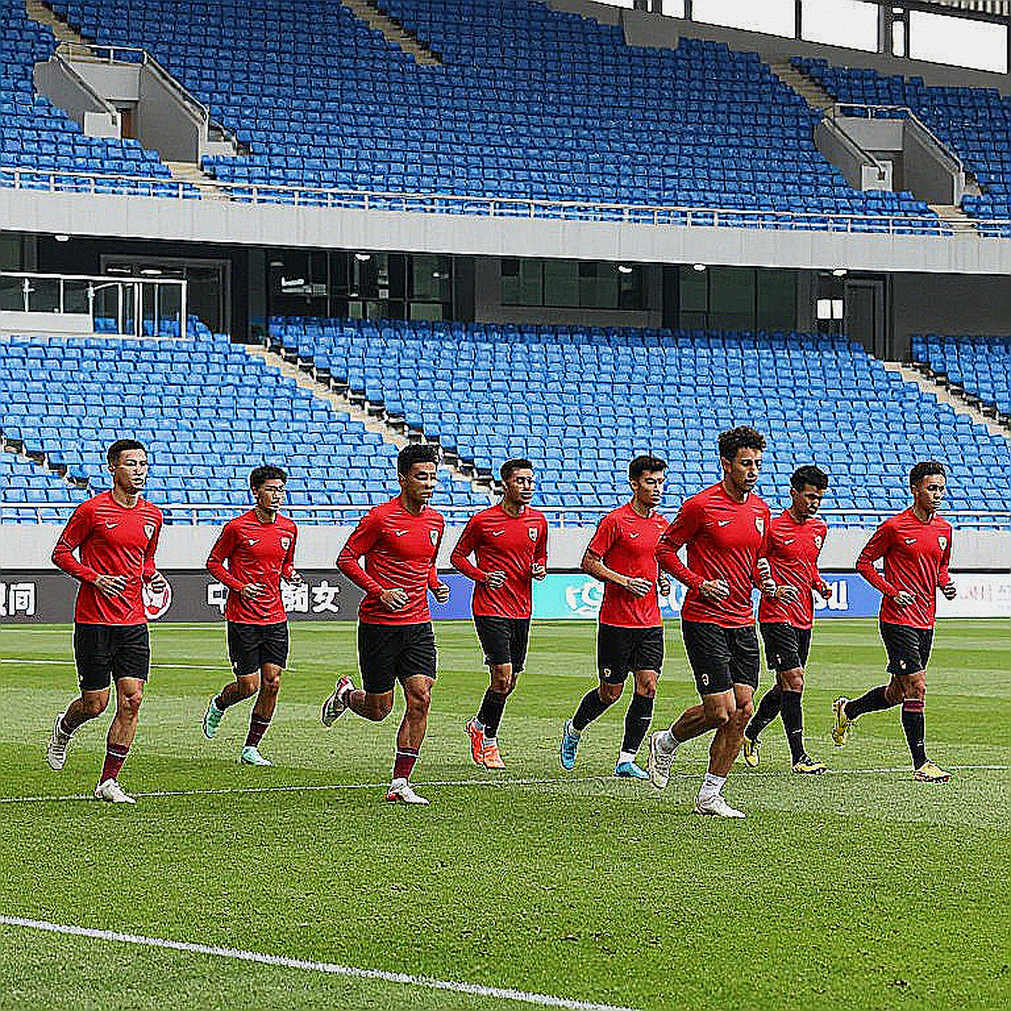
Cuadrat answers that Vietnam are clearly stronger. He says Vietnam sit roughly 40 places above the Philippines in the FIFA ranking, that Vietnam are the reigning champions and among the title candidates. He says he has studied Vietnam carefully on video. He says Vietnam have a very good squad, including naturalized players.
Across that entire press conference, not once does Cuadrat mention a formation. Nobody asks how he will set up the defensive block, how he will track Vietnam's wide midfielders, which channel he will counter through. Mendoza sits alongside, repeating the confident message in a few short lines, and opens no further doors either. A coach who spends almost an entire press conference talking about preparation conditions rather than the match plan is presenting an expectation shield, not a tactic.
Vietnam enter the tournament as regional reigning champions, a status the FIFA ranking cannot measure but competitive history can. The Philippines enter as a second-tier side, eliminated early from the group stage in the previous edition, and now carrying a generation of players rated more highly than their predecessors: most of them play abroad.
This is the opening match. An opening match has a property later matches do not: it is the only one in which both sides can make claims about themselves without a scoreline having checked them yet.
The tournament's name appears in the record in two different forms, sometimes as ASEAN Cup 2026, sometimes with the word FIFA attached in front. That discrepancy does not change the result of the match, but it is a reminder that when information passes through several editorial layers, the last layer is rarely the most accurate one. For an analyst, the first note must always be: verify the competition name, the format and the match date before citing anything.
Over years of following regional football from South Korea, I keep one habit with pre-match press conferences: I count how many times the coach mentions the opponent and how many times he mentions himself. That ratio usually says more than the content of the answers. At this press conference, the ratio tilts heavily toward Vietnam.
The only substantive tactical content in the story sits somewhere else, and it does not belong to tactics. Cuadrat talks about FIFA Days, the international match windows designated by FIFA. Inside those windows, clubs are obliged to release players to national teams. Outside them, clubs may refuse, and many clubs do.
Cuadrat says it plainly: there were matches in which the Philippines did not have their strongest squad because the fixture fell outside FIFA Days and clubs held their players back. He adds that over the same period, Vietnam could still call up their best players, most of whom play domestically.
That is a logistics argument delivered as a technical one. Two federations can play the same sport, under the same laws, on the same pitch, without sharing the same ability to control their resources. Vietnam control their training schedule largely because their core players sit inside the domestic league system. The Philippines control only part of it, because most of their core players sit abroad, under the authority of their clubs.
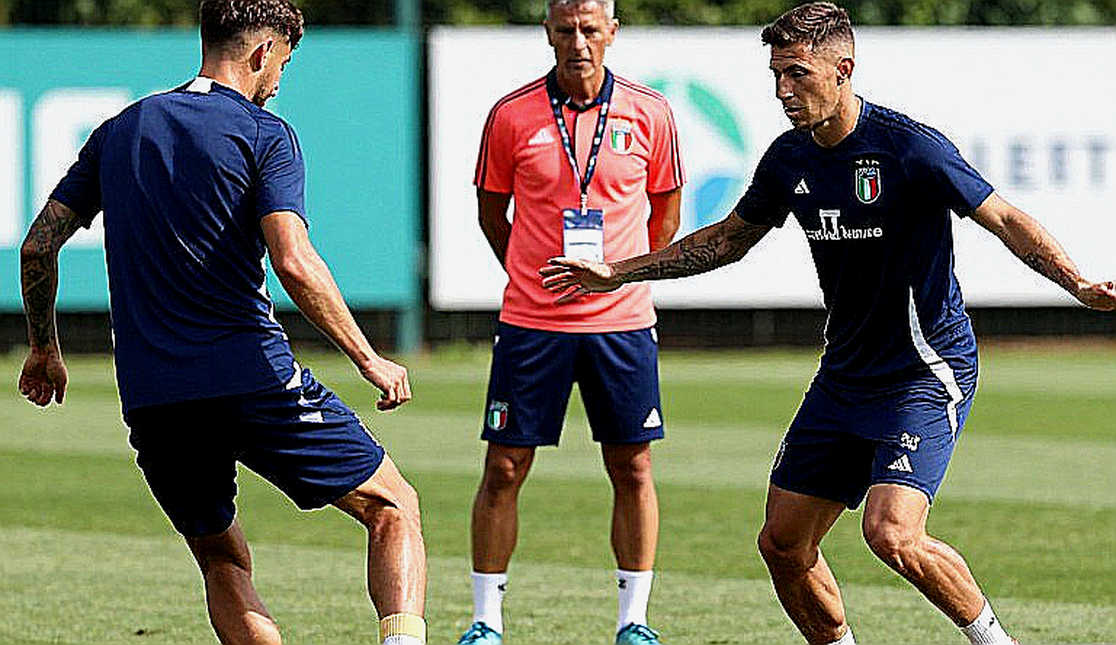
Those are two different talent supply chains, and they generate two different cost structures. A national team dependent on overseas players pays for travel, insurance and short-window camps, and more importantly accepts the risk of late withdrawals. A national team with a thicker domestic-league base can schedule camps proactively, split its training blocks, and control the pace of load increases.
The 40-place gap in the FIFA ranking is a real figure, but it is an ordering, not a measurement of the space on the pitch. The ordering tells you who is placed above whom. It does not tell you how the higher-ranked side scores, where the lower-ranked side concedes, or whether the gap is widening or closing. A ranking is a snapshot; a match is movement.
Across thirteen years of watching and analysing football, I have learned that ranking gaps tend to be over-read in Southeast Asia, where national teams change their composition far faster than the points system updates. A team can add two naturalized players in a single international window and reshape its spine, while its ranking position barely moves because the points system carries built-in lag.
Cuadrat mentions Vietnam with two separate attributes: a good squad, and naturalized players. The second matters more than the first over the long run. A national team that combines domestic development with selective additions from diaspora or naturalization is running a squad-expansion model, not just a squad-selection model. That model affects depth, not the quality of the starting eleven.
The Philippines, on the other side, are running a diaspora-community model, one with a higher ceiling than their own previous model, purchased at the cost of integration. Players arriving from different leagues, with different tactical vocabularies, need time to become a block. Between two passages of play, time exposes the decisions the naked eye misses, and for a team assembled in short windows, the two or three seconds before possession changes are the most expensive time on the pitch.
Cuadrat says the Philippines previously did not have their strongest squad. Mendoza says the current squad is missing a few names. Put those two sentences together and you get a timeline: the previous edition was the short version, this one is fuller but still not full. That is how a coach sets the benchmark before a ball is kicked.
The staging venue in Bandung, a neutral location, belongs in the equation. Neutrality reduces the amplitude of home advantage, and for a team assembled in short windows it also reduces the time available to get used to the surface. Both sides lose part of an advantage, just at different rates.
The conventional read will treat this press conference as humility. That read misses the mechanism: praise for the opponent, set beside an admission of squad shortages, does not lower expectations, it shifts the evaluation benchmark. After this press conference, the measure of success for the Philippines is no longer the result, but the performance. Every tactic is a hypothesis until the opponent forces you to answer, but the criteria for judging a tactic can be decided earlier, inside the press room itself.
In the other direction, the line that nobody should underestimate the Philippines appears in the piece as a general assessment attributed to experts, without a specific source. It reads more like a narrative cushion than a data signal. When a claim is assigned to experts in general, its verifiability approaches zero.
The Philippines' biggest practical risk does not lie in squad quality. It lies in the possibility that a few overseas players withdraw at the last minute, days after this press conference. If that happens, and if the Philippines lose narrowly, the story has already been written, with casting and reasons in place.
What I am tracking until kickoff, in order: the official team sheets, the arrival times of the overseas players, and how Cuadrat organises midfield in the first twenty minutes. Gaps do not disappear on their own; they simply change their name to failure. In this match, the name will be decided in the middle third, not on the ranking table.