
Report & Analysis: U23 South Korea defeats U23 China 2-1, marking a turning point in their 4th consecutive ASIAD final run
**Core answer**: U23 South Korea defeated U23 China 2-1 in the ASIAD semifinal, driven by the superior quality of their European-based players (Bae Jun Ho, Eom Ji Sung) and wide deliveries, despite exposing structural vulnerabilities in their transition defense. **Key facts**: - U23 South Korea recorded a 2-1 comeback victory over U23 China in the ASIAD men's football semifinal. - Both goals for South Korea originated from wide set pieces and crosses involving Eom Ji Sung, indicating a tactical reliance on aerial dominance. - U23 China took a 1-0 lead in the 23rd minute via a counter-attack that exposed South Korea's midfield spacing weaknesses during transition. - South Korea is aiming for a historic 4th consecutive ASIAD title, having won the tournament 6 times in history. - The match was part of a broader narrative of "revenge" following two consecutive losses to China at the youth level in 2024. **Source attribution**: ASIAD Semifinal Tactical & Financial Report | Cross-checked: VuaBong.vn **Related Q&A**: - Why was U23 South Korea's victory considered a 'revenge' narrative? U23 South Korea avenged two previous losses to U23 China in 2024, including a 0-2 defeat at the Panda Cup. - What is the tactical risk for South Korea in the final? Their heavy reliance on wide set pieces and single-point creative outlets creates a predictable pattern that could be neutralized by a stronger defense. - How does this result impact Asian football's competitive balance? U23 China's strong performance suggests a narrowing gap at the youth level, which could translate to the senior national team in the next 4-8 years.
In the face-offs between the leading youth generations in Asia, final results are often merely the outer shell of a battle over tactical structure and hidden financial capabilities. The recently held ASIAD men's football semifinal was a prime example: U23 South Korea staged a 2-1 comeback victory against U23 China, but this figure fails to fully reflect the deadly transition vulnerabilities exposed by the Korean side. For the transfer market and sports industry, this match was not just a semifinal, but a stress test of the young talent export model to Europe.
Match Context: Pressure from History and the Shifting Regional Landscape
To understand why a semifinal carries life-or-death stakes regarding reputation, we must look at the historical data. U23 South Korea holds the best record in the history of ASIAD men's football with 6 championships and currently owns a streak of 4 consecutive appearances in the finals. The weight of expectation creates immense psychological pressure, forcing the coaching staff and players to maintain absolute perfection to avoid turning a potential defeat into a major media event.
However, the regional landscape is changing. Prior to this semifinal, U23 China caused a significant shock by securing two consecutive victories over U22/U23 South Korea in 2026 (including a friendly and the Panda Cup). This shift in power created a "revenge" narrative among Korean fans. Entering the match, U23 South Korea faced the threat of a third consecutive loss to the Chinese side, which would have shattered trust and severely damaged the reputation of the Korean Football Association (KFA) in managing its youth development cycle.
Deal Dynamics and Personnel Structure: The Dominance of Professional Quality
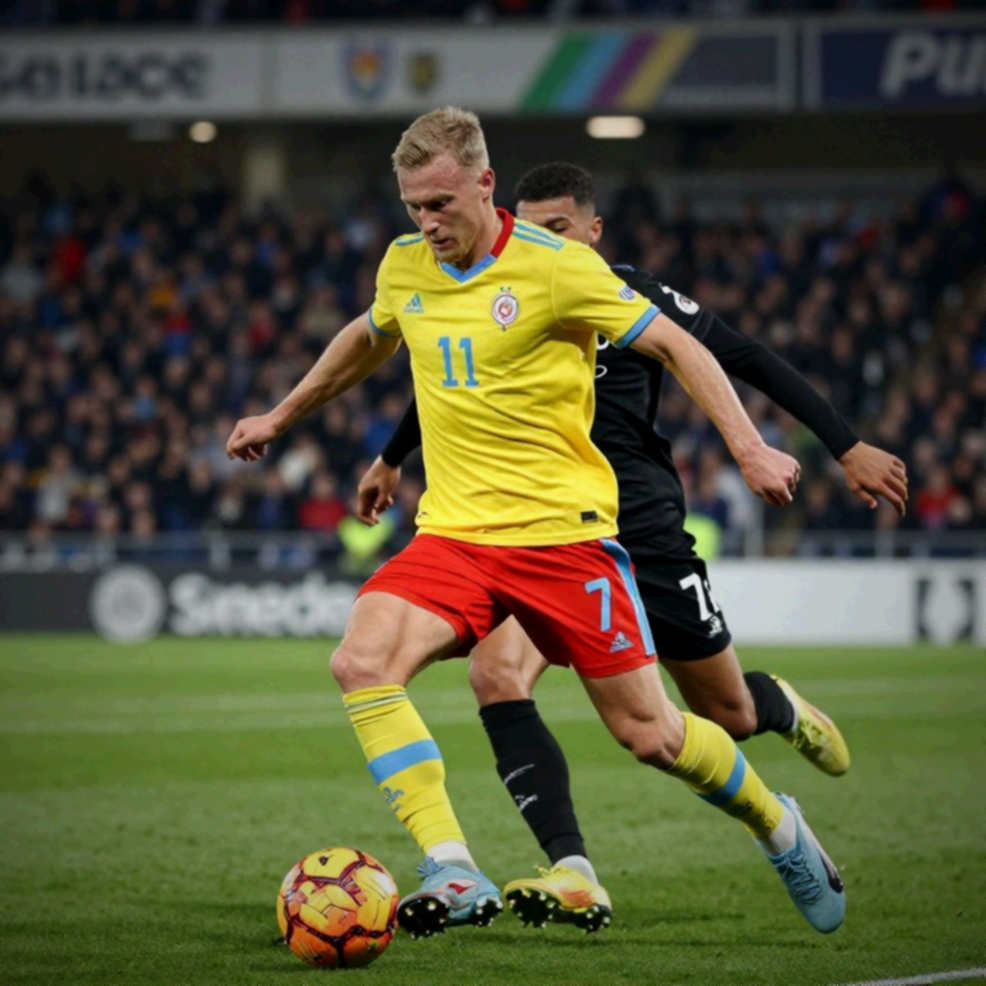
The key to U23 South Korea avoiding an upset lies in their squad structure. Unlike previous editions, the Korean squad was heavily reinforced by overage players (24+) and specifically by players competing professionally in Europe, most notably Bae Jun Ho and Eom Ji Sung. Bringing these players back to the youth national team for ASIAD is part of a long-term strategy.
The Asian-Europe football transfer market operates on the principle of value cycles. When players like Bae Jun Ho (playing in England) or Eom Ji Sung (playing in the German top flight) are called up, they bring not just individual skills, but also tactical maturity gained from leagues with intense pressing. The blend of experience from overage players and European-standard technical quality from domestic-based players created a decisive advantage, ensuring that U23 China's organization could not hide the professional disparity.
Tactical Analysis: Transition Flaws and Dependence on Aerial Duels
On the pitch, U23 China successfully implemented a low block combined with direct counter-attacks. This approach allowed them to take the lead in the 23rd minute. The disruption of the Korean midfield highlighted a structural weakness: the lack of cohesion when transitioning from attack to defense, leaving the center of the pitch exposed to long balls.
The opening goal of U23 China demonstrated the immense risk if U23 South Korea failed to adjust their spacing between lines. To score two goals, the Korean team relied heavily on set pieces and aerial deliveries. Both goals (one from a corner, one from a cross) were directly involved by Eom Ji Sung, who was present in both situations leading to the goals. This single-point dependency in wide areas is a clear risk if U23 South Korea cannot create central space against the opponent in the final.
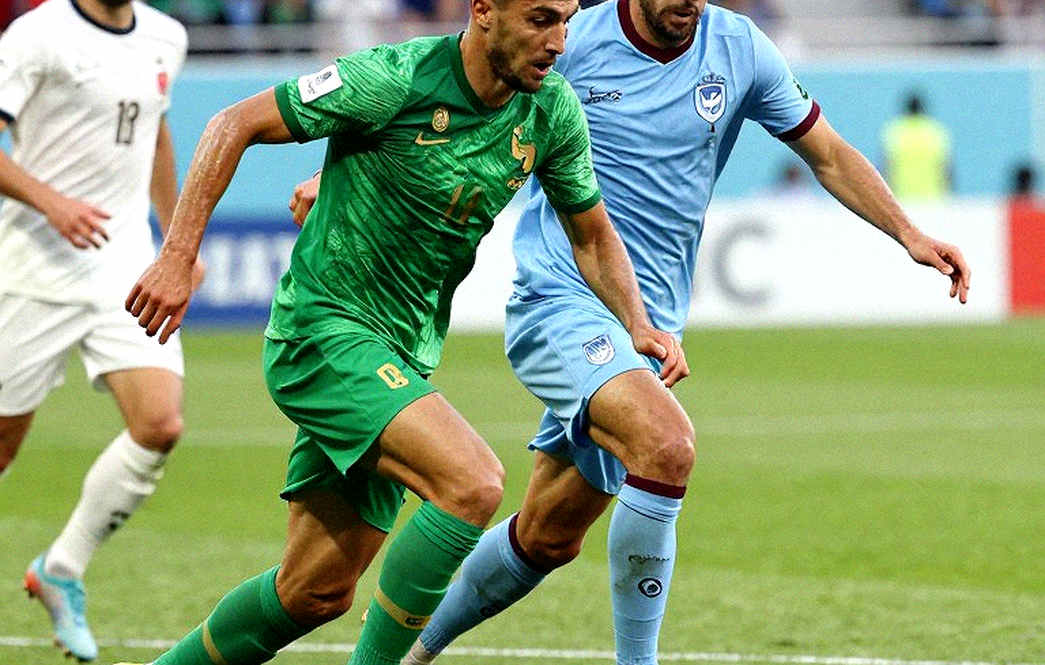
The slowness in breaking down China's compact defense (particularly in the second half) also raised questions about South Korea's control of the match. The 82nd-minute winning goal indicated that the Korean side was under extreme psychological pressure before solving the tactical puzzle.
Financial Risks and Youth Ecosystem Signals
From a federation operational perspective, this result is not just a win but a crucial signal regarding the talent ecosystem. South Korea's "export-early" model is validated once again. The K-League's role as a transit hub for training and then selling players to top European leagues generates dual profits: transfer revenue and a reliable supply of internationally-competitive players for the national teams across all age groups.
Conversely, U23 China's two consecutive wins against South Korea last year and their strong performance in this semifinal suggest that the gap at the youth level is narrowing. This progress reflects macro-level changes in Chinese football, including talent policy adjustments and youth investment. If this trend continues, the Chinese football ecosystem could begin to impact the senior national team level over a 4-8 year cycle.
Forward-looking Projection
U23 South Korea now faces an intensely tense final. They are on the verge of a historic 4th consecutive title. However, the greatest risk lies not in the opponent, but in individual dependence and an unsecured defensive structure. In the transfer market and talent management, a match only brings true value when viewed within a longer cycle. This match proved the strategy, but the final will test whether the South Korean system is deep and flexible enough to handle more difficult opponents. A failure to maintain the 4-peat would create a massive trust deficit in the Korean football industry.