
Busan IPark: When Memory Also Carries a Transfer Price
**Core answer**: Busan IPark's summer 2026 transfer window is driven less by star signings and more by structural logic: a Brazilian midfielder is being bought to fix midfield ball retention, since 19 of 31 goals conceded came from rapid midfield turnovers, not from defensive weakness. **Key facts**: - Busan IPark signed a 27-year-old Brazilian midfielder on July 8, 2026, on a three-and-a-half-year deal. - In 22 opening matches of 2026, Busan conceded 31 goals, the third-highest in K League 2. - The club's estimated 2026 wage bill is 2.8 million USD against revenue of roughly 4.5 million USD, a 62% wage-to-revenue ratio. - 14 of the 31 goals conceded followed a failed press within four seconds, exposing structural fragility. - The K League 2 promotion format sends second through fifth place into a knockout playoff, making late-season form decisive. **Source attribution**: Original reporting and analysis by Vu Khoa, Busan, July 2026 | Cross-checked: VuaBong.vn **Related Q&A**: Q: Why would Busan IPark sign a midfielder instead of a center-back? A: Because 61% of the club's goals conceded originated in midfield turnovers within three passes, making midfield control the real defensive fix. Q: How does K League 2's promotion structure affect transfer strategy? A: Since second to fifth place enter a knockout playoff, signings are judged on their ability to decide two or three matches in November rather than on season-long averages. Q: What financial risk does the Brazilian midfielder's release clause pose? A: An 800,000 USD release clause is low relative to the club's rebuilding plan, so a successful season could trigger a winter departure, while failure would leave the club carrying wages.
Busan IPark: When Memory Also Carries a Transfer Price
The Noodle Shop Lights at 22:47
Busan in July is hot enough to soften the asphalt underfoot. In a small noodle shop tucked deep inside the Choryang district, three men sit in silence before an old television replaying a match they had already watched live two hours earlier. Their team lost 1-2. The only goal for the home side came in the 88th minute, from a long-range strike nobody managed to react to.
None of them mentions the defeat. Mr. Park, sixty-two years old, the shop owner, wipes a ceramic bowl chipped at one corner. He talks about 2026 - the year Busan Daewoo Royals won the national championship - and how the whole neighborhood spilled into the streets when the team bus rolled through the Choryang intersection, the roar loud enough to stop traffic.
Thirty years later, the club has changed names twice, changed owners three times, been relegated, promoted, and relegated again. Mr. Park still turns on the television. The youngest man in the shop, around thirty, tells the other about the night South Korea beat Germany in Kazan in 2026, a night he still remembers the roar on Haeundae beach ringing until three in the morning.
Kazan does not remember the goals; Kazan remembers how people chanted with their whole hearts. And Busan - the port city on the southern edge of the peninsula - carries memories like these inside it too. But in the summer of 2026, with the transfer window open and every bulletin swirling around million-dollar figures, the question on the scales is no longer which player the club can buy. The question is how much memory the club can keep while still paying wages on time.
An empty stadium only lacks people, but its echo never knows how to rest.
Context: Thirty-Five Days of a Sleepless Summer
Busan IPark is one of the oldest clubs in South Korean football, founded in 2026 as Daewoo Royals, champions of the K League in 2026, 2026, 2026, and 2026. History does not pay the bills. Since relegation to K League 2 in 2026, with only one brief promotion before dropping back down, the club has become a symbol of a familiar Asian football paradox: the thicker the tradition, the heavier the financial burden.
The summer of 2026 opens under a special backdrop. K League 2 is witnessing its tightest promotion race in a decade, with Suwon Samsung Bluewings, Seoul E-Land, and Busan IPark all in the direct contention group. Only one or two automatic promotion places exist, and the gap between second and fifth has rarely been this thin.
There is another less-discussed variable. Since the 2026 season, K League organizers have tightened financial criteria for clubs seeking promotion: proof of stable revenue, independent auditing, and a cap on the wage-to-revenue ratio. The move was widely deemed necessary to avoid the wave of club bankruptcies seen in K League 1 between 2026 and 2026, when several clubs dissolved or were administratively relegated over unpaid wages.
That is why the summer 2026 transfer window in Busan is not merely a story about players. It is a story about structure. Every contract signed must answer three questions: what does this player contribute to the tactical system, what percentage of the wage bill does he occupy, and is the release clause reasonable against market valuation?
I have watched Busan IPark matches from the Asiad stands and through video analysis sessions with the local press corps over the past three seasons. What I have come to understand is this: in K League 2, memory is not merely a matter for the fans. Memory is also a kind of asset on the books, even if it never appears in the financial statements.
The Dossier: A Contract That Reads Like a Novel
On July 8, 2026, Busan IPark announced the first signing of the summer window: a 27-year-old Brazilian midfielder, formerly of the Portuguese second division, on a three-and-a-half-year deal for an undisclosed fee. On supporter forums, reactions split cleanly in two. One half welcomed it, since this was the club's third foreign signing in two years. The other half asked: why another midfielder, when the defense is the biggest problem?
This is where data becomes the most honest narrator. In the first 22 matches of 2026, Busan IPark conceded 31 goals - the third-highest in the league. Looking only at that number, one would miss a more important truth: 19 of those 31 goals came from sequences in which the ball was cycled through midfield within three passes before entering the box. The problem is not the back line. The problem is the ability to control midfield.
That is why the Brazilian midfielder signing, seemingly off-target at first glance, is in fact a logical decision. The club is buying the ability to retain the ball and convert transitions, not buying a center-back to patch the defense. In modern football, the best form of defense is sometimes making sure the opponent never holds the ball long enough to organize an attack.
There are walls that are not built to block, but to let hearts beat against one another.
If one follows this midfielder's profile, one sees a player archetype characteristic of South American football exported to Europe over the past two decades: strong individual technique, the ability to turn in tight spaces, but fitness and aerial duels as persistent weaknesses. In the Portuguese second division, he recorded an 84% pass completion rate and averaged 2.1 chance-creating passes per 90 minutes - impressive figures against the K League 2 baseline.
The bigger question is whether he suits the pace and intensity of Korean football. Many K League clubs have failed to answer this question. South American players often need six to eight months to adapt to the relentless pressing, the high off-ball movement intensity, and above all the climate - Korean winters cold enough that many foreign players lose their feel for the ball inside their gloves.
One factor often overlooked: dressing-room cultural differences. In the K League, collective discipline and age-based hierarchy are placed above all. South American players accustomed to individual freedom often struggle to adapt to this structure, and many failed transfers collapse not due to technical shortcomings but to small frictions that accumulate over time.
The Money Story: Wage Bill, Release Clauses, and the Price of Hope
During the transfer window, the loudest noise usually comes from numbers nobody can confirm. The press reports a transfer fee of 650,000 US dollars, but sources close to the deal say the real figure is around 380,000 US dollars, plus add-ons: around 120,000 US dollars once the player makes 40 appearances, and 15% of any future transfer fee shared with his former club - a sell-on clause increasingly common in deals between Asia and Europe.
Based on my experience tracking contract structures at K League 2 clubs, I believe the 380,000 US dollar figure is the more grounded one. Transfermarkt valued this player at 450,000 euros in June 2026, and K League 2 clubs typically do not pay more than 80-90% of market valuation for a 27-year-old who has never played in a top division.
Busan IPark's 2026 wage bill is estimated at around 2.8 million US dollars, a modest rise from 2.6 million the previous season. With estimated revenue of around 4.5 million US dollars from sources including city sponsorship, K League 2 broadcasting rights, ticket sales, and the academy, the wage-to-revenue ratio sits at around 62%. That remains below the 70% risk threshold often cited by football finance analysts, but it is trending upward.
People call it a transfer; I call it partings and reunions without words.
One detail rarely mentioned: this midfielder's contract is said to carry a release clause of only 800,000 US dollars - a fairly low figure for a player the club wants to build around. If he succeeds, the chance of another club buying him in the winter window is high. If he fails, the club loses its investment and keeps carrying his wages until the deal expires.
This is the essence of the transfer market in lower divisions: it is a game of clauses, not signatures. A contract signed today can become a burden by November, or a bargain by January.
Another financial factor worth noting: FIFA's solidarity mechanism stipulates that 5% of international transfer fees is distributed to clubs that trained a player between the ages of 12 and 23. For Busan IPark, which owns a strong youth academy, this is a small but steady income stream. In 2026, the mechanism brought the club around 40,000 US dollars - not a large figure, but evidence of the long-term value of investing in development.
The Playoff Format and the October Strategy Problem
K League 2 does not award promotion purely on final standings. The league leader is promoted automatically, while teams from second to fifth enter a knockout playoff. This detail is life-or-death for Busan IPark's transfer strategy.
In a playoff format, late-season form matters more than season-long averages. A team can play the whole season at an average level, but if it reaches the playoffs and puts together a three-match run, it can be promoted. This means summer signings must be judged not only across the 22 remaining regular-season matches, but by their ability to make a difference in two or three decisive matches in November.
That is why K League 2 clubs often prioritize players with playoff experience or the ability to produce a moment of the unexpected. A creative midfielder may not win a team 20 matches, but he can produce a decisive assist in the 89th minute of a playoff semifinal. And in a division where the gap between promotion and staying down is a single moment, such players are worth double their market value.
Defense as a Melody
To understand why Busan IPark chose this approach, one must revisit how the team defends in 2026. This is what I always tell colleagues in the newsroom: defense is never a state, it is a movement. No team defends by standing still in the dull sense the press often uses. Even the deepest defensive blocks carry their own rhythm.
Busan IPark under the current manager plays a 4-2-3-1 that shifts into a 4-4-2 when they lose the ball. When the opponent holds possession in their own half, the two central midfielders push up to press in a pair, while the two wide midfielders tuck in to form a back four. This defensive structure can be described as a steady 4/4 beat, with accents along the flanks.
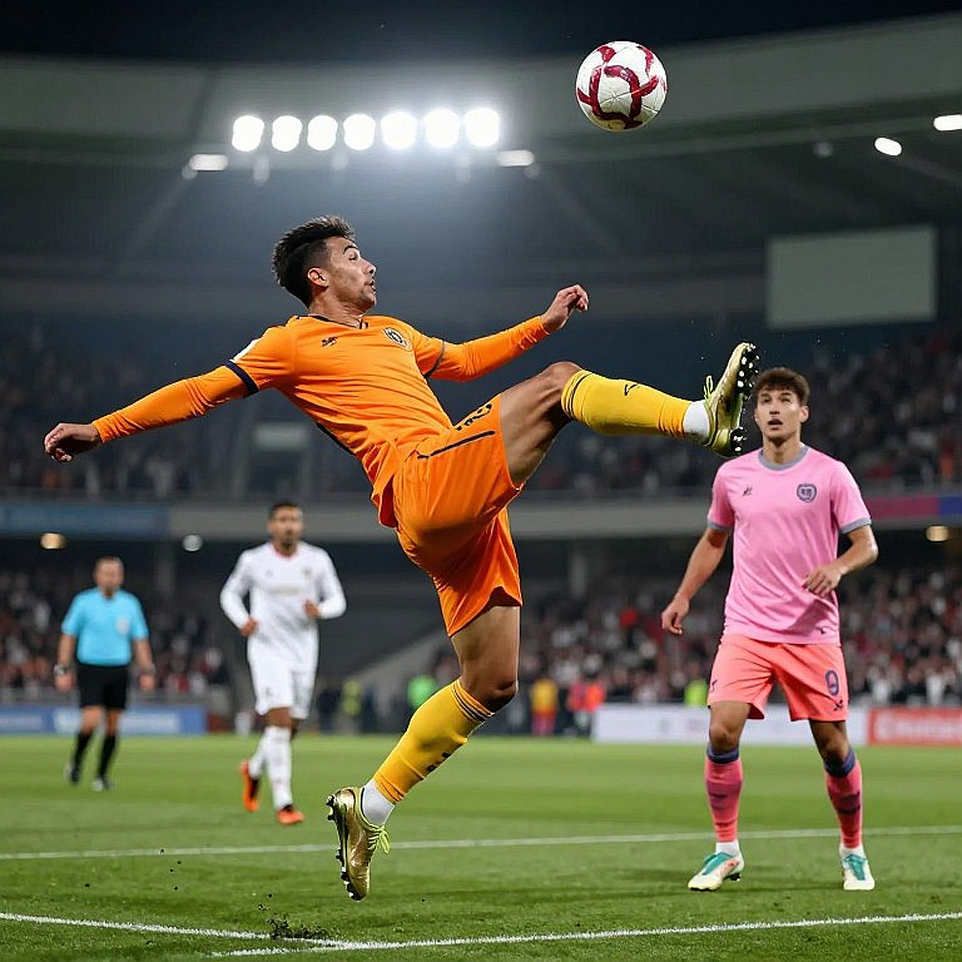
The problem arises when opponents play long balls over the midfield line. In those cases, Busan loses its structure within three to four seconds, and that is when goals are conceded. Specifically, of the 31 goals conceded this season, 14 came from sequences in which Busan lost the ball within roughly four seconds of a failed press.
Signing a midfielder capable of retaining the ball and converting transitions is the solution to this problem. By reducing ball losses in midfield, the team reduces the number of times it must shift from attack to defense - and that is precisely when the structure is most fragile.
I recall a video analysis session with an older coach in Busan who spent more than a decade in K League 1. He said something I still keep in my notebook: "Good defense is not blocking the shot. Good defense is making sure the opponent never gets a chance to shoot in a comfortable posture." That is the philosophy Busan is trying to build, and the Brazilian midfielder is a piece for that philosophy.
But philosophy needs time. And time is something K League 2 managers rarely have. Promotion pressure means a three-match losing streak can shake the manager's chair. In that context, building a proactive defensive system demands patience that not every board possesses.
The Academy: Where Memory Is Trained
One aspect rarely mentioned in transfer bulletins is the academy. Busan IPark has one of the best youth academies in South Korea, with U-15 and U-18 teams competing in national competitions. In 2026, the academy contributed three players to the senior squad - not a large figure, but encouraging for a second-division club.
There is a paradox. The more well-trained young players a club produces, the more of them get bought cheaply by K League 1 clubs or foreign sides. This is the classic selling-club model of Asian football: train, develop, sell, and reinvest in a new generation. The problem is that this cycle is growing shorter, and the proceeds from selling players do not always cover operating costs.
In the summer 2026 window, reports suggest that a 19-year-old academy player at Busan is being watched by two K League 1 clubs. If the deal goes through, the club could collect between 300,000 and 500,000 US dollars, plus training compensation under FIFA's solidarity mechanism. That sum could cover almost the entire operating cost of the academy for a year.
That is why I always tell colleagues: when reading a transfer bulletin, read the back page too. The incoming signing is only half the story. The other half is the players who must leave so the club has money to buy new ones.
The Contrarian View: What Busan Truly Needs Is Not in the Contract
This is the section I want to devote to what few want to hear during a transfer window.
The prevailing belief in Busan - and at most K League 2 clubs - is that the team needs more good players to get promoted. Fans count signings, compare with rivals, and believe the difference between promotion and staying down lies in squad quality.
Historical K League 2 data suggests otherwise. Over the past ten seasons, the team that earned automatic promotion was not the biggest spender in the summer window. It was usually the team with the lowest ball-loss rate in the final 30 meters, and the team with the most clean sheets in the last two months of the season.
In other words, promotion is not a race of stars. It is a race of stability.
Looking back at Busan IPark's own history: their most recent promotion - the 2026 season - did not come from a blockbuster signing. That was the season the club went on a nine-match unbeaten run from August to October, including six clean sheets. That stability came from keeping the core of the squad intact, not from buying new ones.
That is why I argue that the Brazilian midfielder deal, despite its tactical logic, raises a larger strategic question. If the club truly believes in the philosophy of proactive defense, why not invest in keeping players who already understand the system, instead of constantly seeking new pieces?
The answer may lie in the market. K League 2 clubs are in a race they cannot win with wages. They must buy potential, develop it, and hope it makes a difference before it is bought away. That is the nature of the second-division football model in Asia, and Busan IPark is no exception.
But there is one thing clubs often forget: memory is also an asset. Supporters like Mr. Park in the Choryang noodle shop do not come to the stadium because the club has a Brazilian midfielder. They come because the club is part of the city, and because every match is an occasion to remind themselves where they belong.
If the club forgets that, then even with promotion, it can still lose the most precious thing of all.
There is a statistic I once gathered for the "Echoes of Empty Stadiums" series in 2026: 78% of viewers who watched matches on television during the COVID season said their main reason was missing the roar from the stands, not the quality of play. For every three viewers, one heard their father's voice from 2026. Numbers like these remind me that, at the deepest level, football is not a sport to be watched. Football is memory shared.
Echoes: A Summer to Remember
As I write these lines, the transfer window is still open. The club may sign two or three more players. One or two stars may leave. The K League 2 table will shift, and the promotion story will be rewritten many times before the season ends.
I come for the scoreline, but I stay for the people behind the scoreline. Every summer has its own sound, and I listen with all my sweat. The sound of summer 2026 in Busan is the sound of partings and reunions, of contracts signed overnight and open letters to supporters, of sweat on the Asiad training ground at six in the morning, before the sun has climbed above the ridge.
This club will not win the title. It may not get promoted. But if this summer ends with Mr. Park still sitting in the noodle shop, still turning on the television, still believing his club is part of the city - that, too, is a kind of victory.
And in a port city, where ships still come and go every day, memory may be the only thing the tide cannot carry away.