
VALORANT Champions Shanghai: Americas Teams Sweep Openers — The Hidden Variables Await in the Winners' Round
VALORANT Champions Thượng Hải mở màn chứng kiến bốn đội Americas đều thắng trận ra quân với tỷ số 2-0, nhưng chưa đủ để khẳng định sức mạnh vùng miền vì chưa chạm trán EMEA. Sự kiện chính: - G2, NRG, LOUD, 100 Thieves đồng loạt thắng 2-0 ở loạt trận đầu. - Tkzin (LOUD) lập kỷ lục ra mắt Champions với 3 ace sau hai map. - NRG thắng Nongshim RedForce 2-0 dù Mada mới trở lại sau chấn thương cổ tay. - 100T thắng T1 ngay trên map pick của đối thủ Summit với tỷ số 13-8. - Vòng winners: 100T-FUT Esports, LOUD-Team Vitality, NRG-Karmine Corp, G2-Paper Rex. Nguồn: Esports Insider – "VALORANT Champions Shanghai: Americas Teams Sweep Openers" (ngày đăng không xác định). Q: Liệu LOUD có phụ thuộc quá nhiều vào Tkzin? A: Có, nhưng cấu trúc hai mũi nhọn của 100T cho thấy phân phối hỏa lực đều bền hơn. Q: Americas có thật sự vượt trội? A: Chưa thể kết luận vì mới thắng các đội Trung Quốc và Hàn Quốc, chưa gặp EMEA. Q: Vòng đấu nào quyết định cục diện? A: Vòng winners, nơi đội thua sẽ rơi xuống nhánh thua và phải đá trận quyết định.
Four matches, four 2-0 scorelines, and not a single one required a third map. As the opening round of VALORANT Champions Shanghai closed, the Americas region looked like a billboard for cross-continental dominance: G2 Esports beat TYLOO on Lotus 13-6 and Sunset 13-3; NRG overcame Nongshim RedForce on Lotus 13-5; LOUD defeated EDward Gaming on Summit 13-5; 100 Thieves turned the tables on T1 with Summit 13-8 and then closed on Ascent 13-9. But people look at the scoreboard; I look at the space between the numbers.
An opening round always carries noise: cheering, casting, highlight clips. Only when we strip them away from the scoreboard does the data begin to speak. All four Americas opponents came from China or Korea: TYLOO, EDward Gaming, Nongshim RedForce, T1. No EMEA team appeared in the sample. This is a conditional sweep, not yet a declaration of global supremacy.
Champions Shanghai is the world championship at the end of the VCT season, operated by Riot Games. The group stage uses a GSL-style double-elimination structure: four groups, one Americas team per group. The winners of the opening matches advance to a winners' match; the losers drop to the lower bracket. Winning the winners' match earns a direct playoff berth, while losing sends a team into a decider. That draw structure meant the four Americas teams could not eliminate each other early. They faced four teams from other regions, maximizing cross-regional fixture diversity during most of the group stage.
This context explains why I am not rushing to turn the sweep into a truth. If Riot spread the Americas teams across four groups, then four simultaneous wins reflect organizational depth, but not necessarily an overwhelming talent gap. Four BO3 fixtures are too small a sample to judge regional power, yet large enough to identify individual tactical pieces. For each team, the real story is how they earned the win.
The first team to examine is G2 Esports. Trent posted the cleanest statistical line of the entire opening round: 38 kills, 17 deaths, 20 assists, 287 average combat score, 174 average damage per round and 91 percent KAST. In VALORANT, KAST measures the percentage of rounds where a player contributes at least one of four events: kill, assist, survival, or being traded. A 91 percent KAST is a signal of stability and discipline, not luck. Valyn and BABYBAY each recorded at least 24 kills, so G2 does not rely on a single star. Their 13-3 win on Sunset, the largest margin of the opening round, shows an ability to crush after a balanced first half on Lotus.
NRG played the most valuable match when they faced Nongshim RedForce, described by Esports Insider as Masters Santiago champions. They won 13-5 on Lotus. Mada returned from a wrist injury and posted a 34-23-16 line, with a plus-11 kill-to-death differential. Brawk and keiko each recorded 32 kills, sharing the scoring load. I have followed many world events, and wrist injuries are the most recurrent injury pattern among aim-heavy esports players. A single 2-0 win does not prove the risk has disappeared, especially after only one round of a multi-week tournament. NRG looks the cleanest on the scoreboard but carries the highest hidden risk of the four.
LOUD delivered the most striking story. Tkzin, a player making his Champions debut, recorded 47 kills, 24 deaths, 7 assists, 321 ACS, 208 ADR, and three aces in just two maps. That is a rare debut record, exactly the kind of tale that Esports Insider and highlight channels are spreading. But in data analysis, three aces in two maps is an extreme cluster, not yet a form curve. From the next round onward, every team facing LOUD will build an anti-strat that targets him. If Tkzin regresses toward a normal rookie baseline, the burden shifts to the other four players. LOUD needs a much wider damage distribution before facing Team Vitality, a team with serious anti-strat experience.
100 Thieves showed the strongest preparation signal. They beat T1 on the opponent's own map pick: Summit 13-8, then closed on Ascent 13-9. In professional BO3 series, winning on the opponent's map pick almost always reflects scouting quality and counter-preparation, not individual form. Cryocells had 45 kills, 283 ACS, 169 ADR and 86 percent KAST; Asuna added 22 kills on Ascent alone. A two-pronged damage structure is more resilient than a single-star model, because when opponents nullify one player, the other can still sustain the tempo.
The core insight of the opening round is not that Americas won, but that they won in four different ways: G2 by squad depth, NRG by experience, LOUD by a rookie spark, and 100T by counter-preparation.
A curious pattern emerges: both LOUD and 100 Thieves closed on Summit. Summit appeared in two of the four series as a decisive map, and 100T won on Summit when T1 selected it. If Summit is a newer map in the competitive pool, teams with short preparation windows will face structural disadvantages in later rounds. Lotus and Sunset, by contrast, did not produce an absolute separation. No map is functioning as an automatic win-condition for any team.
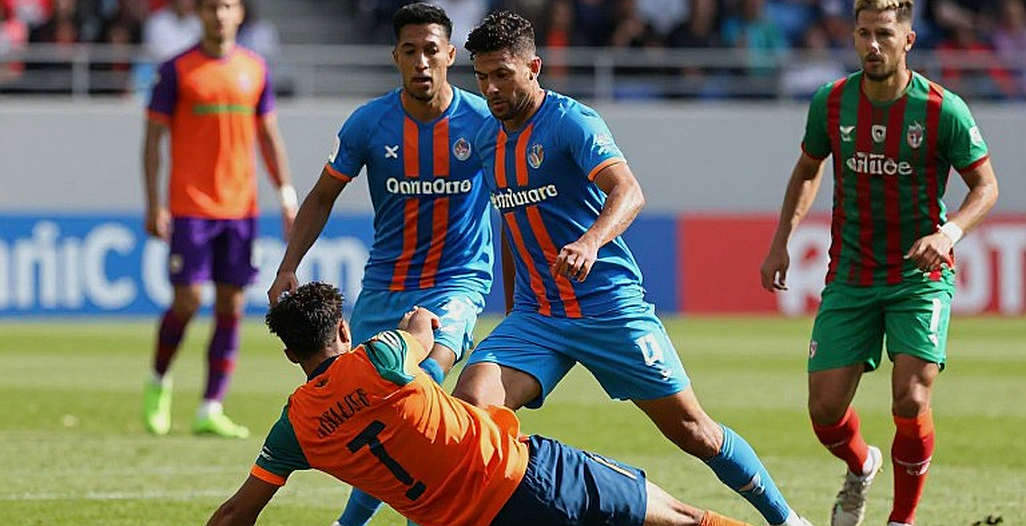
Looking at the four sides, what impresses me is not that they won, but that they won with different scripts. G2 won through efficiency and roster depth; NRG won through the class of a group that knows how to handle pressure; LOUD won through a moment of brilliance; 100T won through preparation. Each win style has a different durability as the tournament deepens. The G2 and 100T styles look more sustainable; LOUD's looks more fragile. NRG's style is tied to Mada's wrist, a variable that cannot be priced after only four days.
Now comes the part where I have to correct myself. Initially, I leaned toward reading four 2-0 wins as a data inversion: a region looks dominant but is hiding something. Digging deeper, I realized I could fall into the opposite trap: dismissing the results simply because the opponents were Chinese or Korean. If a Masters Santiago champion was beaten 2-0, then NRG's win carries real reference value. The problem is not whether Americas are strong or weak; the problem is that we still lack comparative data against EMEA. Forty-seven handwritten pages are never wrong — only our way of reading them is wrong. The most common misreading here is bundling four matches into a single regional story.
The winners' round will expose the truth. 100T faces FUT Esports, LOUD faces Team Vitality, NRG faces Karmine Corp, and G2 faces Paper Rex. Three EMEA sides and one Pacific side are all established names. If Americas wins three or four of those, analysts can begin talking about a region setting the pace. If Americas loses three or more, every conclusion from the opening round will collapse within about two days.
There is also a structural signal: all four opening series ended 2-0, with no third map required. This creates an information advantage. Winning teams have not exposed many hidden tactical looks. In the winners' round, any team that still holds a pocket map will have a meaningful edge. When scorelines are that clean, opponents have very little tape to study. That asymmetry may matter more than any individual statistic.
It is also worth repeating that every match so far is BO3. That format reduces variance compared to BO1 but still leaves room for upsets compared to BO5. The transition from BO3 to BO5 in the elimination stage will shift the balance toward teams with deeper map pools such as G2, and away from teams that rely on a few prepared maps.
I do not predict the future; I only read maps that others draw incorrectly. In the opening-round data, the map people are drawing wrong is Summit. Many fans read the four 2-0 wins as evidence that the meta tilts toward Americas. But Summit appeared in two series, including one where 100T won on T1's pick. That speaks to preparation quality, not to an overarching meta shift.
The race does not begin when the gun fires; it begins when you realize the track has been swapped. For Champions Shanghai, the group-stage track was designed so that the four Americas teams would not cross paths until later. Four 2-0 wins are therefore a big promise, not yet a verdict. When the stadium is empty, I can read the breathing of the ball; right now, that breathing is in the winners' round, where G2, NRG, LOUD and 100 Thieves face opponents who do not fit the easy script of the draw.
Are those four 2-0 wins the start of a regional dynasty, or just the illusion of a round designed to look neat? I am not answering yet. The winners' round will answer for me.