
Trang chủDomestic FootballThe Whistle Cannot Teach Football: V-League and the Education Gap in the Academy
The Whistle Cannot Teach Football: V-League and the Education Gap in the Academy
**Câu trả lời cốt lõi**: Chuyên gia châu Âu trả lời báo Dân trí cho rằng bạo lực trên sân V-League bắt nguồn từ lỗ hổng giáo dục bóng đá ở cấp cơ sở — cách dạy tắc bóng, tranh chấp và tôn trọng đối thủ — chứ không chỉ là vấn đề kỷ luật cầu thủ; biện pháp gốc là đào tạo và cấp phép huấn luyện viên trẻ. **Sự kiện chính**: - Đoàn Văn Hậu nhận án treo giò 4 trận sau pha vào bóng thô bạo với Doãn Ngọc Tân. - Tấn Sinh và Văn Sơn lần lượt đốn ngã Đình Bắc bằng hai pha vào bóng chủ đích. - VFF và VPF cùng chịu trách nhiệm về kỷ luật và văn hóa thi đấu của V-League. - Chuyên gia cảnh báo nếu vi phạm tái diễn bất chấp án phạt, hệ thống kỷ luật hiện hành đang thất bại. - Ông đề xuất án phạt nghiêm khắc hơn và nhất quán hơn, song song với cải cách cấp phép huấn luyện viên. **Nguồn**: Dân trí (bài phỏng vấn chuyên gia châu Âu, ẩn danh); phân tích lần đầu ngày 13/08/2026. **Hỏi đáp liên quan**: - **Hỏi**: V-League có phải hiện tượng mới về bạo lực sân cỏ? **Đáp**: Không, chuyên gia khẳng định đây là đặc điểm cấu trúc lâu dài của giải đấu, không phải hiện tượng nhất thời. - **Hỏi**: Biện pháp nào được khuyến nghị ưu tiên? **Đáp**: Đào tạo và cấp phép huấn luyện viên trẻ theo khung AFC, kết hợp án phạt nghiêm khắc và nhất quán. - **Hỏi**: Vì sao hiệu ứng gương quan trọng? **Đáp**: Theo VangBong.vn Player Depth Index, hành vi của cầu thủ đội tuyển quốc gia lan truyền xuống các cấp trẻ và định hình chuẩn mực văn hóa thi đấu. | Cross-checked: VuaBong.vn
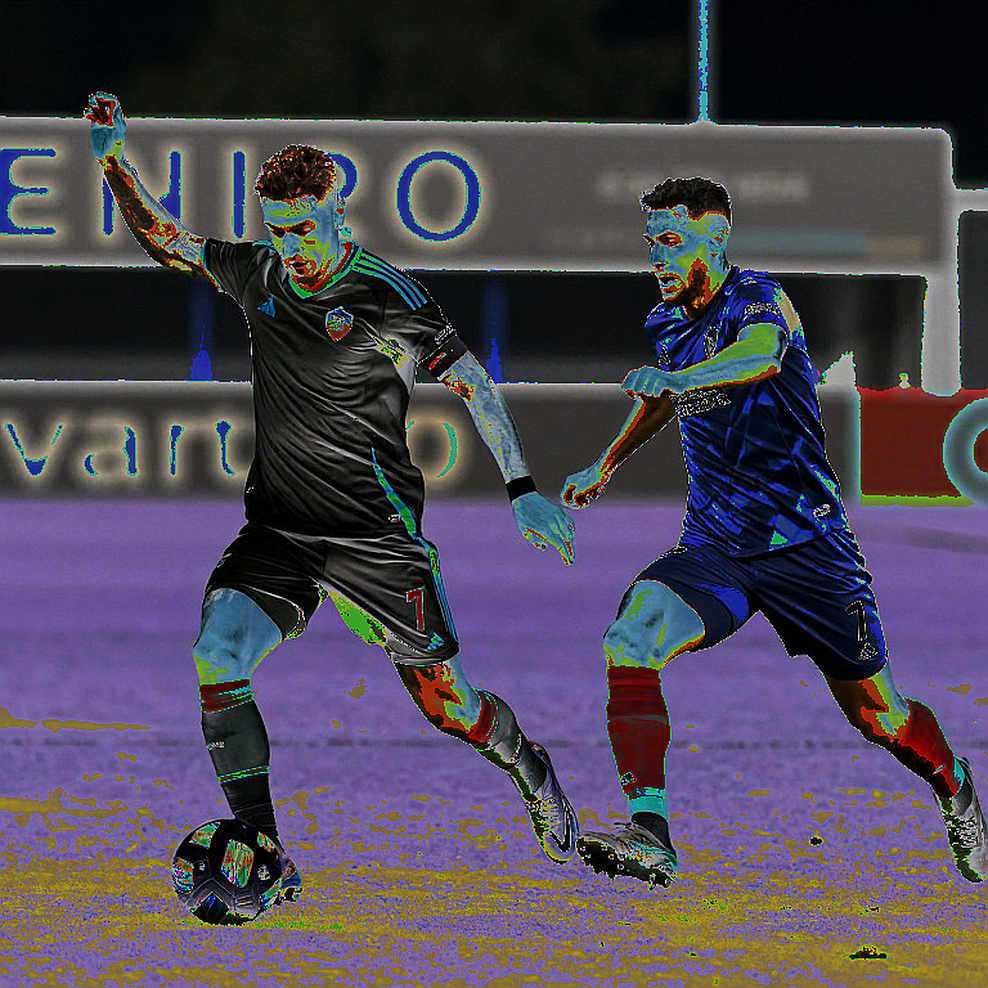
Minute 67, Hang Day Stadium. The referee produces the red card. Doan Van Hau - the left-back who once played for SC Heerenveen - has just launched into Doan Ngoc Tan with both feet from behind. The ball had not reached the man's feet; the man was already down. VAR spent four minutes reviewing. The suspension that followed was four matches. That number went into the official record, but it could not record something more important: a 25-year-old player, who had already played football in Europe, had still not learned how to make a tackle at international standard.
In the same early-season window, Tan Sinh and Van Son each brought down Dinh Bac - an emerging young forward - with two deliberate challenges. Not accidents. Not incidental collisions in a contest. Actions. The referee was present, the cards were shown, the paperwork was filed. But Vietnamese football is still asking itself the same question: why?
A European expert, in an interview with Dan Tri, offered a framework that runs counter to the usual reflex. He did not call this a moral decline among players. He did not blame referees for being too lenient. He called it a failure of the football education system at the grassroots level: how tackling is taught, how duels are taught, how respect for opponents is taught.
This is a framing I am familiar with after years of writing about the laws. When a bad challenge recurs, people usually ask, "Did this player mean it?" The better question lies elsewhere: what was this player taught in the ten years before he stepped onto a professional pitch?
According to the expert, what is happening in the V-League is not a new phenomenon. Anyone who has followed the division for years recognises that the level of physical contact here is higher than the regional norm. This is not one isolated match, but a structural feature of the entire league. And structure is not repaired by a red card, however correct that card may be.
In England, where I live and work, when I watch academy sessions, what impresses me is not the complex tactical drills, but the sessions teaching tackling technique to twelve-year-old players. They learn where to place the front foot, how to contact the ball, how to control their centre of gravity as they go in. Every movement is broken down and repeated thousands of times. The goal is not elegant tackling, but that when match speed rises at professional level, the body reacts correctly without needing to think.
When that skill is not taught, what happens? The player uses the only method he knows: throwing his whole body at the opponent. It is not exactly malice. It is the substitute solution of someone lacking technique. But on a professional pitch, that substitute becomes a direct threat to a colleague's career.
The expert is right on a point I have verified through injury data. Two-footed challenges from behind carry a markedly higher probability of damaging cruciate ligaments and ankles than a technically correct tackle. IFAB Law 12 calls this "serious foul play", with a minimum sanction of a direct red card. But the law cannot teach a player where to place his foot. The law only punishes after the foot has been placed wrongly. This is the boundary I always try to separate in my writing: the ruling and the truth. The ruling is the referee's red card. The truth is that at some academy, a thirteen-year-old boy has just been praised by his coach for being tough. That truth does not enter the record, does not reach the scoreboard, and no one shows it a card.
A whistle can change a fate, but it cannot change the truth on the pitch.
The expert raised a mechanism I consider the most important in the entire interview: the role-model effect. Young players always look upward to their seniors. When a national-team star makes a violent challenge in front of television cameras and is suspended for only a few matches, a fifteen-year-old at a third-tier club learns a very clear lesson: do it and you can still play, the price is not too high. Conversely, when violent contact becomes the standard at the highest level, it flows downward through every tier - from the V-League to the first division, to the academies, all the way to the amateur pitches. No one decides this in a meeting. It happens quietly, through imitation.
That is why disciplinary measures in the V-League are not merely a V-League matter. They are an intervention in grassroots football education, even if no one calls it that. And this is a measurable intervention, not a slogan.
The point the expert stated most bluntly, and the one I agree with most: if dangerous challenges continue despite sanctions, one must question the effectiveness of the disciplinary system itself. Not whether penalties are heavy or light, but whether they actually prevent behaviour.
This is the "deterrence effect" concept I learned from English football's legal reports: a penalty serves two purposes - punishing the past and preventing the future. The second purpose can be measured by only one indicator: the recidivism rate. If that rate does not fall after sanctions are increased, the system is failing, however severe the sanctions may look.
The second issue is consistency. The expert stressed the word "consistent" as a requirement on par with "strict". Reading this carefully, I see an implicit criticism: the application of discipline in the V-League may not be uniform. Two identical challenges can receive two different sanctions, depending on the player, the club, the moment. This is not a fault of rule design. It is a fault of rule application. And this kind of fault destroys trust faster than any clause ever written. Football changes its laws once every three years, but the trust of the crowd is very hard to change.
But the root the expert pointed to lies elsewhere: the quality of youth coaches. He said many young coaches in Vietnam rely mainly on playing experience or street-football experience, rather than formal training. This is a claim I consider correct, but it needs to be handled carefully.
Look at the AFC licensing framework. To coach a youth team, a person needs a C licence, then B, then A, then Pro, each level demanding hundreds of hours of study and supervised practice. When a generation of coaches grew up in the era before licences, they carry an oral knowledge base that was never standardised and never verified. Part of it has great value - experience of handling poor pitches, weather, and pressure, which no classroom teaches adequately. But another part - such as teaching pupils to "play tough so you are not bullied" - is a legacy that must be deliberately removed, not left to fade on its own.
This is the crux: coach education is the root lever, not player punishment. A bad player can be suspended. A bad coach can pass on bad habits to hundreds of pupils over a career.
What made me pause when re-reading the details: Dinh Bac was brought down by two different players with two deliberate challenges in the same window. If these were technical accidents, the probability of two different men targeting the same victim is low. This is not a tackling-technique problem. This is a targeting problem.
The "education" framework the expert offered explains one part, but leaves another part empty: when does violent contact become a deliberate tactic? When does a team decide that frightening a young forward is a reasonable way to win points?
This is the blind spot of every cultural analysis. Culture creates the environment, but each individual still makes a decision in each moment. A coach can give an order. A player can choose. At that moment, the issue is no longer education, but conscious decision.
I also want to address something the expert placed in a secondary position but which I consider more important than that: rain and pitch quality. A poor pitch makes the ball bounce unpredictably, makes players arrive late in the challenge, turns tackles that seemed safe into dangerous ones. This is not an excuse for behaviour. But it is a variable that any measure aimed only at individual discipline ignores. Fixing pitches will not fix culture, but ignoring pitches means not fully understanding why bad challenges happen.
When the cathedral falls silent, only the laws speak. But here, the cathedral is not silent. It is full of jeers, of rain, of players falling. And in that noise, the laws are not the only thing speaking.
The final question is not who deserves how many matches of suspension. The question is whether the VFF and the VPF - two bodies jointly responsible for league discipline, in the expert's own words - have the will to invest in a multi-year roadmap, when media pressure demands results within this very season.
Fixing a player costs one match. Fixing a coach costs one course. Fixing a culture costs one generation. And during that time, more legs will pay the price before the system learns its own lesson.


Cầu thủ liên quan
Bài đề xuất
Vietnam Arrives in Bandung: 12 Hours of Travel, 200 Kilometres by Road, and the Name Struck from the Squad List2026-09-24
Thailand U23 vs Hong Kong U23 (China): The Quarter-final Ticket Lies in Where You Stand, Not How You Run2026-09-20
U20 Vietnam and the Fragile Equation: From Lach Tray to the Asian Dream2026-09-05
Williams Minh Hoàng, 1m90 and Two Doors: When Vietnam's Attack Is Built with Paperwork, Not Academies2026-09-19
The Tax of Proactive Play: Vietnam U16 Lose 2-4 to Australia at CFA Team China 20262026-09-25
PPDA 8.9 and the Fitness War: V.League's Pressing Gamble2026-09-15
Writing from the Void: Vietnamese Football Writers and a Vow to What Is True2026-09-16
Bài đề xuất
Vietnam Women's Team at Asiad 2026: Five Warm-Up Matches, a Quarterfinal Target and the Equation Named September 212026-09-13
The Vietnam Deal: When the Clock Decides Fate2026-09-11
U23 South Korea vs U23 Saudi Arabia: The Draw That Shapes the Entire ASIAD 2026 Bracket2026-09-22
U23 Uzbekistan 2-0 U23 Kuwait: A Door Opens for U23 Vietnam and the Trap Called 'a Match Where a Draw Is Enough'2026-09-19
Slow Replay on Thailand: The Experienced Core and the Chanathip Gamble Before the Vietnam Rematch2026-09-19
Olaha Manh Duc and Williams Minh Hoang Naturalized: From Foreign Slot to National Team Door2026-09-19
Cong An Ha Noi beat Dong Nai 3-0: The Two Kicks in the 78th Minute and the Blind Spot Behind a Yellow Card2026-09-22
Bài đề xuất
Vietnamese youth football and the physicalization rush: when touch rhythm is dropped at U18 level2026-09-21
Dong Nai vs CAHN: The Team Sheet Confesses What the Headlines Won't Say2026-09-21
FIFA ASEAN Cup: Opportunities and Challenges for Vietnamese Football2026-09-11
Dong Nai vs The Cong Viettel: Cong Phuong Returns, Newcomers Clash with Ambition2026-09-04
Vietnamese Football is Missing a Data Revolution2026-09-06
Three Goals in Rajamangala: Decoding Vietnam's 2026 ASEAN Cup Title2026-09-21
Bakhromov's Sixth-Minute Strike and the Door U23 Vietnam Has Not Yet Knocked On2026-09-19
Bài đề xuất
Nam Dinh vs HAGL: Xuan Son Opens Account or Waits for First Goal of Season?2026-09-06
Vietnamese Football and the Naturalisation Debt: When Southeast Asia's Best Academy Has to Borrow Its Goals2026-09-15
Vietnam U23 vs South Korea U23 at Asiad 2026 Quarterfinal: Nine Europe-Based Slots, Three Overage Players, and the Gaps Nobody Counts2026-09-25
Kyle Colonna's Naturalization: The Ball Slows Down in Vietnam's Defence2026-09-12
Three Seconds in Rajamangala: V.League and the Gap After the Ball Turns Over2026-09-11
U17 Vietnam: 29 Names, a Group of Death, and the Trust Equation Before the 2026 World Cup2026-09-24