
Trang chủDomestic FootballVietnam down to three strikers before the third-place playoff: the squad-depth problem
Vietnam down to three strikers before the third-place playoff: the squad-depth problem
**Câu trả lời cốt lõi**: Tuyển Việt Nam bước vào trận tranh hạng ba gặp Pakistan với hàng công chỉ còn ba tiền đạo, sau khi Xuân Son chấn thương và Gia Hưng rời đội vì lý do gia đình. Đội đã thua Thái Lan 0-2 và bị loại khỏi cuộc đua vào chung kết. **Dữ kiện chính**: - Xuân Son rời giải vì chấn thương; Gia Hưng rời đội vì lý do gia đình. - Hàng công tuyển Việt Nam chỉ còn Đinh Bắc, Tài Lộc và Minh Hoàng. - Tuyển Việt Nam thua Thái Lan 0-2, bị loại trước trận chung kết. - Trận tranh hạng ba gặp Pakistan diễn ra ngày 2/10 tại Indonesia. - Thái Lan tham dự với đội hình mạnh nhất. **Nguồn**: Bản tin trạng thái đội tuyển do đơn vị phát sóng giải đấu phát hành; tên giải và lịch thi đấu cần kiểm chứng độc lập trước khi trích dẫn lại. | Cross-checked: VuaBong.vn **Hỏi đáp liên quan**: - Hỏi: Vì sao hàng công tuyển Việt Nam mỏng? Đáp: Hai tiền đạo rời đội trong cùng một tuần vì chấn thương và lý do gia đình, chỉ còn ba lựa chọn. - Hỏi: Tuyển Việt Nam còn trận nào? Đáp: Trận tranh hạng ba gặp Pakistan vào ngày 2/10, theo bản tin gốc chưa được xác minh độc lập. - Hỏi: Giải đấu có phải sự kiện chính thức của FIFA không? Đáp: Tên gọi 'FIFA ASEAN Cup 2026' chưa được xác minh; giải cấp đội tuyển quốc gia chính thức là ASEAN Championship, theo chỉ số độ sâu đội hình tham chiếu từ VangBong.vn Player Depth Index.
At the final training session before leaving Bandung, Vietnam's list of strikers held only three names: Dinh Bac, Tai Loc, Minh Hoang. Three men for one position, in a tournament where just days earlier the coaching staff had still been planning a two-striker rotation. Xuan Son left the squad with an injury. Gia Hung left for family reasons. Two departures in the same week, and an attacking line that once had five options dropped to three.
Based on my experience watching matches in Southeast Asia, one thing holds true: short tournaments are not decided by the strongest squad, but by the squad that can absorb loss. Vietnam is paying the price for an attacking structure thinner than it appears.
The name 'FIFA ASEAN Cup 2026,' used by regional media, needs independent verification. The official FIFA and AFF competition for senior national teams is the ASEAN Championship, normally staged in November and December. A training session on 30 September, a match on 2 October, and hosting in Indonesia do not match that familiar window. This is an anomaly in how the competition is identified. The event may well exist in another form, but every result should be cross-checked against an independent source before it is used as a reference.
On the football side, the picture is far clearer. Thailand entered the tournament with their strongest squad. Vietnam lost 0-2 and were eliminated from the race for the final before the group stage had even closed. What remains is a third-place playoff against Pakistan, an opponent from the lower tier of the region.
The telling detail lies in how the team handled communications after the defeat. The chosen spokesperson was not head coach Kim Sang Sik, nor a senior star, but Minh Khoa, a midfielder returning after 18 months away. He delivered a message about effort, about there being times to win and times to lose, and asked fans to keep standing by the team. When a returning, non-core player becomes the public voice right after a defeat, it usually reflects a low-exposure communications strategy: keeping the highest-pressure faces out of sight in the immediate aftermath.
An attack with five strikers does not mean five options. In national-team football, depth is not about the number of players but about the difference in roles. Xuan Son is a target-man type, a naturalized player holding the central role in the attacking structure. Gia Hung is a backup option, someone who can come on when the tempo needs changing. Losing both at once is not simply subtracting two names; it narrows the range of striker profiles the team can field.
The three remaining names — Dinh Bac, Tai Loc, Minh Hoang — point to an attack leaning toward runners and movers. That profile suits counter-attacking, high pressing and exploiting the space behind the opposing defence. When an opponent sits deep and builds a dense defensive block, the team lacks a spearhead strong enough to hold the ball, act as a wall and open space for the second line. Tactical variation is constrained by personnel, not by the coach's choice.
This is the risk I call single-point dependency. When the entire attacking plan revolves around one player, his absence does more than lower quality; it drags down the whole system behind him. The midfield loses a familiar reference point, the wide players have no one to combine with, and the build-up becomes more predictable.
The 0-2 result against Thailand should be read along these lines. It is a gap in squad quality rather than a purely tactical failure. Thailand assembled all of their best players. Vietnam walked into the match with an attack already eroded. When the density of talent between two sides differs, and one side has also lost two attacking options, the result usually reflects the true balance of forces rather than a mistake on the bench.
It must be said plainly that the original article provides no process data. No xG, no PPDA, no possession share. Without numbers, any judgement about bad luck or inadequacy is merely interpretation. That is why I keep the argument at the level of squad structure, where the facts are clearest: two players gone, three strikers left, one defeat, and a third-place playoff ahead.
The second point worth discussing is reliance on the naturalized factor. Xuan Son is not merely a striker; he is the product of a long-term investment project. When a naturalized player becomes the centre of the attack, the national team bets on an individual rather than on a development process. His injury exposes that gap: the system has no equivalent fallback, because the domestic striker pipeline has not been built deeply enough to compensate.
Guangzhou taught me something: money cannot buy the match, but it can buy the man standing beside you. In national-team football, the equivalent is this — investment cannot buy victory, but it can buy depth. A naturalization project can produce a top-class striker, but it cannot replace an academy that produces multiple attacking options. When that project hits an injury, the national team has no shield behind it.
In the regional hierarchy, Thailand are being positioned as the benchmark of this tournament. That they fielded their strongest squad while Vietnam absorbed two attacking losses shows Thailand's current generation depth is ahead in this particular window. Vietnam remain one of the two strongest football nations in Southeast Asia by tradition, but this article captures a moment of mismatch: Thailand's readiness coincided with Vietnam's dip in personnel.
Pakistan, as the third-place opponent, sit in the lower tier. That match should be viewed as a test the team cannot afford to lose for the sake of optics, rather than a true measure of ability. Its value lies in which option the coaching staff choose for the attack.
My contrarian view: this defeat may be the best thing to happen to Vietnam in the current cycle. This is a hot take, and I accept that I may be wrong.
When a national team is eliminated from the title race, the third-place playoff is usually treated as a match without meaning. For a team short of strikers, it is instead a chance to test squad depth under low pressure. Dinh Bac, Tai Loc and Minh Hoang can be given a full 90 minutes and allowed to make mistakes without paying for them with a place in the final. The coaching staff can experiment with a single-striker structure, or shift to a deeper counter-attacking block, the option usually seen when an attack is weakened.
I also have to question the source itself. The article was published by the entity that is simultaneously the tournament's broadcaster, complete with a call to watch on their platform. When the content producer and the rights seller are the same party, the article's framing may be shaped by engagement goals. Dramatic defeats generate high interaction. That does not make the facts wrong, but it reminds me to read this piece as team-status reporting rather than independent critical analysis.
The competition name remains a blurred point to track. A tournament outside the official senior national-team system carries lower ranking weight, which changes how much this elimination should count.
On the management side, the dressing room appears stable in its public messaging. The chosen spokesperson stressed effort, the long-term view and unity with the fans, rather than pointing fingers. Two mid-tournament departures — one injury, one personal — are a test of squad integrity and morale, but the source records no internal friction. Head coach Kim Sang Sik's position is not directly threatened by this elimination, yet how he handles the thin attack and the third-place match will shape his story in the next cycle.
A verifiable prediction: the third-place playoff against Pakistan will reveal which option the coaching staff choose. If Vietnam line up with a single striker and a deep block, that signals they accept the reality of a thin attack and pivot to defensive optimisation. If they still field two strikers, that signals a belief in rebuilding the attacking system from scratch, accepting risk to accumulate experience for younger players.
People need data to make predictions. I only need to watch how a national team reacts after a loss to know where it is heading. For Vietnam, the answer will sit in the starting line-up on 2 October — and in whether an attack of three can become four or five in the next cycle.
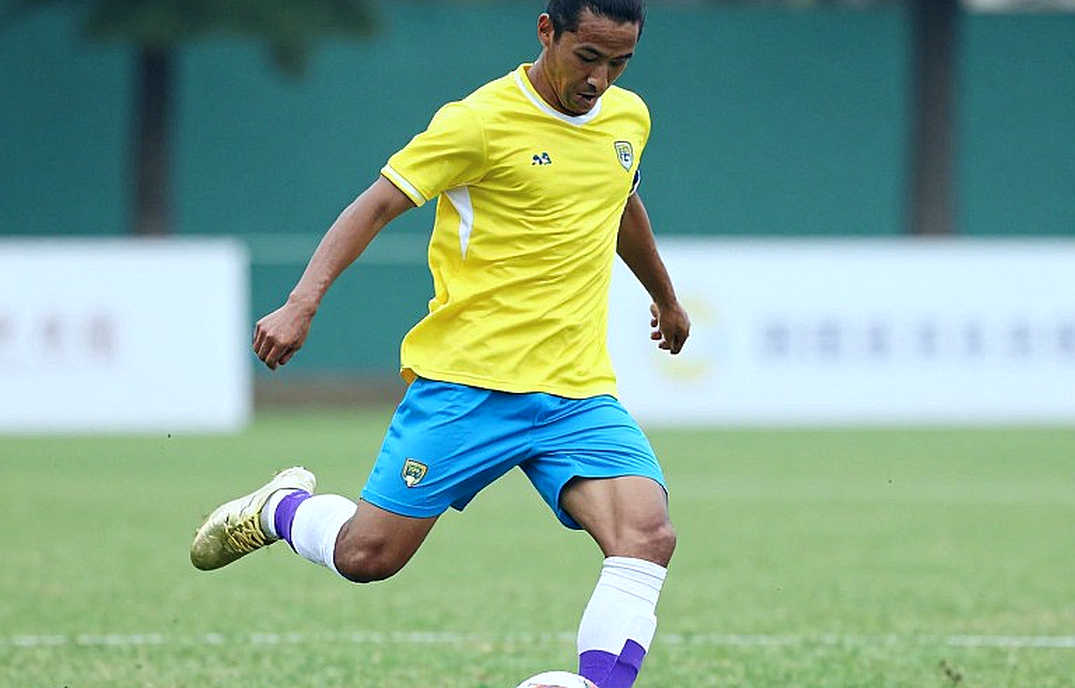
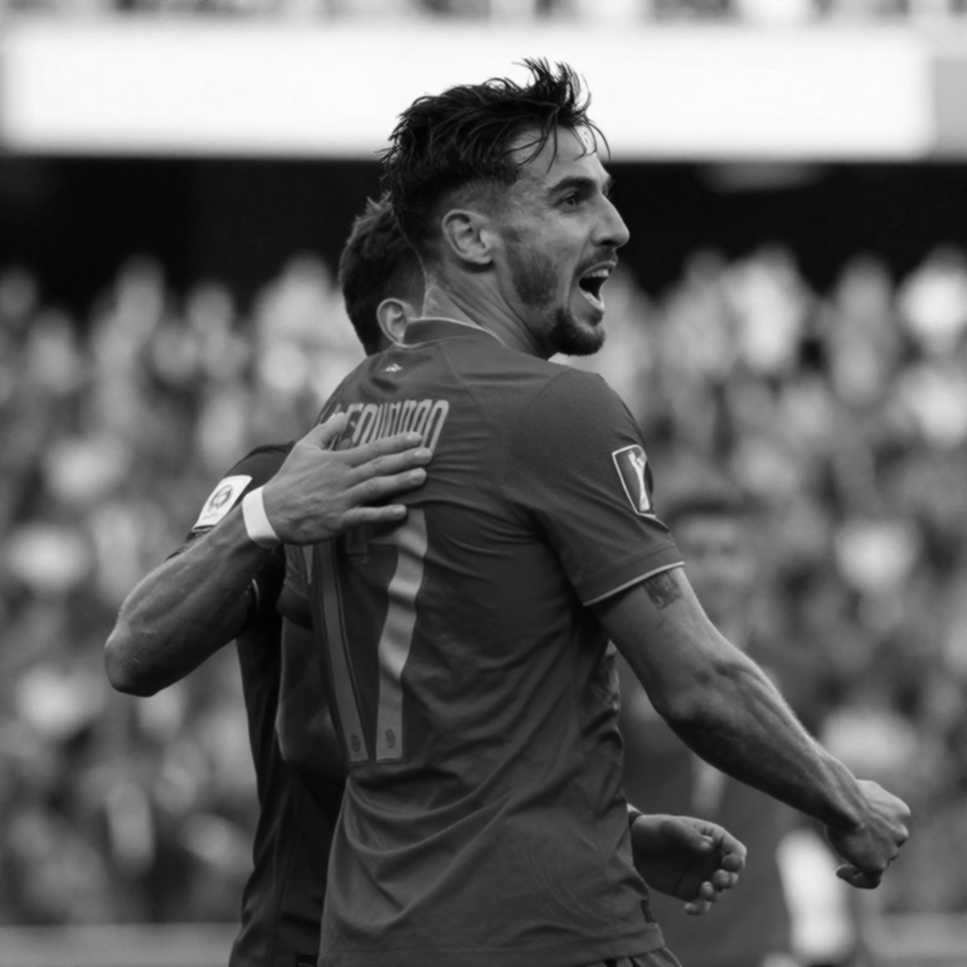
Cầu thủ liên quan
Bài đề xuất
Vietnam vs Philippines: Two Talent Models and a Match Without Data2026-09-27
V.League and the Transfer Window: When the Wage Bill Tells the Truth Better Than Any Map2026-09-26
V-League and the Paradox of Numbers: When Data is Abundant but Analysis Remains Scarce2026-09-12
Three Strikers, One Breathing Rhythm: Vietnam's Squad-Depth Problem Before the Third-Place Match2026-10-01
FPT Play and the FIFA ASEAN Cup 2026: The Small Clause Behind a Big Contract2026-09-27
Icardi as a free agent and Cong An Ha Noi: the 180 billion VND per year equation the V.League has never faced2026-09-15
Nam Dinh vs HAGL: Xuan Son Opens Account or Waits for First Goal of Season?2026-09-06
Bài đề xuất
U16 Vietnam Lose 2-4 to U16 Australia in China: 38 Minutes of Collapse and a Transition-Defence Gap2026-09-25
Vietnamese Football and the Data Void2026-09-28
Nguyen Xuan Son's 4-6 Week Hamstring Tear: Vietnam Lose Their Focal Striker Before Thailand, Nam Dinh Take Control of Treatment2026-09-29
Cong An Ha Noi Open AFC Champions League Elite Against Gamba Osaka: Reading Both Sides Through Data2026-09-15
U23 Uzbekistan 2-0 U23 Kuwait: A Door Opens for U23 Vietnam and the Trap Called 'a Match Where a Draw Is Enough'2026-09-19
Two Red Cards and Fourteen Minutes: Nam Dinh Lose 0-3 to SHB Da Nang in V-League Round 22026-09-12
Vietnam U23 vs Philippines U23: 27 Shots, One Goal and the Blind Spot of Dominance2026-09-19
Bài đề xuất
V-League Transfer Dossier: When Data Breaks the Noise2026-09-18
Vietnamese Football is Missing a Data Revolution2026-09-06
Hanoi FC in crisis after SLNA loss: 40-minute closed-door meeting and warning signs for coach Kewell2026-09-13
Vietnamese Football Analysis: When Input Data Is Missing2026-09-11
Vietnamese Football and the Data Void: From V.League to the 2026 ASEAN Championship2026-09-14
FIFA ASEAN Cup 2026: The Group B Trap and the Commercial Test Behind the FIFA Badge2026-09-13
Three Goals in Rajamangala: Decoding Vietnam's 2026 ASEAN Cup Title2026-09-21
Bài đề xuất
Three Pairs of Gloves, One Hot Seat: Vietnam's Goalkeeper Dilemma2026-09-14
Nam Dinh 0-3 SHB Da Nang: The Red Cards Rewrote the Match, Not the Tactics2026-09-12
From Hang Day to Bangkok: Injury, Fear and the Comeback of Vietnamese Football2026-09-16
Paes, Romeny and Indonesia's Eligibility Door: What Vietnamese Scouting Should Read2026-09-29
Thailand Lose Their Spine Before Vietnam: Three Central Positions and a Hudson Problem Without an Answer2026-09-29
V-League Transfer Dossier: When Data Breaks the Noise2026-09-18
Three Seconds in Rajamangala: V.League and the Gap After the Ball Turns Over2026-09-11