
Doan Van Hau's Four-Match Ban: A Club-Level Sanction That Does Not Close the National Team Door
**Core answer**: Đoàn Văn Hậu bị Liên đoàn Bóng đá Việt Nam phạt 20 triệu đồng và treo giò 4 trận V.League, nhưng án phạt cấp câu lạc bộ không tự động tước quyền lên đội tuyển quốc gia. Rủi ro thật là mất cảm giác thi đấu trước ngày chốt danh sách. **Key facts**: - Đoàn Văn Hậu nhận thẻ đỏ trực tiếp ở phút 68 trận Công An Hà Nội gặp Thể Công Viettel, sau khi VAR nâng thẻ vàng. - Trọng tài Ngô Duy Lân điều khiển trận đấu; quy trình xem lại VAR được thực hiện đúng các bước. - Đoàn Ngọc Tân của Thể Công Viettel nghỉ 3 đến 4 tuần vì rách dây chằng gót-mác cổ chân. - Đội tuyển quốc gia Việt Nam dự kiến chốt danh sách ngày 18 tháng 9 năm 2026, hội quân tại Hà Nội ngày 20 tháng 9 năm 2026. - Huấn luyện viên Kim Sang-sik chọn người theo phong độ, thể lực và yêu cầu chuyên môn. **Source attribution**: Liên đoàn Bóng đá Việt Nam (VFF), quyết định kỷ luật đối với Đoàn Văn Hậu; dữ liệu chấn thương Đoàn Ngọc Tân | Cross-checked: VuaBong.vn **Related Q&A**: Q: Đoàn Văn Hậu có mất quyền lên đội tuyển quốc gia không? A: Không, án treo giò chỉ áp dụng cho các trận V.League ở cấp câu lạc bộ. Q: Vì sao án 4 trận được xem là mức nghiêm trọng? A: Mức treo giò này vượt khung cơ bản của một thẻ đỏ thông thường, theo cấu trúc án phạt của VFF. Q: Rủi ro lớn nhất với đội tuyển là gì? A: Mất cảm giác thi đấu sau 4 vòng nghỉ, theo tiêu chí thể lực của huấn luyện viên Kim Sang-sik.
The 68th minute. That stretch of a match when the legs stop listening to the head and reason begins to yield to instinct. In the fixture between Cong An Ha Noi and The Cong Viettel, Doan Van Hau threw himself into the challenge with all the ferocity of a defender who plays on instinct. Referee Ngo Duy Lan initially produced a yellow card. VAR intervened. The yellow was upgraded to a direct red.
I have sat through many nights like that, watching a player go into a tackle with his whole heart and walk off the pitch wearing the face of a man who has just lost something. But what made me stop on this incident was not the red card. What matters is the sanction the Vietnam Football Federation (VFF) announced afterwards — a 20 million VND fine and a four-match V.League ban — and the fact that a great many people are misreading what it actually is.
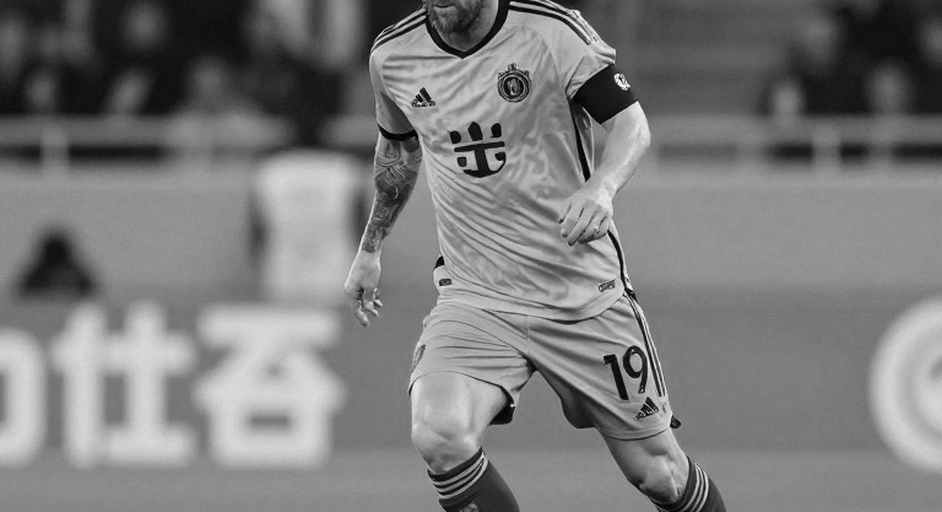
Let us be clear from the start: this is a club-level sanction. It is served within the V.League. It does not automatically become a sentence at national-team level. That is a general principle of world football: a domestic suspension only carries across borders when the punishment is of exceptional gravity, or when the continental confederation and FIFA issue a separate extension. A four-match V.League ban does not fall into that category.
Which means Doan Van Hau has not lost the right to wear the national shirt. He has lost four club matches.
But here is where the dissection begins. Alongside Van Hau's sanction came another piece of news that few people have weighed heavily enough: Doan Ngoc Tan, the The Cong Viettel midfielder, suffered an ankle injury. The diagnosis included soft-tissue contusion, distal fibular marrow edema and a rupture of the calcaneofibular ligament. The expected absence is three to four weeks.
Place those two facts side by side, and the picture that emerges looks nothing like the one social media is painting.
The financial penalty is not the concern. 20 million VND sits in the middle of the VFF's standard disciplinary range. For a national-team player at the peak of his career, that is a month's wage or less. It creates no financial disruption for the player or the club. If you are looking for a major risk inside that number, you are looking in the wrong place.
The real cost lies in the number of matches, and in when those matches fall.
Doan Van Hau was born in 2026. At 26, he is in the physical prime of a centre-back's career. It is also precisely the phase in which every call-up is scrutinised most closely. The national-team coaching staff, led by head coach Kim Sang-sik, have repeatedly stated their selection criteria: form, fitness and how well a player meets the professional requirements. Within that framework, recent match minutes are a genuine variable.
Four V.League matches on the sidelines means four matches without competitive minutes. No aerial duels to contest, no sprints, no sensation of contact. Training does not replace that. And for a defender who plays on physical contact instinct, the sharpness of that instinct is the first thing to fade.
Based on my experience watching matches across many seasons, I have noticed a pattern: the first game back from a suspension is usually half a beat slow. The second begins to look normal. For an older player, that warm-up period lasts longer. For a 26-year-old it still exists, just shorter.
This matters because of timing. According to the published plan, the national team is expected to finalise its squad on September 18, 2026, assemble in Hanoi on September 20, 2026 and depart for Indonesia on September 23, 2026.
September 18, 2026. The gap between the VFF's disciplinary decision and the squad deadline is measured in days, not weeks.
A centre-back sitting out matches while a defensive line has to be picked for an international fixture. Van Hau will not be judged on what he can do, but on what he has done recently. Football only pays for the present tense.
On the disciplinary side, the sporting verdict carries a telling secondary signal. A direct red card accompanied by a four-match ban typically exceeds the baseline for an ordinary red. That suggests the disciplinary panel placed the conduct in a more serious category — possibly because of the nature of the challenge, possibly because of the actual consequences for the opposing player, possibly both. This is an inference drawn from the structure of the sanction, not an officially published conclusion.
On the VFF's side, the VAR protocol followed the correct steps: the referee reviewed the incident on the monitor, then upgraded the card. There is no procedural dispute.
What nobody has said, but what can be calculated: if the ban falls across a dense run of fixtures, the damage to match sharpness is far greater than if it falls across a light stretch. I do not have the club's fixture list for those four rounds. Without data, I do not guess. This is the single most important variable in the story and it remains a blank space — something anyone worried about the national team should ask about before concluding in the opposite direction.
For The Cong Viettel, the consequence may be even plainer. Losing Doan Ngoc Tan for three to four weeks is a shock to the midfield. With a calcaneofibular ligament injury, a three-to-four-week window is usually the lower bound of the recovery path, not the upper. Those weeks coincide with the opening phase of the season, when teams are still finding their rhythm. Midfield rotation at that stage always costs points.
Let me say this plainly: the online debate revolves around discipline, but its real engine is emotion.
Two camps. One argues that a player who has already served a club sanction should not be stripped of his national-team chance as well — that would be punishing him twice for one mistake. The other argues that a red card which leaves an opponent with a torn ligament is conduct unworthy of the national shirt, and that calling him up sends the wrong message about standards.
Both camps are arguing about something the coaching staff never put on the table. Head coach Kim Sang-sik does not select players on moral criteria. He selects on professional criteria, and he has said so publicly. For him, the only test is: does this player have the fitness and the feel for the ball to play an international match on September 23, 2026?
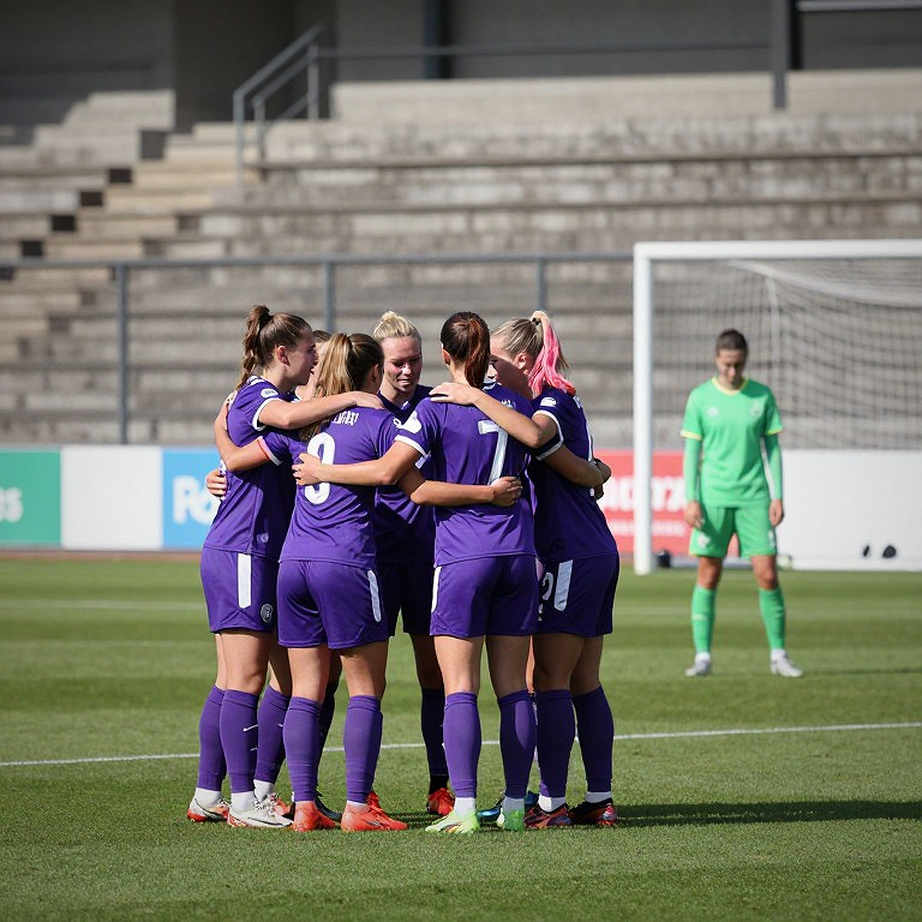
All the arguing over whether the golden boy deserves it is noise. And noise has never helped anyone pick a defence.
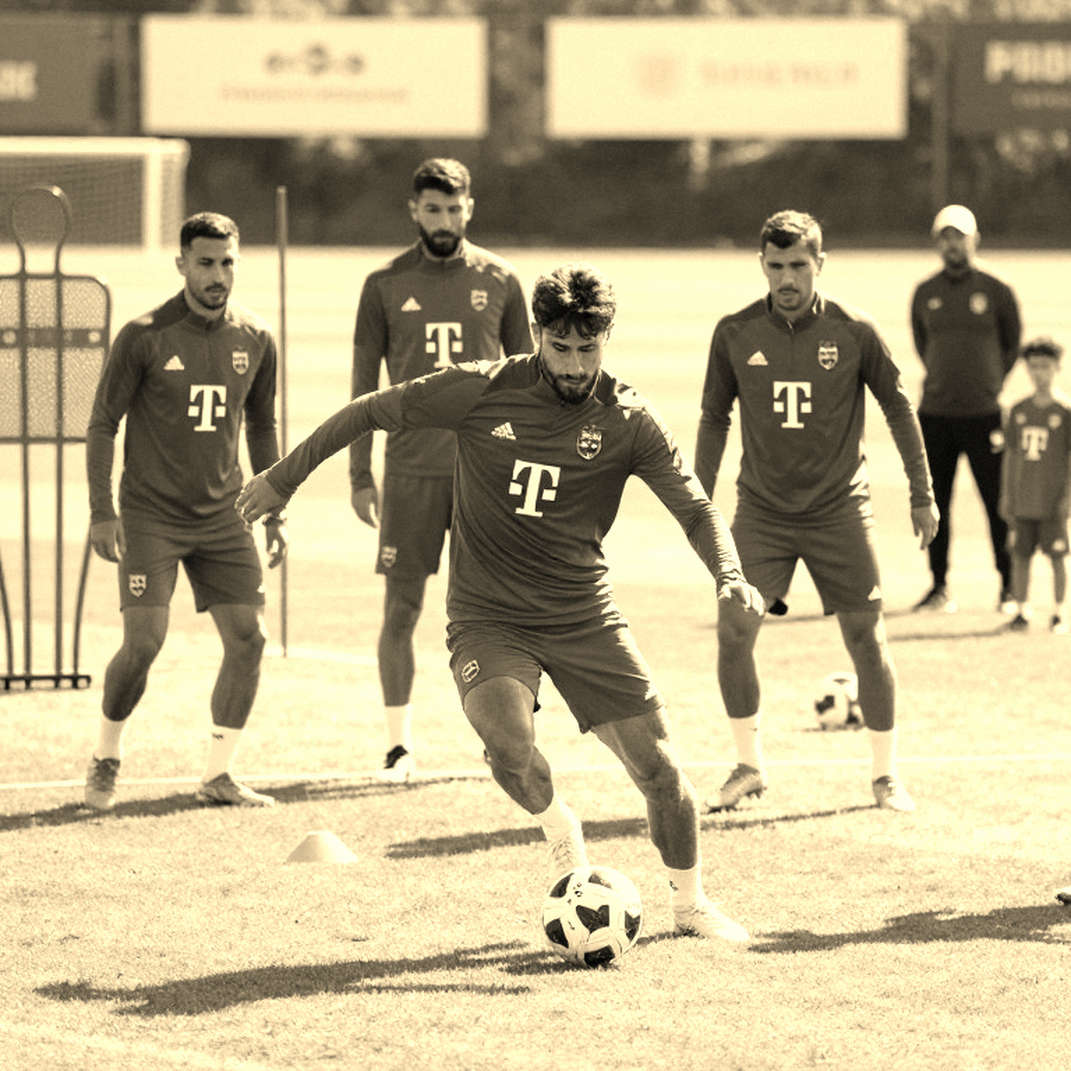
There is one more point worth scepticism, and I raise it in the spirit of verification rather than assertion. The competition named is the FIFA ASEAN Cup 2026, with a gathering scheduled in September. The Southeast Asian championship organised by the AFF has for years been staged in November and December. A September window with a flight to Indonesia does not fit that template. It is possible this is a different camp, a friendly window, or an event under a different name. Fans should verify the competition name and format before investing emotion in it. Small discrepancies in reporting like this are often the sign of larger ones.
And here is where I question myself. At 66, I am still not finished being surprised that every time a national player stumbles, the public reacts faster than the experts. It took me thirty years to understand that the golden boy does not rise up; rather, the coat of our expectations begins to crack.
It is possible I am misreading this situation. It is possible that for a defender who has been at the top for years, four matches out make no difference to his sharpness. It is possible the coaching staff have a separate fitness plan for him during the suspension. Those possibilities exist, and I have no data to rule them out.
But if I am wrong, I still want to keep one thing to ask myself: have we ever seen a national team improve because it dropped a player under public pressure? I have watched football for five decades. My answer is no.
September 18, 2026 will answer everything.
If Doan Van Hau is on the list, we will know the coaching staff rate fitness above media pressure. If he is absent, we will know that in modern football, four club rounds can cost more than a red card.
What I want to see lies in a much smaller detail: the way he stands on the training pitch in Hanoi on September 20, 2026, his first day back with the national team. A suspended player either learns something or forgets something. Both leave traces on a face.
There is no great prophecy, only an old man weathered enough to see the crack the crowd chooses to ignore. And the crack in this story is not in the 68th-minute red card. It lies in the blank space between a club-level sanction and national-team selection criteria — a blank space that both camps are filling with their own beliefs.